4L80E Torque Converter Shudder Diagnosis
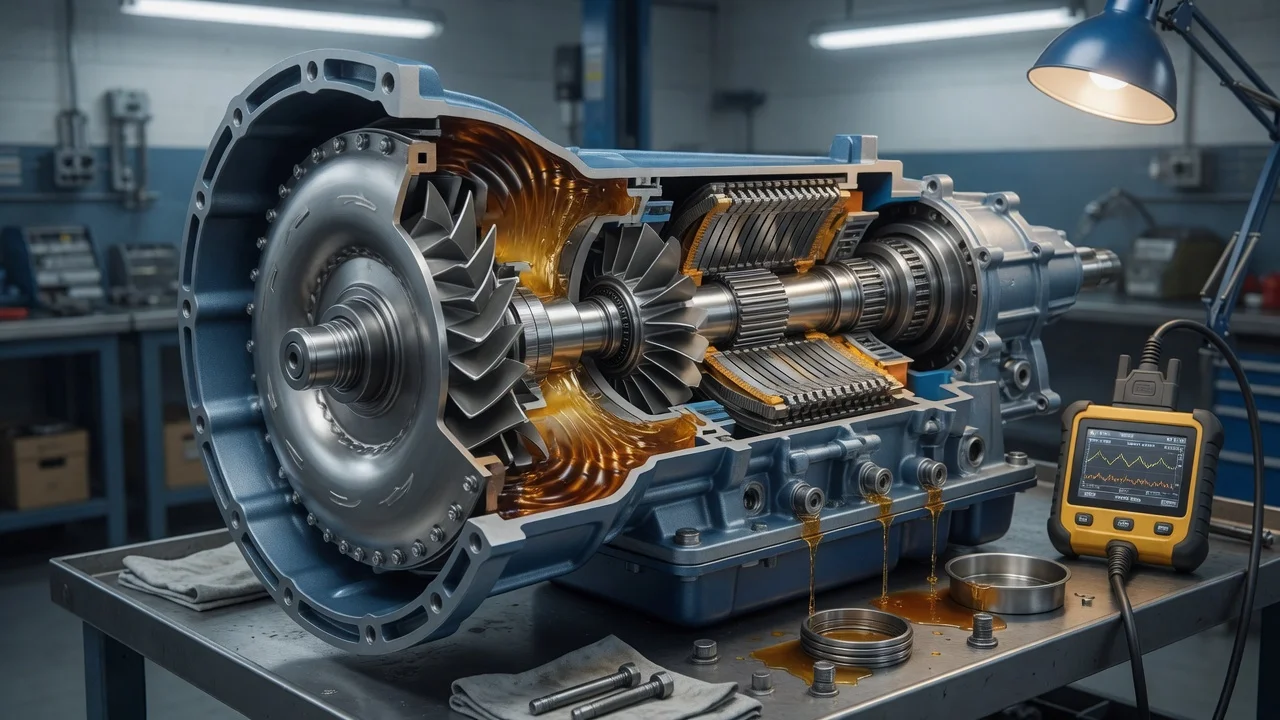
A shudder at steady cruise that feels like driving over rumble strips is a common complaint on GM's 4L80E four-speed automatic. It often appears when the torque converter clutch applies, but engine misfires, driveline vibration and hydraulic pressure problems can feel almost the same. This guide covers how to describe the symptom, separate the likely causes, order the checks and read the results, so you can decide what to do next without replacing parts on a guess.
Establish the symptoms
Start by confirming the transmission type. The 4L80E is an electronically controlled heavy-duty four-speed. It was used behind gasoline and diesel V8s in full-size GM trucks, vans and SUVs, and it is often swapped into other vehicles. Check the identification tag on the case and the vehicle's option label instead of assuming from the model name, because lighter-duty versions of the same trucks commonly used the 4L60E. Note the engine and whether the vehicle is two- or four-wheel drive. Also note whether the transmission is controlled by the engine computer or a separate controller, and whether the vehicle has an aftermarket converter, tuning, or a changed axle ratio or tire size. These details change the expected lockup behavior and determine which service information applies.
Then record exactly when the shudder happens. Converter clutch shudder usually appears in the higher gears at light, steady throttle and moderate cruising speed. It may get worse on a slight grade, while towing, or just as lockup engages, and it may fade when you accelerate harder or lift off completely. Note whether it happens cold, hot or both, whether engine rpm flickers during the shudder, and whether the check engine light is on. Write down the recent service history as well. A fluid change with a different fluid, a new converter, ignition work or driveline repairs are all relevant clues.
Distinguish plausible causes
The leading suspect is the converter clutch slipping and grabbing as it applies. Degraded or incorrect fluid often contributes, because the clutch depends on the fluid's friction characteristics. Shudder that began after many miles without a fluid service, or after a switch to a fluid that does not meet the specification, points in this direction. A worn or glazed clutch lining inside the converter feels the same, but it cannot be confirmed without removing the converter and cutting it open or rebuilding it. Hydraulic causes include low line pressure, a worn pump, or worn valves and bores that control converter feed and apply. Any of these can make the clutch apply weakly or unevenly. An electrical fault in the converter clutch solenoid circuit more often causes no lockup or erratic lockup than a steady shudder. Intermittent connections, however, can cause on-off cycling that feels similar.
Several problems outside the transmission mimic converter shudder. An engine misfire under light load can feel identical, especially at the low rpm reached after lockup. Misfire codes, a rough idle or recent plug and coil work support this possibility. Driveline vibration tends to follow road speed rather than lockup state. Sources include worn universal joints, an unbalanced or damaged driveshaft, incorrect driveshaft angles after a lift, and a failing carrier bearing on long-wheelbase trucks. Tire and wheel problems usually build steadily as speed rises. Worn engine or transmission mounts can amplify any of these vibrations. If the vibration continues while the converter clutch is released, the converter becomes a less likely cause.
Checks in a useful order
Begin with the checks any owner can do safely. Check the fluid level and condition using the procedure for your vehicle. A 4L80E is normally checked with the engine running, the transmission at operating temperature and the vehicle level; a reading taken cold or with the engine off can mislead you. Note the color and smell of the fluid and look for debris on the dipstick. With the engine off and the vehicle secured, look underneath for leaks and check the universal joints for play. Confirm tire pressures. If the check engine light is on, have the diagnostic codes read before anything else. Codes for converter clutch performance, slip, solenoid circuits or engine misfires narrow the search considerably. Code definitions vary by model year and controller, so confirm them in the correct service information.
Next, reproduce the shudder on a road test, only where traffic allows. While the shudder is happening, lightly touch the brake pedal without slowing much. On these GM applications, the brake switch normally signals the controller to release the converter clutch. If the vibration stops immediately and engine rpm rises slightly, the shudder is tied to converter clutch apply. If it continues unchanged, focus on the engine, driveline or tires. Have a passenger take notes so the driver is not distracted.
Tests that need equipment or specifications come after that. A technician can use a scan tool showing commanded converter clutch state, converter slip speed, misfire counters and transmission temperature to see whether slip fluctuates when the shudder occurs. A line pressure test with a gauge, compared against the published specification for your model, checks the hydraulic side. Solenoid circuit checks, pan removal to inspect debris, and pump or valve body inspection should follow the factory procedure. These are usually best left to a qualified transmission technician.
Interpret the findings
Each result narrows the field, but it rarely proves that a single part has failed. If the shudder stops when the converter clutch releases, the vibration is happening during lockup. That result alone does not tell you whether the cause is fluid condition, clutch lining wear or a hydraulic apply problem. Slip readings that fluctuate at the moment of shudder support a converter clutch apply issue. Steady slip during the vibration points back toward the engine or driveline. Misfire counters that rise during the event favor an ignition or fuel problem, even if the converter happens to lock at the same moment.
Dark, burnt-smelling fluid or heavy friction material in the pan suggests internal wear, so a fluid change alone is unlikely to be enough. Clean fluid at the correct level and in-range line pressure make fluid and pressure less likely causes, but the clutch lining can still be worn. Some shops exchange the fluid for one meeting the correct fluid specification as a diagnostic step, sometimes adding a friction additive. Improvement afterward supports a friction-related cause, though a fix that masks wear may not last. Before replacing a converter, confirm that the hydraulic system can apply it properly. A new converter fed by a worn pump or valve may shudder again.
Urgency and next action
A mild shudder that only appears during lockup is not usually an emergency, but it should not be ignored. A slipping converter clutch generates heat that degrades the fluid further, and the resulting debris can contaminate the rest of the transmission. Stop driving and arrange an inspection if any of the following happen: the transmission slips in gear, shifts harshly or erratically, or overheats; the check engine light flashes; you notice a burnt smell, a heavy leak, or grinding or whining noises. Towing or hauling with an unresolved shudder adds load and heat. No one can predict how many miles remain before a failure, so schedule the repair rather than trying to stretch the remaining mileage.
When you take the vehicle in, bring information that saves diagnostic time. That includes confirmation that it is a 4L80E, the model year, engine, drive type and mileage, the fluid used at the last service and when, and any stored codes. Add your notes on speed, gear, load and temperature when the shudder occurs. Mention any aftermarket converter, tuning, lift or tire size change, since the fitment of replacement parts depends on the exact configuration. With that record, a technician can explain the repair options, from correcting fluid and hydraulic issues to converter replacement or overhaul, and why each step is justified.