4L60E Transmission Relearn: Requirements and Procedure
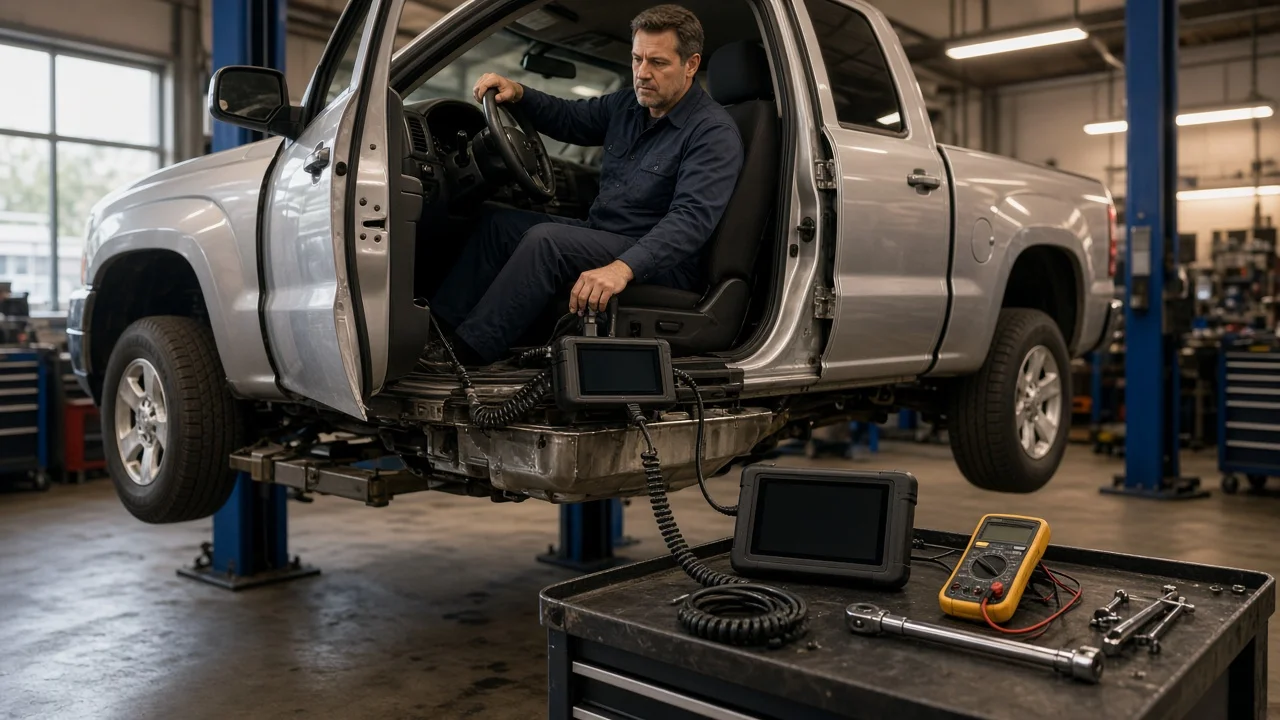
The 4L60E is a GM four-speed automatic with electronic shift control. Its computer keeps adjusting shift pressure as the transmission ages and wears. After a rebuild, a replacement unit, valve body or solenoid work, or a computer change, those stored adjustments may no longer match the hardware. A relearn clears the old values and lets the controller build new ones. This article covers what a relearn requires, how it is usually performed, and where its limits are.
The Short Answer
A 4L60E relearn normally has two parts. First, the stored adaptive shift values are cleared with a scan tool that supports the function. Then the vehicle is driven so the controller can record new values under the right conditions. On factory GM tools and many capable aftermarket scan tools, the reset is usually listed as a transmission adaptive pressure reset, often shortened to TAP reset. On most vehicles, no key-cycle or pedal sequence can substitute for the scan tool command.
A relearn makes sense after work that changes how the transmission responds to pressure commands. That includes an overhaul or replacement transmission, valve body or pressure control solenoid work, and a replaced or reprogrammed powertrain control module. A relearn is not a fix for a transmission that slips, flares or shifts harshly for an unknown reason. If the unit has a mechanical or hydraulic fault, clearing the adaptive values may hide the problem for a short time or make shift behavior worse.
How Adaptive Shift Learning Works
The controller sets line pressure through the pressure control solenoid. It then measures how long each upshift takes by comparing engine speed with output shaft speed. If a shift takes longer than the target, the controller adds pressure for that operating range the next time. If the shift is too quick, it reduces pressure. These corrections are stored as separate values for different throttle and torque conditions. That is why a transmission can shift well at light throttle and still feel off under moderate load.
The trouble starts when the hardware changes but the stored values stay the same. A worn transmission may have learned to use extra pressure to make up for clutch wear or internal leakage. A freshly rebuilt unit that inherits those values can shift firmer than intended. The opposite can happen too. Normal driving does gradually correct the values, but only in small steps and only within set limits. This is why many technicians reset and relearn instead of waiting for the controller to catch up on its own.
What Changes the Answer
Start by confirming the transmission type. The 4L60E was used for many model years in GM trucks, SUVs, vans and some performance cars. It also has close relatives, the 4L65E and 4L70E, which are similar but not identical. The vehicle's service parts identification label lists option codes, and M30 identifies a 4L60E. Controller software, adaptive strategy and scan tool menus differ by year and application, so the reset may appear under different names. Some older calibrations offer fewer adaptive functions.
Disconnecting the battery clears learned values on some vehicles but not on many later ones, so it is not a reliable reset method. Aftermarket tuning, standalone transmission controllers, shift kits and non-stock torque converters can also change or replace the factory adaptive behavior. In those cases, follow the instructions from the tuning or controller supplier instead of the factory procedure.
The fluid specification matters as well. Many of these transmissions originally used an earlier Dexron fluid, and GM later specified Dexron VI for service. Check the owner's manual or service information for your vehicle. An incorrect fluid type or level changes shift feel and can affect what the controller learns.
Before You Start the Relearn
Check the fluid level using the procedure for your vehicle, with the fluid at the specified temperature. Confirm that the fluid type is correct. Scan for diagnostic codes and resolve any that relate to the transmission, speed sensors, throttle position or engine load before resetting anything. Active faults can stop the controller from adapting or cause it to learn incorrect values. Review the service history so you know exactly what was replaced, rebuilt or reprogrammed. That record helps you decide whether a relearn is actually called for.
You also need the right tool. A basic code reader that only reads and clears codes usually cannot reset adaptive pressure values. Look for a scan tool that lists transmission special functions for your specific year and model. Ideally it should also display live fluid temperature and adaptive values. If you do not have one, many transmission shops can perform the reset quickly as part of a road test.
Driving the Relearn Cycle
After the reset, drive until the transmission fluid reaches normal operating temperature. You can confirm this on the scan tool rather than guessing. Choose a safe road where you can accelerate from a stop and shift through all four gears without interruption. From a stop, hold light to moderate, steady throttle and let the transmission upshift from first to second, second to third, and third to fourth without moving the pedal. Come to a stop and repeat this several times. Change the throttle opening slightly between runs, staying within the light to moderate range, so that more operating conditions get learned. Avoid wide-open throttle, manual range selection and abrupt braking during these runs. The exact number of repetitions and the required temperature window come from the vehicle's service information.
Pay attention to shift behavior as you go. Shifts may feel slightly firm or soft at first and should become more consistent over the following drives. If your scan tool shows adaptive values, watch whether they settle or keep climbing toward a limit. Normal mixed driving afterward continues to refine the values.
Limitations and Next Step
A relearn can only adjust pressure within the controller's limits. If shift quality does not improve, or if the adaptive values run up against a limit, there is an underlying problem the software cannot correct. Possible causes include low or unstable line pressure, worn clutches or bands, leaking seals or servos, valve body wear, a failing sensor or solenoid, or wiring faults. The same symptom can come from several of these. A harsh or delayed shift does not by itself prove that a particular part has failed. Pinpointing the cause takes code diagnosis, live data review and often a line pressure test.
Get professional help if you lack a capable scan tool, if codes keep coming back, or if the transmission slips, flares between gears, refuses to shift or has dark, burnt-smelling fluid. A qualified shop can confirm the correct procedure for your vehicle and identify the actual fault. The shop can then lay out repair options, from replacing a single component to a rebuild or replacement unit. If a replacement transmission is considered, confirm that it matches the original's configuration and calibration requirements before installation, and plan a reset and relearn afterward.