Identifying a 4L60E Transmission Pressure Control Solenoid
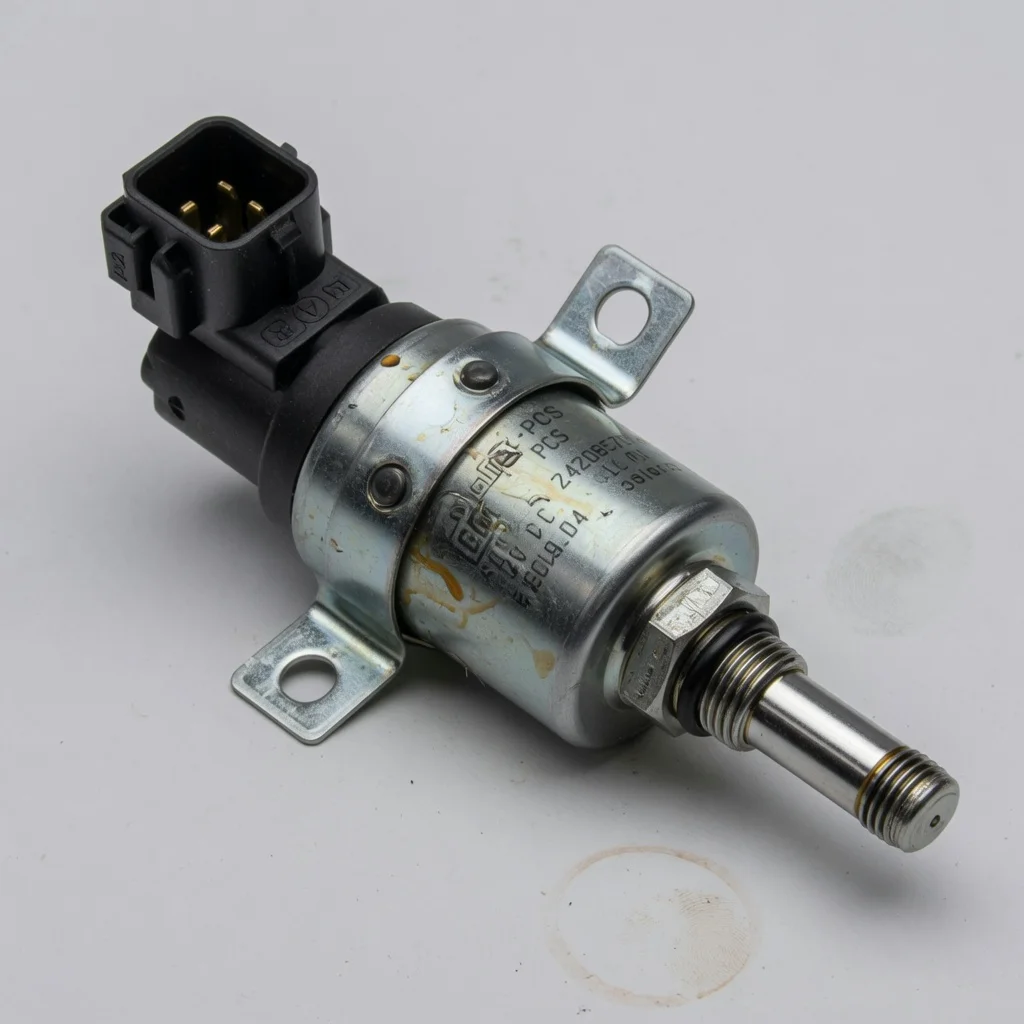
The pressure control solenoid in a 4L60E lets the engine computer set the transmission's line pressure. It is easy to confuse with the shift and torque converter clutch solenoids that sit near it on the valve body. Before buying parts or blaming this solenoid for a shift complaint, confirm that the transmission really is a 4L60E and that you are looking at the right component.
What the pressure control solenoid is and where it sits
In a GM 4L60E, the pressure control solenoid is often shortened to PCS. It is also called the electronic pressure control solenoid or the force motor. It is a variable force solenoid mounted on the valve body inside the oil pan. A retaining bracket holds it in place, so it is not threaded in like a sensor. Its two-wire connector plugs into the transmission's internal wiring harness. You can only see it after the pan and filter are removed.
On the valve body, shift solenoids A and B are compact on/off units. The 3-2 control solenoid and the torque converter clutch solenoids serve other circuits. The pressure control solenoid is bulkier than the shift solenoids and is retained differently. Solenoid layout and count changed across model years. Compare what you see with the component diagram in the service information for your year rather than with photos of another unit. A part that looks similar may still be a different solenoid or a different version of the same one.
How it controls line pressure
The powertrain control module varies the electrical current sent to the pressure control solenoid. The solenoid then adjusts a signal pressure that acts on the pressure regulator's boost valve, and that sets main line pressure. The relationship is inverse: more commanded current lowers line pressure, and less current raises it. With no current at all, line pressure goes to maximum. That can happen with an unplugged connector, a broken wire or a computer in fail-safe mode. Defaulting high protects the clutches from slipping, which is why an electrical fault in this circuit often causes firm or harsh shifts rather than soft ones.
The module chooses the pressure from several inputs, including throttle position, engine load, vehicle speed, fluid temperature and learned shift adaptations. Shift behavior therefore reflects the whole control system, not the solenoid alone. A faulty throttle position signal, a wrong temperature reading or corrupted adaptive values can make the transmission shift badly while the solenoid itself works correctly.
What changes the answer
First, confirm the transmission type. The 4L60E carries the GM RPO code M30, which is usually listed on the service parts identification label, and the case has its own identification tag. The related 4L65E and 4L70E use similar electronic control but have their own part numbers. The older non-electronic 4L60 uses a throttle valve cable to control pressure and has no pressure control solenoid at all. That distinction matters if a vehicle has had its transmission swapped or its records are unclear.
Within the 4L60E production run, the solenoid design, connector and internal harness changed. Parts from different years may not interchange even when they look close. Match fitment by vehicle year, VIN and RPO code. Also check whether the transmission has been modified. An aftermarket valve body, shift kit or reprogrammed shift calibration can change how pressure is controlled and how shifts feel. The correct fluid specification also matters: GM calls for a Dexron-family fluid, and the owner's manual or current service information states which grade to use.
Diagnostic codes need careful reading. P0748 is commonly associated with the pressure control solenoid electrical circuit, but code definitions vary with model year and control module. A circuit code points to a problem somewhere in the circuit, not necessarily the solenoid. The cause can be the internal harness, the case pass-through connector, the external wiring or the module's driver. Hydraulic faults can also produce pressure-related shift complaints without setting any code at all. Examples include a worn pressure regulator or boost valve, a pump problem, or debris in the valve body.
What the owner can do
Start by gathering evidence. Confirm the transmission from the RPO label or case tag. Read codes with a scan tool that can access transmission codes and live data. If your tool shows them, compare commanded pressure control solenoid current or pressure with what the system reports. Write down when the shift behavior occurs: cold or hot, light or heavy throttle, every shift or only certain gears, and whether shifts feel harsh, soft, delayed or slipping. Review the service history, including fluid changes, previous rebuilds and any earlier solenoid or valve body work.
Check the fluid level and condition using the procedure for your vehicle, typically at operating temperature with the engine running. Low fluid alone can cause erratic pressure and shifting. Dark, burnt-smelling fluid or heavy debris points to wear that a new solenoid will not fix. Inspect the external transmission connector and nearby wiring for damage, corrosion or fluid seeping through the connector, and repair those before replacing internal parts.
If the evidence points to the solenoid, replacing it means removing the pan and filter and working at the valve body. Use the correct part for your year and configuration. Keep the work area clean, tighten fasteners to specification and refill with the specified fluid. Some vehicles shift better after the adaptive values are reset or relearned, so check whether yours needs that. Other repair options include harness or connector repair, valve body service and a full overhaul. Choose based on what the diagnosis shows, not on the symptom alone.
Limitations and when to get help
Electrical specifications vary with model year and supplier, and only the factory service information for your vehicle can confirm them. These include solenoid resistance, expected current, connector pin assignments and line pressure values. A pressure gauge at the transmission's line pressure test port gives direct evidence of what the hydraulics are doing. Its readings are only meaningful against the correct specification table for your application.
Get help from a transmission specialist if codes return after a repair, if fluid is badly burnt, or if the transmission slips, flares or engages late. A shop can use a capable scan tool and pressure testing to tell an electrical fault from a hydraulic or mechanical one. Avoid extended driving while the transmission is slipping, because that can turn a solenoid or wiring problem into a much larger repair.