4L60E Transmission Limp Mode Reset: What Works and What It Means
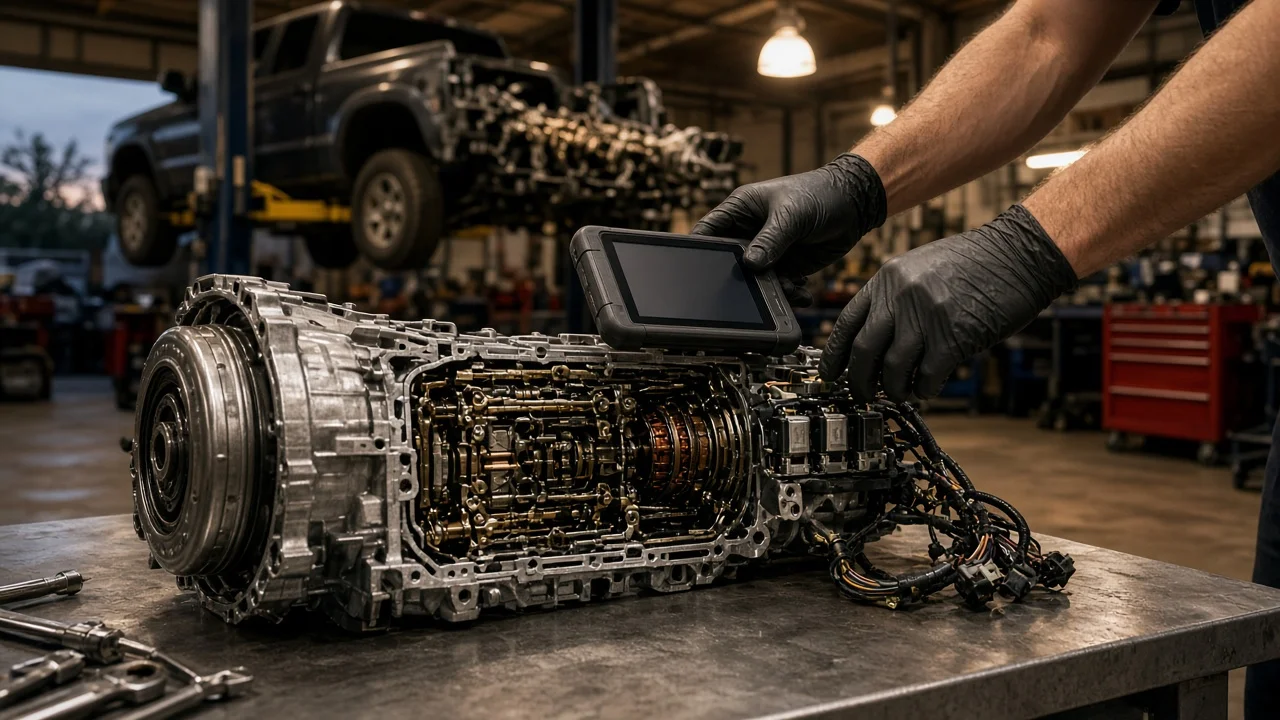
When a 4L60E drops into limp mode, the vehicle usually feels stuck in one gear, with firm engagements and no upshifts. Many owners want a quick reset, and sometimes a key cycle or clearing codes does bring normal shifting back. That only removes the symptom for now. The fault that triggered the protection strategy is still present until someone identifies it, and resetting the wrong way can erase information you need for diagnosis.
Can you reset 4L60E limp mode?
Often yes, but usually only temporarily. The simplest reset is to stop in a safe place, shut the engine off, wait briefly and restart. If the control module does not detect the fault again during its self-checks and the next drive, normal shifting may return. If the cause is intermittent, such as a loose connector or a voltage dip, the transmission may behave normally for a while. If the fault is constant, such as an open solenoid circuit, failsafe operation will come back right away or as soon as the triggering conditions repeat.
The other common reset is clearing stored diagnostic codes with a scan tool. Do this only after you have recorded the codes and any freeze-frame data. Disconnecting the battery also clears module memory on many vehicles, but it is a blunt method: it can wipe learned adaptive shift data, affect other modules and erase the codes that point toward the problem. None of these methods repairs anything. They tell the controller to try again, and how quickly limp mode returns is itself a useful clue.
How 4L60E limp mode works
The 4L60E is GM's electronically controlled four-speed automatic, used in many rear-wheel-drive and four-wheel-drive trucks, SUVs, vans and cars. Hydraulic pressure and clutches do the mechanical work, but the shift solenoids, the pressure control solenoid and the torque converter clutch solenoid are commanded by a control module. That module uses inputs such as vehicle speed, throttle position, fluid temperature and gear range selection to decide when and how firmly to shift.
When the module sees an electrical fault, an implausible sensor signal or a gear ratio that does not match what it commanded, it may stop controlling the solenoids. With the shift solenoids unpowered, the valve body's default hydraulic state typically holds the transmission in third gear in the forward ranges. With the pressure control solenoid off, line pressure rises to maximum, so engagements feel harsh. Converter lockup is normally disabled. Park and reverse usually still work because they are selected mechanically through the manual valve. The result is the familiar limp-home shift behavior: sluggish takeoff, no fourth gear and higher engine speed on the highway. The strategy exists to protect the unit while letting you reach a safe place.
What changes the answer
Start by confirming the transmission type. The 4L60E is closely related to the later 4L65E and 4L70E, while the earlier 700R4 and non-electronic 4L60 have no electronic limp mode at all. A stuck-in-gear complaint on those older units is mechanical or hydraulic, and no reset applies. On many GM vehicles, the service parts identification label lists option codes, and M30 identifies a 4L60E. An owner's manual or a dealer lookup by VIN can also confirm it.
Model year and platform also matter. Depending on the vehicle, transmission control may sit in the powertrain control module or in a separate transmission module. The available codes, the scan tool functions and whether adaptive values need a relearn after clearing all vary. Engine swaps with standalone controllers, aftermarket transmission controllers and modified calibrations behave differently again, and resets and code reading happen through that system's software. Part fitment varies too, so a solenoid, harness or valve body for one year is not automatically correct for another.
Operating conditions change what a reset proves. Some faults appear only when the fluid is hot, in cold weather, under heavy load or over rough pavement. If limp mode shows up only after twenty minutes of highway driving, a restart in the driveway and a short test loop tell you very little.
Check these before you reset
Read and record the diagnostic codes, including pending and history codes, with a scan tool that can access transmission data. Basic code readers may show only generic powertrain codes and miss manufacturer-specific ones. Write down the freeze-frame data and the circumstances: speed, temperature, load, weather and any recent work. Typical 4L60E-related codes involve shift solenoid circuits or performance, the pressure control solenoid, the range switch, the fluid temperature sensor, incorrect gear ratio or GM's transmission slipping code. Each one points to a circuit or a symptom, not a confirmed failed part. A solenoid circuit code, for example, can come from damaged wiring, a corroded connector or a module problem just as easily as from the solenoid itself.
Next, check the basics. Inspect the fluid level and condition using the procedure for your vehicle, which usually involves warm fluid, a running engine and level ground. Use the fluid specification listed for that model year, typically a Dexron grade, but confirm it rather than assuming. Note any burnt smell, very dark color or visible debris. Look at the harness connector on the transmission case and the nearby wiring for fluid intrusion, corrosion, chafing or a loose fit. Also check battery condition and charging voltage, because low or unstable system voltage can cause erratic module and solenoid behavior.
Reset, then observe
Once the codes are recorded and the basics are checked, perform a key cycle or clear the codes and take a gentle test drive that includes the conditions under which the problem first appeared. Watch the shift behavior: does it take off in first, upshift through all four gears and lock the converter at cruise? If limp mode stays away, keep monitoring and recheck for pending codes after several drives. If it returns immediately or the same code resets, stop resetting and move on to diagnosis; repeated clearing only hides the pattern.
Keep driving in limp mode to a minimum. Harsh engagements, no converter lockup and high engine speed add heat and wear, and a transmission with a developing internal problem can get worse quickly. Driving gently to a safe place or a shop is the intended use of failsafe operation, not daily commuting.
Limitations and when to get professional help
Limp mode looks the same whether the cause is a damaged connector, a failed solenoid, a faulty sensor, worn internal components or a module fault, so the symptom alone cannot identify the part. Service history helps narrow it down: a recent fluid service, a rebuild, overheating, towing or a known leak all change which causes are likely. Exact checking procedures, specifications and relearn steps depend on the vehicle, so use service information for your specific model year and platform.
Get a transmission shop involved if codes point to internal circuits, ratio or slipping faults, if the fluid is burnt or contains metal, or if limp mode keeps returning after the basics check out. A shop can test circuit resistance and voltage, measure line pressure and view live data with factory-level tools. Repair options range from a wiring or connector repair to solenoid or valve body work to a rebuild or replacement unit. The right choice depends on the diagnosis, not on the symptom or the success of a temporary reset.