Choosing Transmission Cooler Lines for a 4L60E
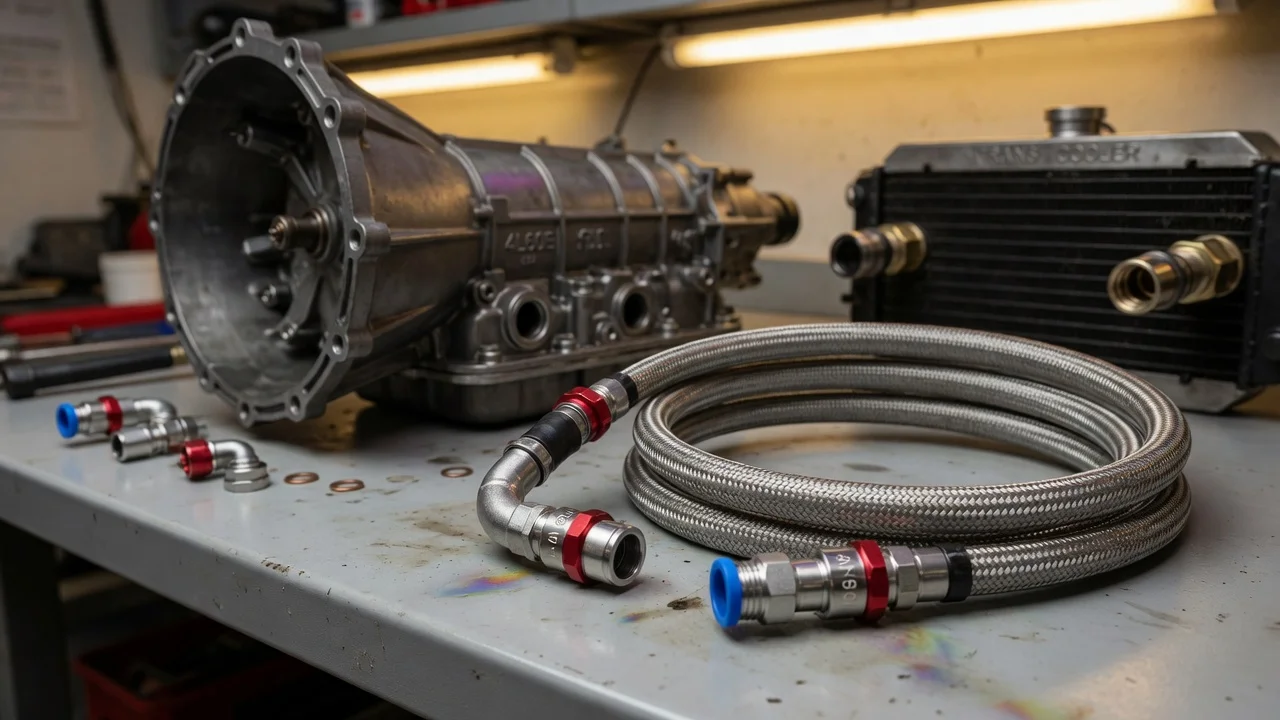
Cooler lines carry automatic transmission fluid from a 4L60E to the radiator cooler, or to an auxiliary cooler, and back again. When a line weeps, kinks or rubs through, the replacement has to match the case and radiator fittings, route safely and handle hot fluid under pressure. This guide explains how to choose 4L60E transmission cooler lines for your truck, SUV or car, what to verify before ordering, and when a new line will not solve the underlying problem.
Define the job the lines must do
Start by confirming the transmission type. The 4L60E is an electronically controlled four-speed automatic used in many GM rear-drive trucks, SUVs and cars from the 1990s onward. The earlier hydraulically controlled 4L60 and the 700R4 have a similar layout and are sometimes confused with it, so people shopping for 4L60 transmission cooler lines may actually need parts for either one. Check the transmission identification tag, the vehicle's service parts label and your service history rather than relying on the name alone, because routing and fittings changed across years, engines, cab styles and drive configurations.
Next, decide why you need lines. Replacing a leaking or corroded factory line on a daily driver calls for an exact-fit replacement. Adding an auxiliary cooler for towing, plowing or a truck with larger tires means extra length and new connections. An engine or transmission swap, or a rebuilt unit going into a vehicle with an unknown cooler setup, may need custom lines built to measured lengths. Each job points to a different product, so settle this before comparing prices.
If the reason is a symptom such as low fluid, slipping, harsh or delayed shift behavior, or diagnostic codes related to fluid temperature, confirm the cause first. A wet line near the case can be fed by a leak higher up, and overheating can come from a restricted cooler, converter clutch problems or a faulty sensor. Clean, inspect and recheck before treating a line as the failed part.
Check compatibility before ordering
Fitment comes down to both ends of each line and the path between them. At the transmission, many 4L60E cases use push-in connectors held by retaining clips, while other years and some aftermarket setups use threaded fittings with tube nuts. The radiator end may also be a quick-connect or a threaded fitting, and its size depends on the radiator. Match what is actually on your vehicle, including a replacement radiator if one was installed, rather than trusting a generic listing.
Measure the tube outside diameter; common sizes include 5/16 inch and 3/8 inch, and mixing sizes without proper adapters invites leaks. Record the year, model, engine, two- or four-wheel drive, cab and bed length, and whether the vehicle has a factory tow package or auxiliary cooler, because these change line length and routing. Before removing anything, note which port is the feed and which is the return, and photograph the brackets and clips so the new lines can be secured in the same places.
Every hose, seal and O-ring in the circuit must be compatible with automatic transmission fluid at operating temperature. GM specifies Dexron-type fluid for the 4L60E; follow the fluid specification in your owner's manual or service information when topping up after the job, and confirm that any aftermarket hose is approved for that fluid.
Features that affect the choice
OE-style preformed lines replicate the factory bends and usually work with the original clips and brackets. They are the closest thing to a bolt-in replacement, but quality varies. Check that bends are smooth without flattened sections, that crimped hose sections look uniform, and that the ends include the correct O-rings or retainers. Coated or stainless tubing resists corrosion better than bare steel where roads are salted, which is often why the original lines failed.
Braided stainless hose with AN fittings and rubber transmission cooler hose with barbed connections are flexible and suit custom routing or auxiliary coolers. They require adapters at the case and radiator, careful length planning and protection from chafing. Rubber hose should be specifically rated for transmission oil cooler use; heater hose and fuel line are not substitutes. Clamped connections need a barb or bead on the tube to hold reliably.
Treat labels such as heavy-duty, high-flow or performance with caution. Useful evidence is concrete: tube material and diameter, hose type, pressure and temperature ratings stated by the maker, connector or thread type, and an application list that matches your exact configuration. A larger line does not automatically improve cooling if the fittings or the cooler itself remain the restriction.
Limitations and ownership costs
Cooler lines move fluid; they do not cool it on their own or repair internal damage. If the transmission failed and was rebuilt or replaced, debris can remain in the cooler and lines, and many rebuilders expect the cooler circuit to be flushed or replaced and checked for flow before installation. Skipping that step can contaminate a fresh unit.
Budget for the extras: fluid to replace what drains out, new O-rings or retaining clips, adapters for aftermarket fittings, and possibly a quick-connect release tool. Hard lines on trucks can be awkward to remove without moving other components, so labor time may exceed the part price. After installation, check the fluid level using the procedure in your service information, look for leaks after a test drive, and periodically inspect routing for contact with the exhaust, frame or suspension. Rubber sections age and belong in routine inspections.
If the connector type or routing is unclear, a transmission or hydraulic hose shop can measure and fabricate lines. That is one of the repair options worth pricing alongside a ready-made kit, especially for swaps and auxiliary cooler installations.
Build a practical shortlist
Before comparing prices, write down the verified details: transmission type and year, vehicle configuration, connector style and size at both the case and the radiator, tube diameter, and whether an auxiliary cooler is part of the circuit. Keep only products whose listed fitment and connector types match all of them.
Compare the remaining options on the same points: tube or hose material and corrosion protection, whether O-rings, clips and brackets are included, whether the line is preformed or needs custom routing, stated suitability for transmission fluid, and the seller's return policy if fitment proves wrong. Favor clear specifications over claims, and choose the simplest option that fits the job, whether that is an exact OE-style replacement or a hose kit for an added cooler.