42RLE Transmission Valve Body Identification: Confirming the Right Unit
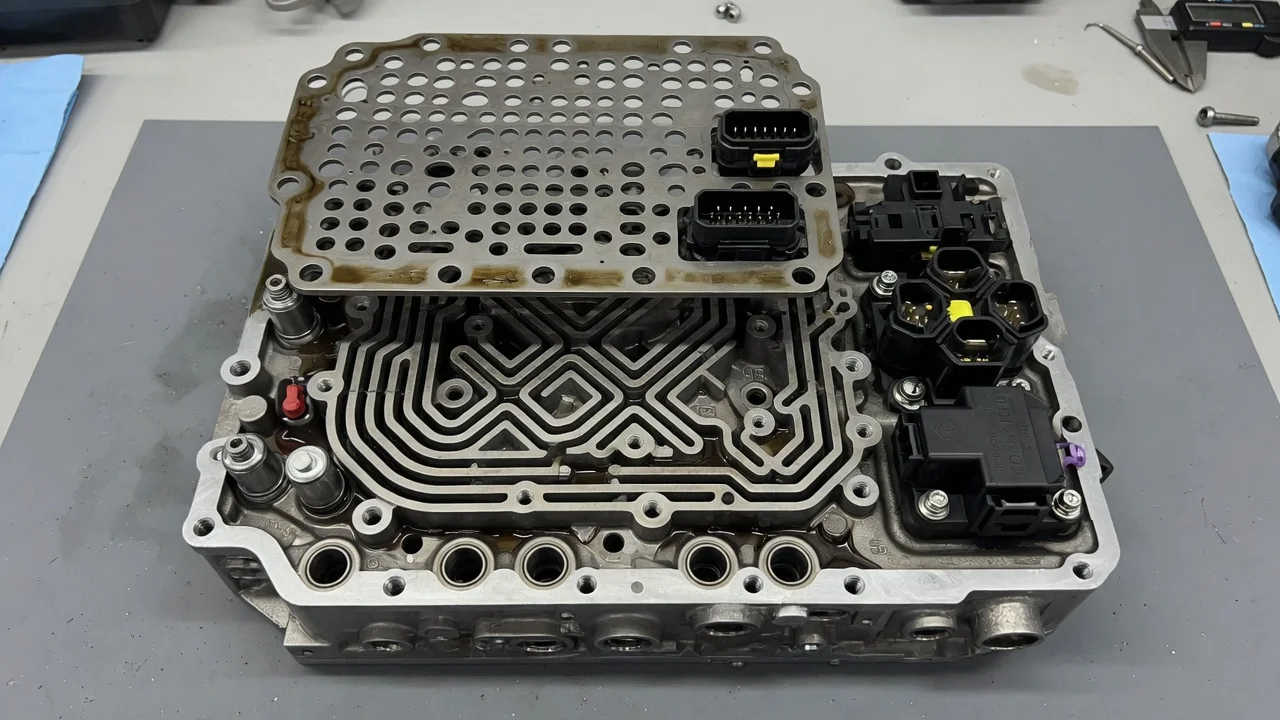
The 42RLE is a four-speed, electronically controlled automatic used in a range of Jeep, Dodge and Ram trucks and SUVs. If you need a replacement valve body or are trying to make sense of a shift problem, start by confirming two things: that the transmission really is a 42RLE, and which version your vehicle carries. This guide covers how to identify the unit, what the valve body does, and why a symptom alone does not prove the valve body has failed.
Identifying a 42RLE Valve Body
Confirm the transmission type before looking at the valve body. The most reliable route is the vehicle's VIN. A dealer parts department or a reputable parts catalog can decode it and show the factory transmission. The transmission case also carries an identification tag or stamped markings with a part number and build information. Read these directly rather than relying on the model and engine alone, because some vehicles offered more than one automatic over their production run.
Once you know the transmission is a 42RLE, identify the valve body itself by the part number of the assembly, or by the numbers cast or stamped into the valve body and printed on the attached solenoid and pressure switch assembly. The 42RLE shares design ideas with Chrysler's earlier electronic four-speeds, but do not assume its valve body is interchangeable with those units. Within the 42RLE line, part numbers were revised over the production years. Match the replacement to your VIN or to the number on the unit you are removing, not just to the year and model.
How the Valve Body Controls Shifting
The 42RLE uses clutch-to-clutch shifting. Instead of bands, it applies and releases a set of hydraulic clutches in different combinations to produce each gear. The valve body is the hydraulic control center for this process. It is a machined assembly of passages, valves and springs that takes pressurized fluid from the pump and routes it to the correct clutch at the correct time.
Electronic control sits on top of the hydraulics. Depending on model year, this is a separate transmission control module or a function built into the powertrain controller. The controller reads inputs such as input and output shaft speed, throttle position and engine load. It then commands solenoids in the solenoid and pressure switch assembly bolted to the valve body. Those solenoids direct fluid through the valve body circuits, and pressure switches report back whether a circuit actually received pressure. A manual valve linked to the shift lever selects park, reverse, neutral and the drive ranges.
The controller also adapts over time. It adjusts clutch fill timing and pressure to compensate for wear and normal variation. This adaptive learning is why shift quality can change after a battery disconnect, a controller reset or the installation of new parts.
What Changes the Answer
Several factors affect both which valve body fits and how to interpret a problem. Model year matters because component revisions and controller changes occurred during production. The vehicle line and drivetrain configuration can change the overall transmission part number. For that reason, confirm the specific valve body or solenoid assembly number rather than assuming every 42RLE takes the same part.
Service history is the other major variable. A transmission that has been rebuilt or swapped may not match its original build data, and earlier repairs may have introduced updated or mismatched components. Fluid history matters too: the wrong fluid, a low level or heavily degraded fluid can produce shift complaints that resemble a valve body fault. Finally, some remanufactured valve bodies are sold as complete assemblies with the solenoid pack, while others are bare castings. That difference changes what you are actually buying and how the installation goes.
What the Owner Can Do
Start by recording the VIN and reading the transmission identification tag. Then check fluid level and condition using the procedure for your vehicle. Some applications have a dipstick, while others need a specific tool or a temperature-dependent check, so follow the service information rather than guessing. Chrysler specifies ATF+4 for this transmission family. Confirm the fluid specification in your owner's manual or on the fill label, and do not top off with a generic fluid.
Next, retrieve diagnostic codes with a scan tool that can communicate with the transmission controller. A basic engine code reader may not show transmission data. Note the shift behavior in detail. Is the problem harsh engagement, a slip, a flare between gears, delayed reverse, or the transmission holding a single gear in a protective default mode? Does it happen cold, hot or all the time? Codes and patterns point toward a circuit or system. They do not confirm which part has failed. A solenoid circuit code, for example, can come from wiring, a connector, the solenoid assembly or the controller.
Repair options range from correcting fluid level or wiring faults, to replacing the solenoid and pressure switch assembly, to replacing the valve body, to a full rebuild when internal clutches are worn. After replacing the valve body, solenoid assembly or controller, these transmissions generally need the adaptive values reset and a relearn procedure run with a compatible scan tool. Skipping that step can leave poor shift quality that looks like a defective new part.
Limitations and Next Step
This article explains identification and diagnostic logic. It does not provide torque values, pressure specifications or a teardown procedure, and those details vary by revision. Part numbers, connector styles and controller software can differ between vehicles that look identical from the outside. Always confirm fitment against your VIN or the removed unit before ordering.
Seek professional help when codes persist after basic checks, when the transmission slips under load, or when the fluid shows heavy debris or a burnt smell. These conditions can indicate internal clutch wear that a valve body cannot fix. A transmission specialist can perform line pressure tests, check for controller software updates, inspect for internal wear and run the relearn procedure. That combination is often what separates a confirmed valve body failure from a symptom with a different cause.