Upgrading 3rd Gen 4Runner Brakes With Tundra Parts
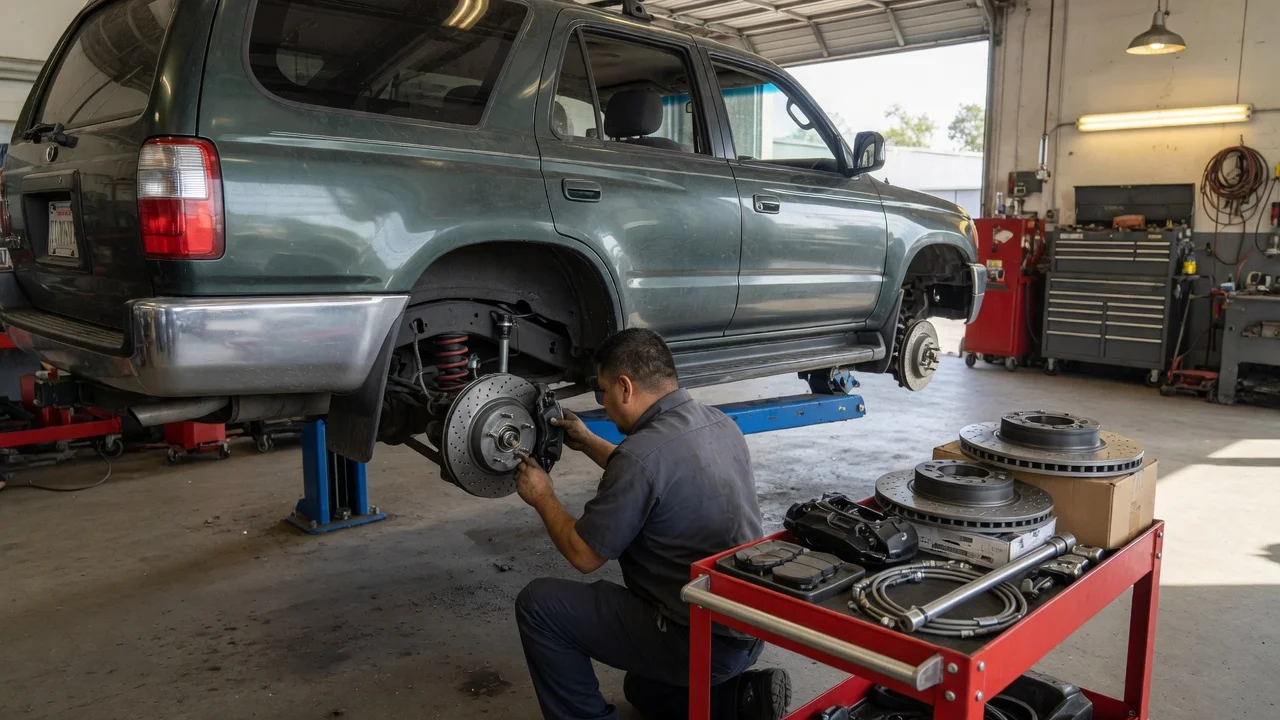
The short answer
The Tundra brake upgrade replaces a third-generation 4Runner's front calipers and rotors with parts from an early first-generation Toyota Tundra. The swap is widely discussed among owners. Its appeal is a larger front brake package from the same manufacturer, which owners describe as offering more braking capacity and better resistance to fade than the original setup. Whether the swap suits a particular truck depends on the donor parts' exact model years, wheel clearance, and the condition of the rest of the braking system. This article does not include verified caliper part numbers, rotor dimensions, or measured stopping-distance results, so treat those as details to confirm before buying parts.
What the upgrade covers
The third-generation 4Runner is generally identified as the 1996 to 2002 model years in the North American market. The upgrade covers the front brakes only. A caliper is the hydraulic clamp that presses the pads against the rotor, and the rotor is the disc that turns with the wheel. The swap generally involves:
Tundra front calipers taken from the specific early Tundra model years that owners identify as compatible; Matching Tundra front rotors, because the calipers are sized for the larger disc; Pads that match the Tundra calipers; Fresh brake fluid, plus a full bleed of the system after installation
Calipers from later Tundra generations, or from other years within the first generation, may not be interchangeable. Confirm the donor years and caliper identification against current parts catalog data rather than relying on the Tundra name alone.
What to verify before committing
Wheel clearance: the larger caliper and rotor can contact the inside of some wheels, especially smaller-diameter or tightly spoked designs. Check your specific wheels. Donor part accuracy: confirm the caliper and rotor part numbers for the intended Tundra years, because the wrong caliper will not fit or will not match the rotor. Hub and mounting fit: confirm that the calipers bolt to your 4Runner's front steering knuckles and that the rotors fit your hubs without modification. Toyota uses different front hardware on two-wheel-drive and four-wheel-drive versions of this generation. Supporting components: the swap does not address the master cylinder, brake hoses, rear brakes or fluid condition. Worn components in those areas can limit any improvement. Pedal feel: changing caliper piston area can change how the pedal feels. Information on whether this swap requires master cylinder changes was not available for this article.
How much improvement to expect
Owners commonly describe stronger, more consistent stops, particularly in heavier trucks with larger tires, added armor, or a towing load. These reports are owner experience, not controlled testing. This article has no independent measurements of stopping distance or fade resistance comparing the stock and Tundra setups, so the size of the improvement cannot be stated here. Tire size and weight, pad compound, and overall vehicle weight also have a large effect on real-world braking.
Is it the right choice?
On balance, the upgrade is a sensible option to research if you have added weight or larger tires to a third-generation 4Runner and the stock front brakes feel overworked. If the truck is near stock, quality pads, rotors, and fresh fluid in the original system may be enough. Brakes are safety-critical. Do the work using the factory service information and correct torque specifications, or have a qualified shop do it. Bleed the system thoroughly and bed in the new pads before relying on the truck in normal traffic.
Information gaps to close
Exact Tundra donor model years and caliper identification; Front rotor diameter and thickness for the stock and Tundra parts; Minimum wheel size and wheel designs confirmed to clear the larger brakes; Whether two-wheel-drive and four-wheel-drive 4Runners differ in compatibility; Any measured braking performance comparison