3rd Gen 4Runner Sway Bar Bushings: Symptoms, Fitment and Replacement
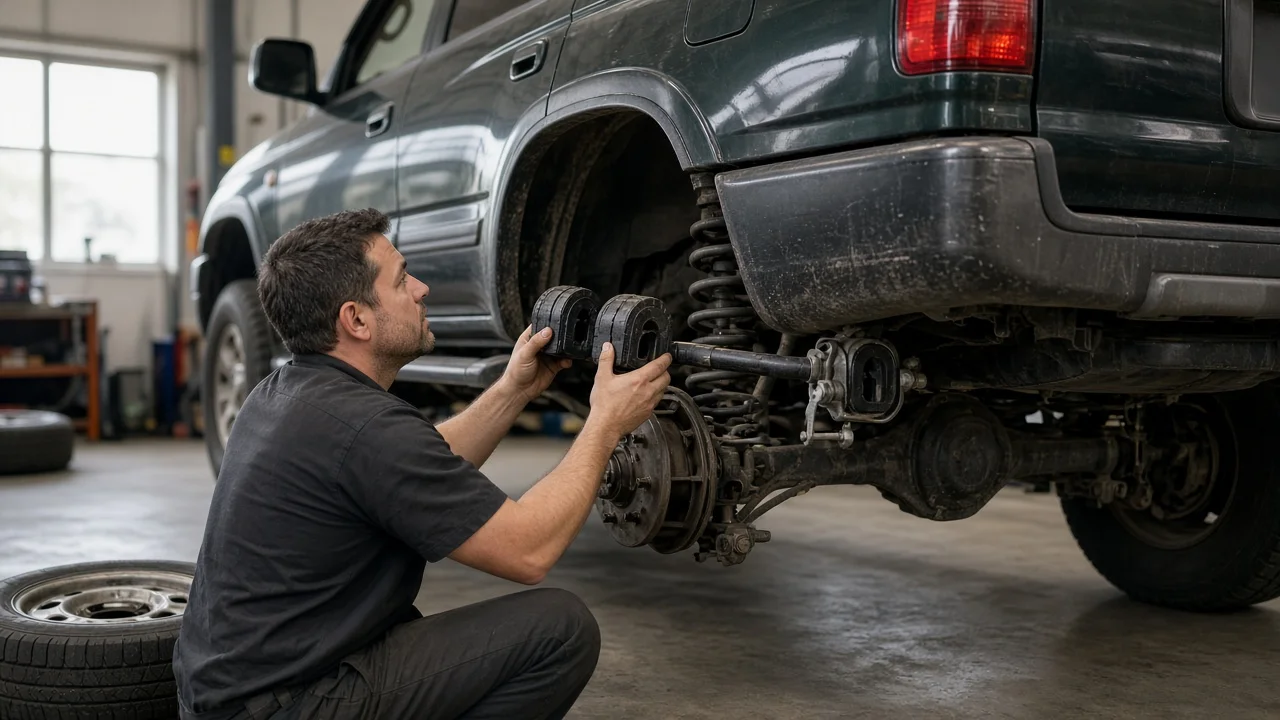
On a third-generation Toyota 4Runner, built for the 1996 to 2002 model years, the sway bar bushings are small rubber or polyurethane parts that hold the stabilizer bar to the frame. When they harden, crack or wear oval, the truck can clunk over bumps, squeak at low speed and feel looser in turns. This guide explains what the bushings do and what affects which parts fit your truck. It also covers how to inspect them and what to consider before ordering replacement 3rd gen 4Runner sway bar bushings.
Short answer: are worn bushings worth replacing?
Yes. Worn stabilizer bar bushings are usually worth replacing, and on this truck the job is typically one of the simpler suspension repairs. Bushings are inexpensive wear parts, and on vehicles of this age the original rubber has often taken a set or cracked. However, bushings are rarely the only possible source of a clunk or a vague feel. Sway bar end links, control arm bushings, ball joints, shock mounts and steering components can cause similar complaints, so new bushings fitted without an inspection may not fix the noise you are chasing. The correct bushing also depends on the bar fitted to your specific truck. That can vary with drivetrain, model year and trim, so confirm fitment by part number or by measuring the bar. Do not assume one size fits every 4Runner from this generation.
How the stabilizer bar and its bushings work
The front stabilizer bar, also called an anti-roll bar or sway bar, is a torsion spring that links the left and right sides of the front suspension. Its ends connect to the lower control arms through end links. Its center section passes through two bushings, which brackets clamp to the frame. When the body leans in a turn, one wheel moves up relative to the other and the bar twists. That twisting resistance reduces body roll.
The bushings let the bar rotate while holding it firmly in place. When they are healthy, the bar pivots smoothly and silently. When the rubber hardens, compresses or tears, a gap opens between the bar and the bushing or between the bushing and the bracket. The bar can then shift or knock against the bracket. That produces a clunk on uneven pavement, a creak during slow articulation such as driveway entrances, and a slight delay before the bar starts resisting roll. Depending on trim and options, some trucks also have a rear stabilizer bar with its own bushings, and the same principles apply there.
What changes fitment and the result
Fitment is the main variable. The bar diameter determines the inner bore of the bushing, and bar sizes are not necessarily the same across every 2WD and 4WD truck, model year or trim from this generation. Whether your truck has a rear bar at all, and which one, also depends on how it was built. Because vehicle configuration matters, look up parts using the VIN or the original part number. Alternatively, measure the bar diameter with calipers at a clean section near the bushing before you order. Aftermarket bushings sold in a range of sizes are only useful if you know the actual diameter.
Modifications and operating conditions also change the picture. A lifted 4Runner may use extended end links, aftermarket bars or quick disconnects. These change the geometry the bushings see and can make the original parts list irrelevant. Trucks driven off road, on salted roads or with frequent heavy loads tend to wear rubber and corrode brackets faster than trucks driven mostly on pavement. Replacement is generally based on the condition found during inspection rather than a fixed mileage, so check what your maintenance schedule and service history show for your truck.
How to inspect the bushings
Start with a visual inspection. Park the truck on level ground with the engine off, and use wheel chocks and proper jack stands if you need to get underneath. Look at the two front bracket locations on the frame. Signs of wear include visible cracks, rubber squeezing out of the bracket, a bushing that looks flattened or oval, and rust staining around the bar. A bright worn band on the bar shows where it has been rotating or sliding against something it should not touch.
Next, check for movement. With the weight on the wheels, gently use a pry bar between the stabilizer bar and the frame near each bracket, and watch whether the bar shifts within the bushing. A little flex in the rubber is normal, but a visible gap or a knock is not. Check the end links at the same time by looking for torn boots and play at the ball studs, because worn links are a common cause of similar noises. Note when the noise happens. A clunk over single-wheel bumps points toward the stabilizer system, while noise during braking or steering more often points elsewhere. Record what you find in the service history so later changes can be compared.
Choosing and installing replacements
Replacement bushings come in two broad types. Rubber parts that match the original design tend to be quiet and forgiving, and they generally do not need lubrication. Polyurethane bushings are firmer and resist deflection, which can sharpen steering response slightly. However, they can squeak unless they are lubricated with the grease supplied or recommended by the manufacturer, and some need periodic re-greasing. For a daily-driven truck where quiet operation matters most, rubber is usually the simpler choice. Polyurethane suits owners who accept some maintenance in exchange for a firmer feel. Replace bushings in pairs to keep both sides consistent. If inspection shows the end links are worn, many owners replace them at the same time.
The job typically involves removing the bracket bolts on each side and sliding the old bushings off the bar. Clean rust and debris from the bar and brackets, then fit the new bushings in the same position. Do not grease rubber bushings unless the bushing instructions call for it. Tighten fasteners to the torque values in the factory service manual for your exact model year rather than a generic figure. Reuse or replace hardware according to its condition. Seized or corroded bolts are common on older trucks, and penetrating oil and patience help. If a bolt breaks off in the frame, stop and reassess before continuing.
Limitations and when to get help
This guide cannot confirm which bar or bushing your truck uses, and it does not replace the manufacturer specifications for your vehicle. Part numbers, bar sizes and torque values should come from the factory service information for your model year, drivetrain and trim, or from a parts catalog that decodes your VIN. Previous owners may also have changed bars, lift components or end links, so the parts on the truck may not match the original build.
Get professional help in any of these situations: the noise continues after new bushings, you find play in ball joints, tie rod ends or control arm bushings, the frame near the brackets shows heavy rust, or the truck pulls, wanders or steers unpredictably. These symptoms can involve safety-critical parts beyond the stabilizer system. A suspension inspection by a qualified mechanic, ideally one familiar with older Toyota trucks, will confirm whether the bushings are the cause before you spend more on parts.