3800 Supercharger Bypass Valve: Identification and Checks
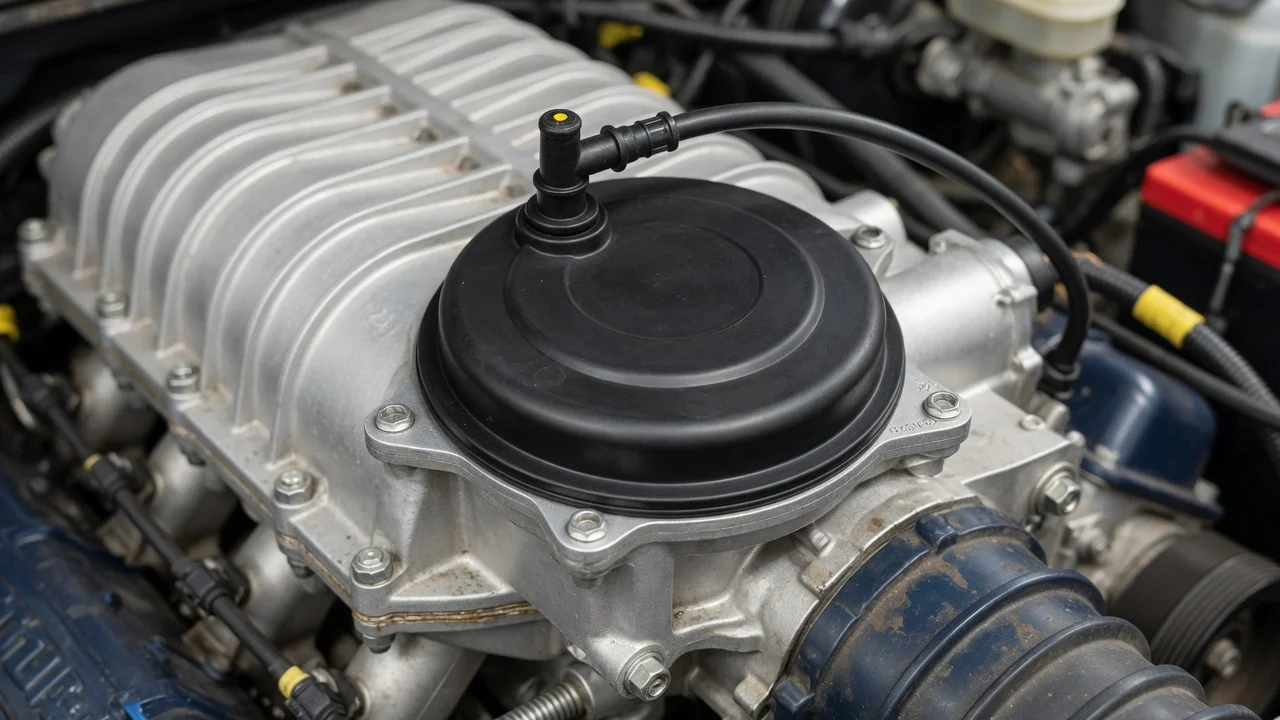
On the supercharged 3800 V6, the bypass valve lets the supercharger recirculate air when boost is not needed and closes so the engine can build boost under load. When the valve sticks, its actuator leaks or it loses its vacuum signal, the car can feel flat, idle poorly or behave inconsistently. This guide explains how to identify the valve, describe what you notice and work through checks in a sensible order before buying parts. Confirm every detail against the service information for your exact vehicle configuration.
Establish the symptoms
Start by finding the parts involved. On the supercharged 3800, the bypass valve sits on the supercharger assembly near the throttle body and inlet. It is operated by a round vacuum actuator, a diaphragm canister fed by a small rubber hose from intake manifold vacuum, with a rod or linkage that moves the valve. The exact shape and mounting differ between engine generations and model years. Use the engine code from the VIN and the matching service information to confirm what you are looking at.
Then write down when the problem happens. Note whether it appears cold or warm, at idle, during light cruising or only at wider throttle. Record related signs such as a hiss or whistle near the supercharger, a high, low or unstable idle, an illuminated check engine light, stored trouble codes, weaker acceleration, a change in supercharger noise or worse fuel economy. Also list recent changes: air filter service, belt replacement, intake or throttle body work, disturbed vacuum hoses, an aftermarket pulley or a tune. A problem that began right after work in the area points first to whatever was touched.
Distinguish plausible causes
Bypass valve faults fall into a few patterns. If the valve stays open or does not close fully under load, boost leaks back to the inlet. The engine then feels more like a non-supercharged version while idle may seem normal. If the actuator diaphragm is torn or its hose is cracked, the system has a vacuum leak. That tends to cause a hiss, an unsteady or raised idle and possibly lean-related codes, and the valve may also fail to open at idle. If the valve sticks closed, power under load may feel normal, but the supercharger keeps working when it should be bypassing, which can change its sound at idle and cruise.
Several other faults produce similar complaints. Vacuum leaks elsewhere on the intake, a split duct between the airflow sensor and throttle body, a slipping or worn drive belt, a restricted air filter, a faulty airflow sensor, weak fuel delivery, exhaust restriction and internal supercharger wear can all reduce power or upset the idle. A hiss that stops when the actuator hose is briefly pinched supports a diaphragm or hose leak. An actuator that holds vacuum and moves smoothly weakens the case against it. Belt squeal or glazing points to the drive rather than the valve.
Checks in a useful order
Begin with safe observations with the engine off and cool. Inspect the actuator hose along its full length for cracks, softness, oil soaking or a loose fit at either end. Check that the actuator is firmly mounted and that the rod and linkage are intact, connected and free of obvious corrosion or bending. If the service information permits, confirm that the linkage moves through its travel without binding. With the engine idling, listen near the actuator for a hiss. Watch whether the rod changes position when a helper briefly opens the throttle. Keep hands, hair and clothing well away from the belt and pulleys.
The next checks need tools. A hand vacuum pump applied to the actuator shows whether the diaphragm holds vacuum and whether the rod moves fully and returns. Compare the result with the manufacturer specifications rather than a general rule. A scan tool can read stored codes, freeze frame data, manifold pressure and fuel trims at idle and under load. A smoke test locates intake and vacuum leaks that are hard to hear. Measuring boost on the road needs a safe location and a helper, or should be left to a technician. Removing the supercharger, checking the valve shaft inside its housing or inspecting the supercharger internally belongs with a qualified technician.
Interpret the findings
If the actuator holds vacuum and the rod moves smoothly, the diaphragm and external linkage are likely sound. That does not prove the valve plate inside the housing seals or moves freely, because it can still bind or be damaged. If the actuator will not hold vacuum, a diaphragm leak is established. Still inspect the hose and connections before ordering parts, since a leak at the fitting can look the same. If the hose itself is cracked, replace it first and recheck. A cheap hose may be the whole fault.
Scan data adds context but rarely names the part on its own. Fuel trims that run strongly positive at idle and improve as load rises fit an unmetered vacuum leak, but a smoke test is needed to show where it is. If the valve is confirmed to close and boost is still low, look elsewhere: the belt, intake ducting leaks, the airflow sensor, fuel delivery or the supercharger itself. Replace a part only when a specific test result ties the symptom to it.
Urgency and next action
A bypass valve fault usually affects drivability rather than creating an immediate hazard, but its symptoms overlap with more serious problems. Stop driving and arrange inspection if the check engine light flashes, if you hear grinding, heavy rattling or other new mechanical noise from the supercharger, if the belt squeals hard or shows damage, or if you smell fuel. Do the same if the engine overheats or other warning lights appear. No remaining safe mileage can be predicted from these symptoms, so decide based on what the car is doing now.
For the repair visit, bring the model year, model, engine code from the VIN and mileage. Add the service history, including belt and supercharger lubricant service where it is recorded, and any stored codes with freeze frame data. Include your symptom log covering operating conditions, timing and recent work, plus the results of any checks you made. Ask the shop to confirm that any replacement actuator or valve matches your engine generation, and to retest the original symptom after the repair.