20W-50 and 15W-40 Engine Oil: When These Grades Suit a Car
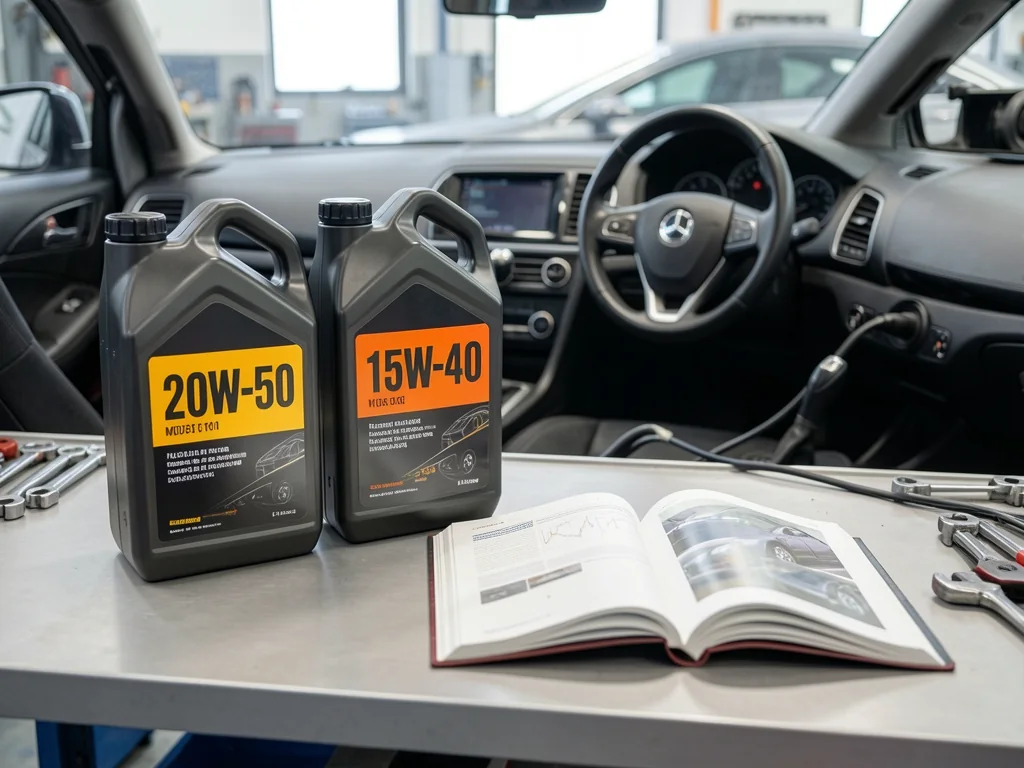
A 20W-50 engine oil and a 15W-40 engine oil sit at the thick end of the multigrade range, and both still have a place in certain garages. Classic cars, air-cooled engines, race builds and some hot-climate vehicles may call for them. Many modern engines, however, are engineered around much thinner oil. Whether either grade suits your car depends on documented requirements, not on age, mileage or weather alone.
What the 20W-50 and 15W-40 Labels Tell You
Whether a bottle reads 20W50, 20W-50 or 20 W 50 engine oil, the label is an SAE viscosity grade for a multigrade oil. It describes how the oil flows under standardized tests, not how good the oil is or which vehicles it fits. The number before the W relates to cold cranking and pumping limits. These limits govern how easily a cold engine turns over and how quickly oil reaches critical parts. The number is not a minimum outdoor temperature, so 20W does not mean the oil is safe at twenty below.
The second number, 50 or 40, reflects viscosity requirements at specified high test temperatures that represent a warm engine. A 50 grade must stay thicker under those conditions than a 40. That affects film strength, oil pressure readings and how much energy the engine spends moving oil. Viscosity is only part of the picture, though. Performance specifications and manufacturer oil approvals define additive chemistry, deposit control and emissions compatibility. An oil can carry the right grade and still be the wrong choice for a particular engine.
When 15W-40 Is Suitable for a Passenger Car
The only reliable answer to whether 15W-40 engine oil can be used in a car is the vehicle's owner's manual or service documentation. Some older passenger cars list 15W-40 among permitted grades for certain ambient temperature ranges, while other engines do not list it at all. Much of the 15W-40 on store shelves is made for heavy-duty diesel trucks and equipment. The viscosity label alone does not tell you whether a product was designed or approved for a passenger car engine.
For gasoline or diesel passenger cars, look for the exact performance specification and manufacturer approval your documentation requires. It should be printed on the product label or technical data sheet. A close match or a vague claim is not enough. Emissions equipment deserves special attention, because catalytic converters and diesel particulate filters can be sensitive to ash-forming additives and phosphorus content. An oil marketed for trucks or commercial engines may be built around different emissions hardware and duty cycles, so confirm it is compatible before pouring it into a car.
20W-50 in Classic and Air-Cooled Cars
Some classic cars and air-cooled engines specify or permit 20W-50, which is why the grade remains familiar in vintage and enthusiast circles. Still, a car's age or its lack of a radiator does not by itself make 20W-50 correct. Start with the original lubrication chart for that engine, including its ambient temperature guidance. Then check whether a rebuilder has documented different requirements. Air-cooled designs rely heavily on oil to carry heat away, but the approved grade still has to come from guidance written for that specific engine.
Additives matter for certain valvetrain designs, especially older flat-tappet camshafts that depend on anti-wear chemistry. That does not make high zinc content a universal benefit, and it does not justify adding supplements to a finished oil. Follow the documented guidance for the engine instead. A rebuilt or modified engine may also need oil guidance that differs from the factory specification. Changes to bearing clearances, camshaft type or intended use can change what the builder expects. Keep the builder's oil recommendation with the car's service records so later owners and technicians can find it.
Hot Weather and Racing Require Specific Oil Guidance
In hot climates, the manufacturer's ambient temperature chart decides whether a heavier seasonal grade is allowed. Some older charts show 20W-50 or 15W-40 as acceptable when temperatures stay consistently high, while others never list them. Hot weather alone does not justify using 20W50 engine oil in a car whose engine was never approved for it. A modern engine is designed to reach the right operating viscosity with its specified grade. A thicker oil may flow less readily through small passages and tight tolerances rather than adding protection.
Racing is a separate case. Oil choice for a race engine should come from the engine builder. The builder bases it on engine configuration, bearing clearances, sustained load and oil temperatures measured during real sessions. Advice from the next paddock over is no substitute. Some racing oils are formulated for competition only, so check whether a product meets road-use specifications and is compatible with the emissions system before using it in a car that also drives on public roads. Racing branding on the bottle is marketing, not proof that the oil suits street driving.
High Mileage, Oil Consumption, and Pressure Concerns
Mileage alone does not create a need for 20W-50 or 15W-40. A high-mileage engine that still runs properly on its specified grade has no mileage-based reason to switch to a heavier one. Careful observation is more useful. Record every oil addition with the date and odometer reading, and check the level using the owner's manual procedure on level ground. Look for visible drips or wet areas around the engine, but do not crawl into an unsafe position under the vehicle. Those notes give a technician real oil consumption data instead of impressions.
Some owners switch to a thicker oil and notice less smoke, quieter lifters or a higher oil pressure reading. Those changes do not prove the underlying problem is fixed. A heavier oil can mask worn parts, a failing seal or a faulty sensor while the cause gets worse. Ongoing oil consumption, new noises or pressure concerns call for professional diagnosis. If an oil-pressure warning appears while you are driving, pull over when it is safe, shut off the engine and follow the vehicle's guidance rather than continuing to drive.
Protecting Modern Engines When Choosing Either Grade
Using an unapproved heavy grade in a modern engine can slow oil delivery during cold starts. It may also interfere with oil-controlled functions such as variable valve timing, hydraulic chain tensioners and lifters. It can increase internal friction and lower fuel economy as well. How much any of this matters depends on the engine design, the climate and how the car is driven. Before buying oil, confirm the model year, exact engine, permitted viscosity, required performance specification and manufacturer approval.
A synthetic label, a respected brand name or marketing that promises extra protection from a heavy grade cannot replace those requirements. A premium synthetic 20W-50 is still the wrong oil for an engine that calls for a thin grade and a specific approval. If an unsuitable grade is already in the engine, write down the product name, grade and approximate amount added. Then ask a dealer or qualified technician how to correct it for that vehicle. Avoid additives, improvised flushing products and other oils mixed in to thin it, since each can cause new problems.