2024 Nissan Rogue Shift Lock Release: How to Move the Shifter Out of Park
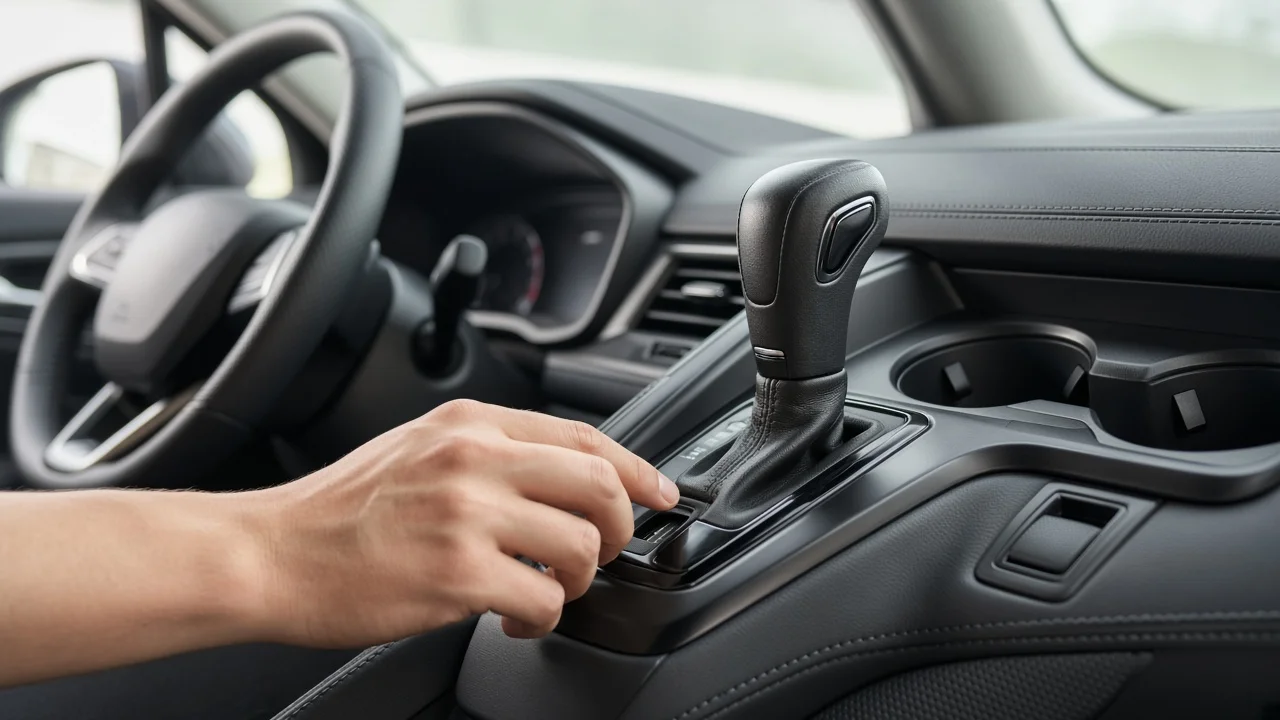
When a 2024 Nissan Rogue won't come out of Park, the shift lock release lets you move the selector by hand so the vehicle can be pushed, towed or loaded onto a flatbed. It's an emergency override, not a repair. This guide explains how the override generally works on the Rogue's shift lever and continuously variable transmission (CVT), what can change the procedure, and what a stuck shifter can and can't tell you about the cause.
The short answer
The 2024 Rogue has a mechanical override for the shift interlock. The usual sequence on Nissan lever-type selectors is: secure the vehicle, switch the power off, open a small access cover near the shift lever, press down inside the opening with a thin tool such as a small flat-blade screwdriver, then hold the brake pedal, press the lever button and move the selector to Neutral. The exact location of the access point, the shape of its cover and the order of steps for your trim should be confirmed in the owner's manual for your vehicle. Don't pry at trim panels while guessing where it is.
Once the lever is in Neutral, the park mechanism no longer holds the vehicle, so it can roll. Before using the release, chock the wheels and make sure the parking brake is holding. The 2024 Rogue uses an electronic parking brake, and with a fully discharged 12-volt battery it may not apply or release normally. Plan for that before moving the shifter, and never leave the vehicle unattended in Neutral.
How the shift lock works
The shift lock is part of a brake-transmission interlock. A small electrically controlled lock, usually a solenoid, holds the selector in Park until the vehicle is powered on and the system receives a brake pedal signal from the brake light switch circuit. When both conditions are met, the lock releases and the lever can leave Park. The design prevents the vehicle from being shifted into gear without the driver's foot on the brake.
The manual release bypasses the electrical side of this system. Pressing through the access point moves the lock mechanism directly, so the lever can travel even without power or without a brake signal. It does nothing to the transmission itself. The lever still moves the CVT's selector through its normal linkage, and the transmission's park pawl disengages as the lever leaves Park. That's why the override is useful when the problem is electrical but won't help if the linkage or the park mechanism is the source of the trouble.
What changes the procedure
Configuration matters first. All 2024 Rogue trims use a CVT, but console trim and shifter surround details can affect where the release cover sits and how it's removed. Other Rogue model years and the Rogue Sport may use a different layout. Instructions written for another vehicle shouldn't be assumed to fit yours, even if the shifter looks similar.
Electrical condition changes the approach. With a weak or dead 12-volt battery, the brake signal and the shift lock solenoid may not work at all, and the electronic parking brake and push-button ignition will also be affected. In that case, restoring battery power safely, for example with a jump start done according to the owner's manual, often restores normal shift behavior without using the override. If the battery is healthy and the lever still won't move, the cause is more likely in the brake switch circuit, a fuse, the interlock itself or the lever mechanism.
Operating conditions matter too. On a slope, the vehicle's weight can load the park pawl, making the lever hard to pull out of Park even when the interlock has released. That's a mechanical bind, not proof of a failed part. Applying the parking brake before shifting into Park when parking on a grade reduces that load. Liquid spilled into the console, debris around the lever or recent work on the console can also interfere with lever movement.
What the owner can do
Start with simple observations before reaching for the override. Check whether the dash lights up normally with the power on. Have a helper confirm whether the brake lights come on when you press the pedal. If they don't, the stop lamp fuse, the brake light switch or its wiring become likely suspects, and that's also a road-safety issue. With power on and the brake pressed, you may hear a faint click from the console as the lock releases. Its absence is a clue, not a diagnosis. Also check that the lever button presses fully and isn't sticking.
If the Rogue has to be moved right away, use the release as the owner's manual describes, keep the wheels chocked, and move the vehicle only as far as needed. For transport, follow the towing instructions in the owner's manual for your drivetrain. A flatbed is the conservative choice for a CVT vehicle, especially with all-wheel drive, because towing with drive wheels on the ground can damage the transmission or driveline.
Gather information that speeds up diagnosis: when the problem started, whether it's intermittent, whether the brake lights work, and any recent battery replacement, console repair or accessory installation in the service history. A scan for diagnostic codes in the body and transmission control modules can point to a specific circuit, but a code identifies where a fault was detected, not which component failed. Ask a dealer to check your VIN for open recalls or service bulletins related to the shifter or brake switch.
Limitations and next step
This article describes how the shift lock and its override generally work. It can't confirm the exact access point, cover design or step order for your specific Rogue. The owner's manual or a Nissan dealer is the authority for that. If the override doesn't free the lever with reasonable pressure, stop rather than forcing it. A bent lock, damaged linkage or loaded park pawl can be made worse by excess force.
Needing the release more than once is a sign the underlying fault should be diagnosed, not worked around. Repair options range from replacing a fuse or adjusting or replacing a brake light switch to servicing the interlock solenoid or the shifter assembly. Which one applies should be confirmed by testing the circuit and the components, not inferred from the symptom alone. Any replacement parts should be checked for correct fitment by VIN. If the brake lights aren't working, have the vehicle inspected before driving it on public roads.