2024 Ford F-150 Shift Lock Release: How to Get Out of Park
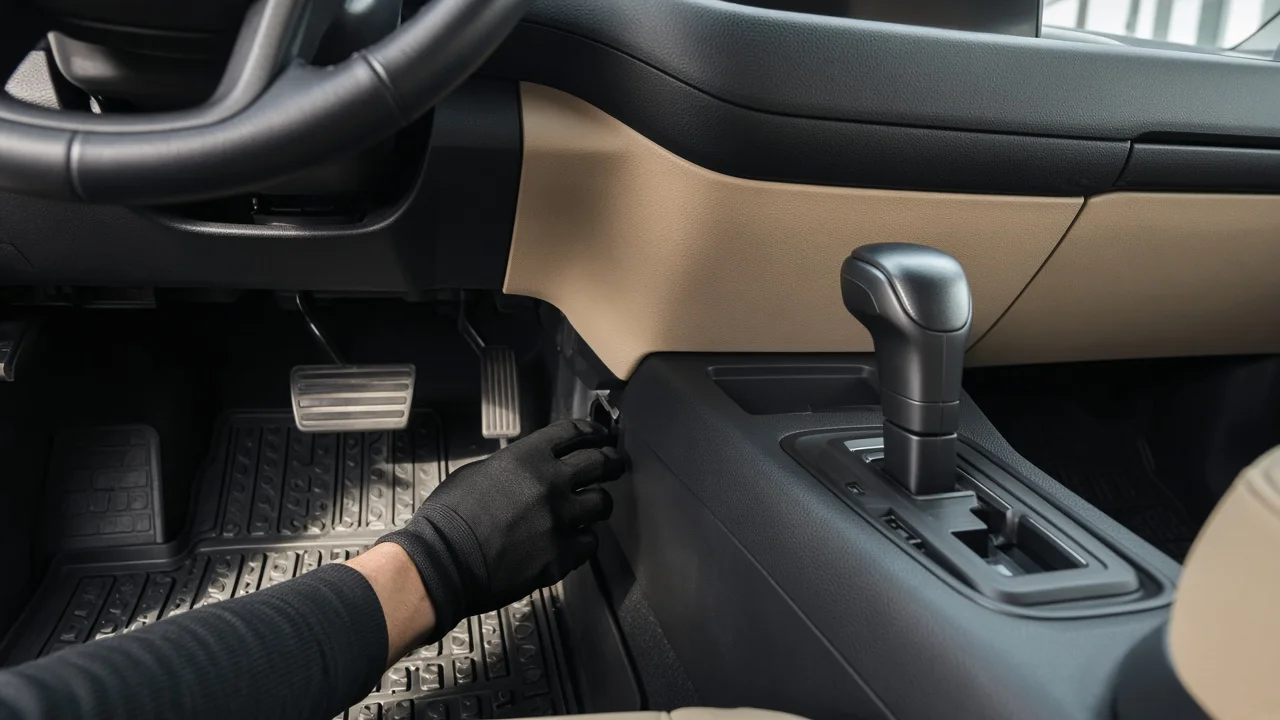
If your 2024 Ford F-150 is stuck in Park, the fix is rarely a hidden button beside the shifter. The gas and hybrid versions of this truck pair a 10-speed automatic with electronic shift-by-wire controls. Getting the transmission out of Park therefore depends on electrical power, a valid brake signal and Ford's own neutral and park-release procedures. Below is what applies, what changes from truck to truck, and when a shop is the right call.
The short answer for the 2024 F-150
When the 12-volt system is healthy, there is no separate release step. With the ignition on or the engine running, press the brake pedal firmly and select a gear. The shift lock opens once the truck confirms both conditions. Unlike older trucks with a mechanical console shifter, this generation generally does not have a small override slot that you press with a key or screwdriver.
If the truck refuses to leave Park, the usual reasons are that the brake pedal is not being detected, battery voltage is too low, or a control module has logged a fault and is blocking the shift. Needing Neutral for a conveyor car wash or for moving the truck without the engine running is a different situation. Ford provides a dedicated Stay in Neutral procedure for that, using the shifter and the instrument cluster prompts. For an electrical failure that leaves the truck stranded in Park, the owner's manual describes a manual park release procedure on trucks that have one. It is an emergency measure, not a normal way to drive.
How the shift interlock works on this truck
The brake-shift interlock is a safety rule: the truck must be in the correct ignition state and the brake must be applied before Park can be released. On a shift-by-wire system, the lever or console shifter is essentially a switch. It sends a gear request to the control modules, and the transmission control system then operates the park mechanism inside the transmission. The shifter itself has no mechanical link to that mechanism, which is why there is nothing to physically force at the lever.
Because every step is electronic, the request can be refused even when the dash lights come on. A weak battery may power the display but drop voltage too far when modules try to act. A brake pedal signal that never reaches the system looks the same to the truck as your foot being off the pedal. Ford's electronic shifters can also select Park automatically in certain situations, such as when the engine is switched off while in gear. This protective logic is the reason a car wash needs the dedicated neutral mode instead of simply leaving the shifter in N.
What changes the answer
Shifter style varies by trim and options. Some 2024 F-150s have a column-mounted lever, while others use a console shifter, including a version that folds flat to create a work surface. The basic interlock logic is similar, but menus, prompts and the exact sequence for neutral modes can differ. Follow the owner's manual for your specific configuration rather than steps written for another truck.
Powertrain also matters. Conventional gas engines and the PowerBoost hybrid both use a 10-speed automatic, and the hybrid still relies on its 12-volt system to wake the controls. The F-150 Lightning is a battery-electric truck with no conventional transmission, so its procedures are separate and are not covered here. Operating conditions change things as well: a discharged or recently disconnected battery, extreme cold, aftermarket remote start or accessory wiring, collision damage and recent service work can all affect whether the shift request is accepted. Your service history is worth reviewing, especially any battery replacement, brake work or module software update shortly before the problem began.
Checks the owner can do
Start with the basics. Make sure the ignition is fully on or the engine is running, then press the brake pedal firmly before selecting a gear. Read the instrument cluster for any message about the brake, the transmission or shifting, and note the wording exactly. Ask someone to watch the brake lights while you press the pedal. If they stay dark, the brake signal is a strong lead, but not proof that a particular switch has failed, because wiring, fuses and module communication can produce the same result.
Next, check the battery. Slow cranking, flickering displays or several unrelated warnings point toward low voltage. Charge the battery or jump-start the truck using the connection points and procedure in the owner's manual, then try again. Pay attention to shift behavior as well: whether the truck refuses every gear or only some, whether the cluster shows the requested gear, and whether the problem only appears in certain conditions. Those details help a technician far more than a general description.
If you have a scan tool, read the diagnostic codes, keeping in mind that a basic OBD-II reader may only show engine-related codes. Body, shifter and transmission module faults often need a scan tool that can read Ford-specific modules. Write the codes down before anything gets cleared. For a car wash, perform the Stay in Neutral steps before you reach the conveyor rather than trying to override Park after the truck has already engaged it.
Using the manual park release safely
Use the manual park release only when the owner's manual says your truck has one, and follow its location and steps exactly. Releasing Park mechanically means the transmission is no longer holding the truck. Before you start, set the parking brake, chock the wheels and keep people clear. It is meant for moving the truck a short distance or preparing it for a tow, not for driving.
Check the towing section of the manual for your drivetrain before the truck is moved, because the correct method depends on the configuration. When the job is done, return the release to its normal position as the manual describes. Then have the underlying fault diagnosed, because whatever stopped the electronic shift is still present.
Limitations and next step
A truck stuck in Park is a symptom, not a diagnosis. The same complaint can come from a weak battery, a brake signal fault, damaged wiring, the shifter assembly, a control module, outdated software or the park mechanism inside the transmission. Replacing parts on a guess wastes money. Many electronic shift components also have to match the truck's exact fitment and may need programming after installation, which a parts swap alone does not cover.
Depending on its in-service date and mileage, a 2024 F-150 may still be under factory warranty, so a dealer visit is often the sensible first repair option. A dealer can check your VIN for open recalls, technical service bulletins and available software updates. An independent shop with Ford-capable diagnostic equipment is a reasonable alternative outside warranty. If the battery and brake checks do not restore normal shifting, or if the cluster shows transmission or shifter warnings, stop troubleshooting and arrange professional diagnosis. Have the truck towed rather than repeatedly forcing the manual release to keep using it.