2024 Chevy Silverado Shift Lock Release: How It Works and What to Check
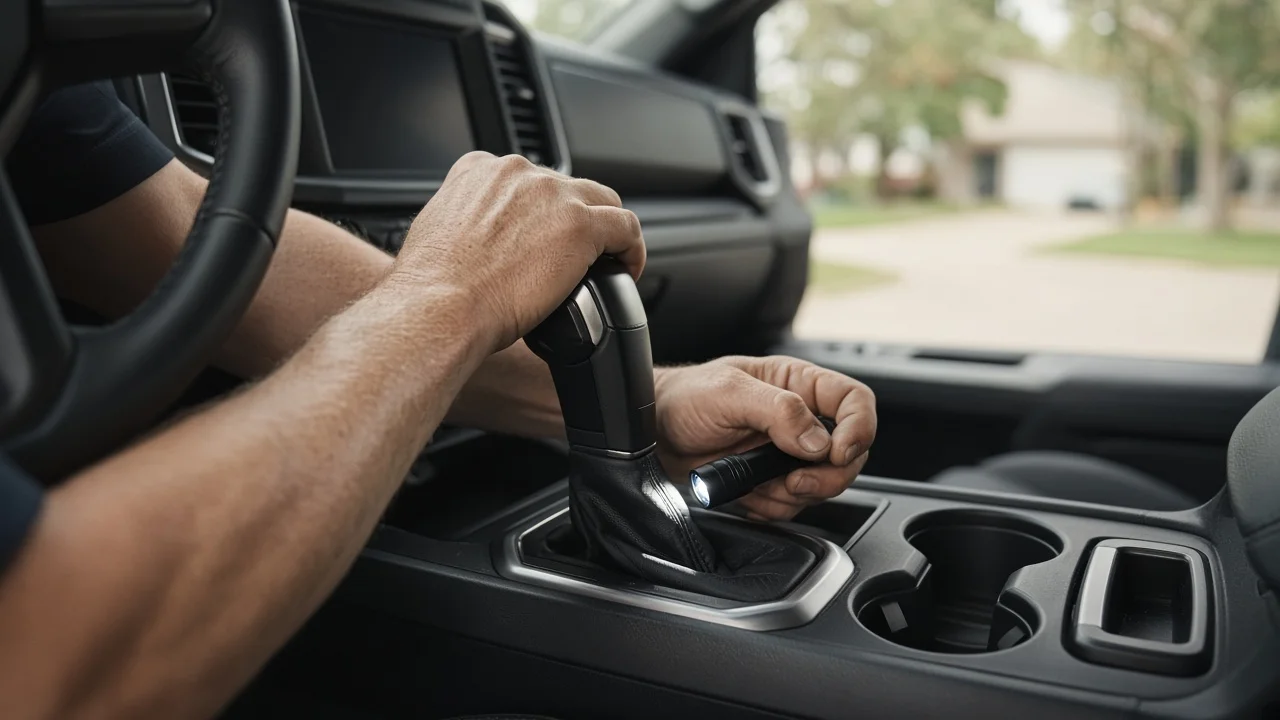
If your 2024 Chevy Silverado will not come out of Park, the shift lock is usually doing its job. It holds the transmission in Park until the truck detects the conditions it needs. Whether a manual shift lock release exists, and how to use it, depends on the shifter your truck has. This guide explains how the interlock works, which configurations change the answer, and what an owner can safely check before calling for service.
The short answer
On a 2024 Silverado, the normal way to release the shift lock is to turn the truck on, press the brake pedal firmly and then select a gear. The interlock is designed to block a shift out of Park unless the system detects brake application and the correct ignition state. If those conditions are met and the truck still stays in Park, part of that chain is not reporting correctly. Likely areas include the brake signal, battery voltage and the shifter itself.
A manual override is a different matter. Some shift systems include a mechanical release for moving the vehicle when it cannot be shifted normally. Others depend on electrical power and have no owner-accessible bypass. The 2024 Silverado is offered with different shifters across trims and between the 1500 and heavy-duty models. For that reason, the owner's manual for your exact truck is the only reliable source for whether a release exists, where it is and how to use it. An override does not fix the cause. It only lets you move the truck, and it removes a safety barrier while it is in use.
How the shift interlock works
The brake transmission shift interlock links three things: the ignition state, the brake pedal and the shift control. When you press the brake, a switch or sensor at the pedal reports that input. The signal that lights the brake lamps is commonly the same one the interlock relies on. The control modules then allow the shifter to leave Park. On a conventional column lever, an electrically controlled lock typically blocks lever movement until it is released. An electronic shifter has no mechanical linkage from your hand to the transmission. Its controls send a request, and the truck decides whether to carry it out.
That difference explains much of the shift behavior you see when something goes wrong. A mechanical lever that will not move suggests the lock is still engaged. With an electronic shifter, the button may respond while the gear indicator stays in Park. That means the request was refused or never received, and a message on the driver information display often explains why. In both cases the transmission itself is usually not the problem. The issue typically sits upstream, in the signals and controls that permit the shift.
What changes the answer for your truck
Start by identifying your configuration. Many work-oriented Silverado trims use a column-mounted shift lever, while many higher trims use an electronic shifter with push and pull controls. The 1500 and heavy-duty models also differ in engine and transmission type. The specific automatic transmission fitted affects service procedures, fluid specification and diagnostic paths. The window sticker, the build information or a dealer lookup by VIN will confirm what you have.
Operating conditions matter as well. A weak or discharged battery can power the dash lights but still be too low to operate the interlock or complete an electronic shift. Leaving the truck in Neutral through an automatic car wash, towing, and switching off the ignition outside Park each have their own procedures. On electronic shifters, the owner's manual typically describes these as separate modes. Recent electrical work is relevant, including trailer brake wiring and aftermarket lighting. Brake system service matters too, because any of these can affect the brake pedal signal.
What the owner can do
Before anything else, set the parking brake and make sure the truck cannot roll. Then work through the simple checks. Confirm the engine is running or the ignition is fully on, and press the brake pedal firmly before selecting a gear, since a light touch may not register. Ask someone to watch the rear of the truck while you press the pedal. If the brake lights stay dark, the brake signal is a strong suspect, and the same fault can affect other systems that rely on it. Note any warning lights or messages on the driver information display, and write down the exact wording.
Look at battery condition next. Slow cranking, dim displays or a recent no-start point toward low voltage, and a proper jump start or charge may restore normal operation. If the truck then shifts normally, still have the battery and charging system tested rather than assuming the problem is solved. Reading stored diagnostic codes with a capable scan tool can narrow the search. Keep in mind that a code describes a circuit or condition, not a confirmed failed part. A brake switch code, for example, could come from the switch, its adjustment, the wiring or a connector.
If you need to move the truck and the manual describes an override for your configuration, follow it exactly, keep your foot on the brake and treat it as temporary. If no override applies, arrange flatbed transport rather than towing with the drive wheels on the ground, because towing requirements depend on drivetrain and transmission configuration. A 2024 truck is likely still within factory warranty coverage, so a dealer visit is often the most practical repair option. It also avoids paying for parts that may be covered. If parts are replaced, fitment matters, because switches, shifters and modules vary by trim and configuration.
Limitations and when to get help
This guide describes how the system generally works, not the exact procedure for every 2024 Silverado. Override locations, mode procedures and diagnostic steps differ by model, trim and shifter type. The owner's manual and factory service information take precedence over any general explanation. Symptoms can also overlap. A truck that refuses to leave Park may have a brake signal fault, low voltage, a shifter or module issue, or a software condition, and only testing can separate them.
Get professional help in any of these situations: the brake lights do not work, warning messages persist after a normal restart, the truck shifts unexpectedly or will not hold Park, or the problem returns after using an override. Ask the service department to check for service bulletins or software updates that apply to your VIN. Keep a record of the symptoms, messages and any codes. That service history helps a technician reproduce the fault and supports any warranty claim.