2023 Nissan Rogue Shift Lock Release: What to Know and Do
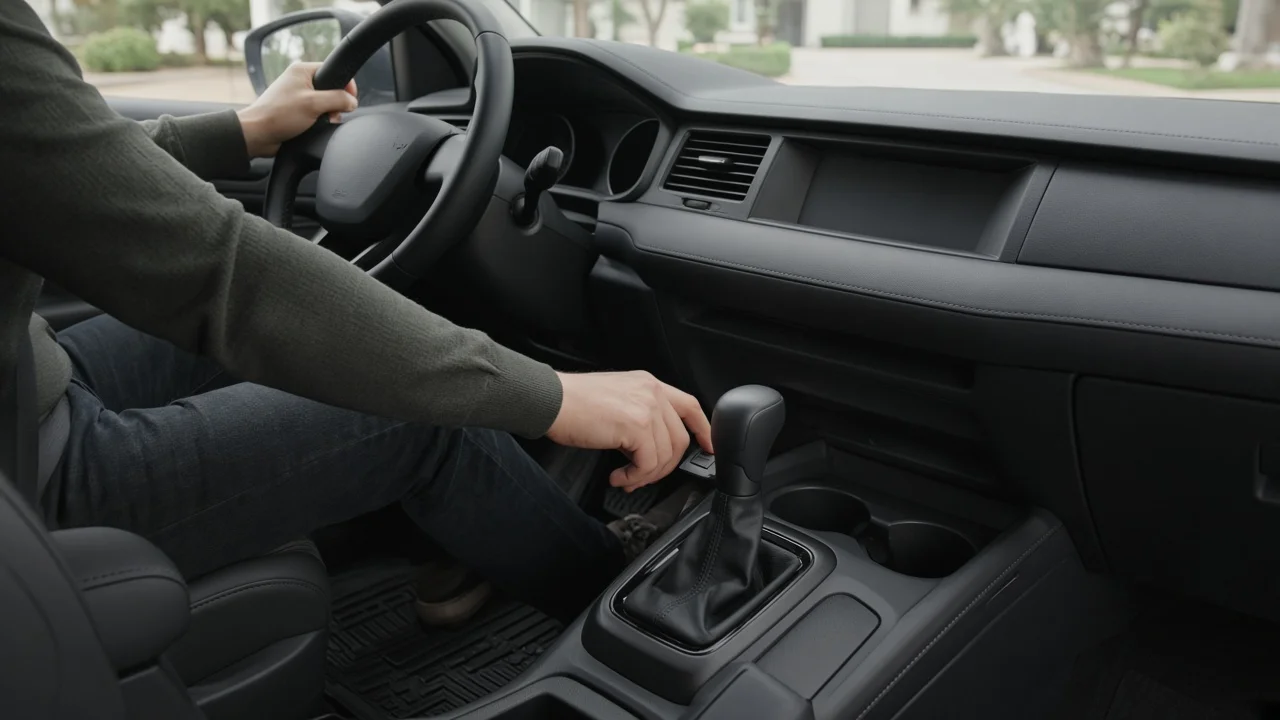
If the gear selector on a 2023 Nissan Rogue will not leave Park, the cause is usually the shift interlock refusing to release because it is missing a signal it needs. A failed transmission is a less likely explanation. This guide covers what a shift lock release does and why the procedure depends on the exact shifter in your Rogue. It also covers which checks an owner can safely make and when the problem needs a technician with scan tools and factory service information.
The short answer for a stuck shifter
Every 2023 Rogue uses Nissan's Xtronic continuously variable transmission. The selector is interlocked so it cannot move out of Park unless the ignition is on and the brake pedal is pressed. Sometimes those conditions are met and the selector still will not move. In that case the usual temporary measure is a shift lock release, which is an override that lets you move the selector to Neutral so the vehicle can be pushed or loaded for towing. Before trying one, check the owner's manual for your specific vehicle. It tells you whether your Rogue has a manual override at all and exactly how to use it. The shifter design in this generation differs from older Rogues, which used a simple release slot under a small cover beside the lever, so instructions written for earlier models may not apply.
A release is a way to move a vehicle that will not shift. It is not a repair. If the selector only moves with the override, something in the interlock circuit is not sending or receiving the right signal, and the vehicle should not go back into normal use until that is understood. Never use an override on a slope without first setting the parking brake and securing the wheels.
How the shift interlock works
The interlock ties together three inputs: ignition state, brake pedal position, and selector position. When you press the brake, the brake light switch, also called the stop lamp switch, sends a signal, and the control system then allows the selector to leave Park. In a conventional mechanical shifter, a small solenoid physically blocks the lever until it is energized. In an electronic shift-by-wire design, the selector acts as a switch. A control module then commands the transmission's park mechanism, so the lock is enforced by software and actuators instead of a pin in the lever.
That difference matters for the release. A mechanical override bypasses the solenoid with a physical push. An electronically controlled system generally needs electrical power to change position. With a flat battery, any procedure for placing the transmission in Neutral may require restoring power first. The owner's manual and its towing section are the authority on how your vehicle handles this.
What changes the procedure and the likely cause
Trim, build date, and service history, including any completed campaigns, can change the details. Identify the vehicle by its VIN before following any instructions. Drivetrain also matters. Front-wheel-drive and all-wheel-drive versions may have different towing requirements, so check the guidance for your transmission type and drivetrain before moving the car on its wheels. A flatbed avoids that question entirely.
Operating conditions matter as much as configuration. Each pattern below points in a direction, but none confirms a failed part. • If the shifter refuses to leave Park after the vehicle sat unused for days, suspect the battery first. • If it refuses only when the brake lights do not illuminate, look at the brake light switch, its fuse, or the related wiring. • If the selector moves but a warning appears, the selection is ignored, or shift behavior feels abnormal, that is a separate situation. It may involve stored diagnostic codes in the transmission or body control systems. • On many vehicles, parking on a steep grade without the parking brake loads the park mechanism and makes it harder to come out of Park.
What the owner can check and do
Start with simple observations. Does the instrument cluster light up normally? Does the engine crank and start? Do the brake lights come on when the pedal is pressed? Ask someone to look, or check the reflection in a garage door or window. Confirm the ignition is fully on, press the brake firmly, and try the selector again. If the vehicle is parked on an incline, set the parking brake, hold the brake pedal, and try once more.
If the battery is weak, a jump start or a full charge often restores normal operation. If it does, have the battery and charging system tested instead of assuming the problem is gone. If the brake lights do not work, check the relevant fuse using the fuse chart in the owner's manual. Treat a dead brake light as a safety problem in its own right, apart from the shifter. Only use a shift lock override if your manual describes one for your vehicle, and follow its steps exactly. Before selecting Neutral, secure the vehicle with the parking brake and wheel chocks.
Write down what you observed: • warning lights and messages; • whether the problem is constant or intermittent; • any recent battery replacement or electrical work; This record, together with stored diagnostic codes, shortens diagnosis. It also helps a technician separate a battery problem from a faulty switch, actuator, or module.
Limits of a DIY release and when to get help
Without scan data, an owner cannot confirm where the fault is. It could be the brake light switch, an interlock actuator, a control module, wiring, or the transmission's park system. Replacing parts based on the symptom alone often wastes money. Fitment of switches and modules depends on the exact vehicle, so parts should be matched by VIN. Repair options range from a battery or fuse to a switch replacement or module programming, and the right choice depends on test results.
Get professional help in any of these situations: • the selector will not leave Park even though the battery voltage is good and the brake lights work; • a transmission or shifter warning appears; • the vehicle moves when it should be held in Park; • the override does not behave as the manual describes; A Nissan dealer can also check by VIN for recalls or technical service bulletins that apply to your vehicle. Until the cause is found, move the Rogue on a flatbed instead of forcing the selector.