2021 Nissan Rogue Shift Lock Release: How to Get Out of Park
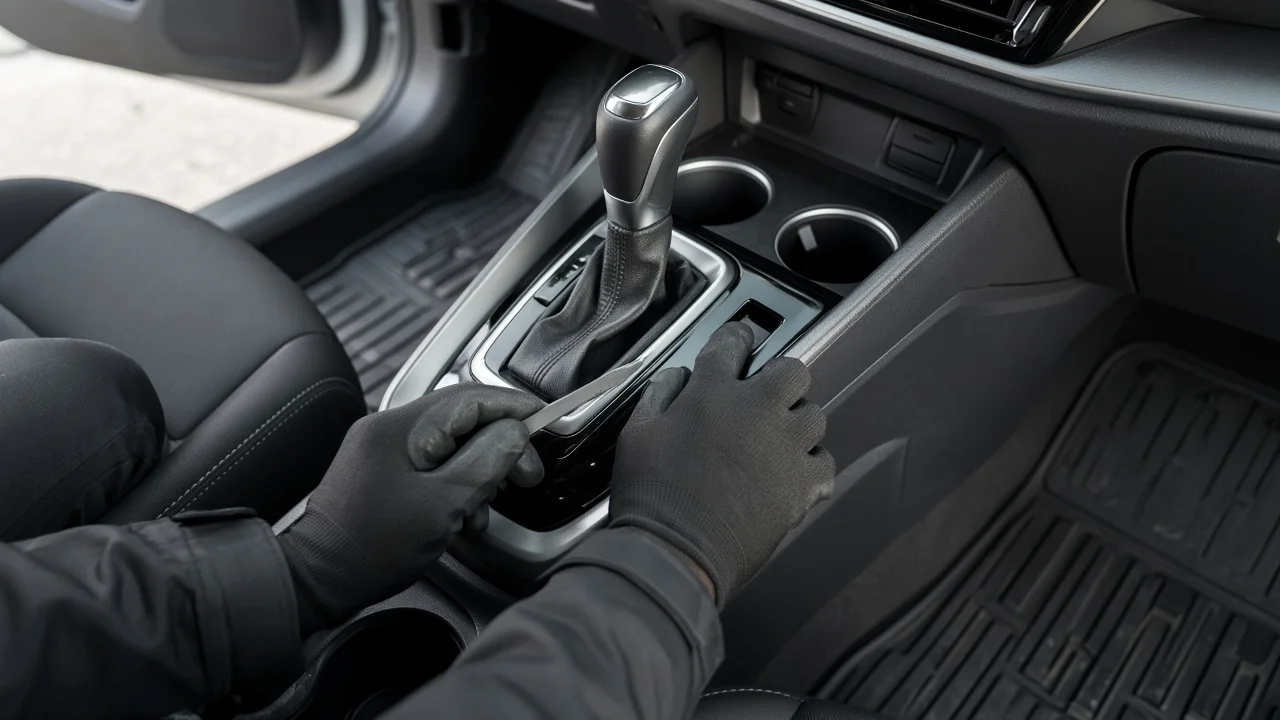
When a 2021 Nissan Rogue refuses to come out of Park, the shift lock release lets you move the selector to Neutral so the vehicle can be pushed, towed or winched onto a flatbed. It is an emergency override, not a repair. Whether you can use it, and how, depends on which shifter your Rogue has and on why the lock engaged.
The short answer for 2021 Rogue owners
On a Rogue with a mechanical, cable-operated shift lever, there is normally a shift lock release access point next to the shifter, usually under a small removable cap or trim piece. The general procedure is to set the parking brake firmly and turn the ignition off. Next, pry off the access cover with a small flat tool or the mechanical key blade stored in the key fob. Press down on the release inside, and while holding it down, press the shifter button and move the lever to Neutral. The exact location of the cover and the order of steps can differ by trim, so confirm them in the owner's manual for your vehicle before you start.
The 2021 model year introduced a fully redesigned Rogue. Depending on trim, it may have an electronic shift-by-wire selector instead of a traditional cable-linked lever. With an electronic selector there may be no simple release slot beside the shifter, and leaving Park usually requires the vehicle to have electrical power. On these versions, restoring power, for example with a jump-start, is typically the first step. Any manual park release procedure for that design is described in the owner's manual or by a dealer and should not be improvised.
How the shift interlock works
The shift interlock is a safety feature that keeps the selector locked in Park until the brake pedal is pressed with the ignition in the correct mode. Pressing the pedal closes the stop lamp switch. That signal either energizes a small lock solenoid in the shifter assembly or tells the control module that shifting is allowed. Without that signal the lever stays put, which keeps the vehicle from rolling away or being knocked out of Park by a passenger or a child.
The manual release mechanically defeats that lock and does nothing else. On a cable-type shifter, moving the lever to Neutral pulls the shift cable and disengages the parking pawl inside the transmission. This is why the parking brake has to be set first: once the pawl releases, nothing but the brakes holds the vehicle. The Rogue uses a continuously variable transmission, but the release does not involve the transmission internals or the CVT fluid. Fluid specification and condition play no part in a selector that is simply locked in Park.
What changes the answer
Shifter design is the biggest factor, so identify it first. A lever with a button that moves through a gated pattern is likely mechanical. A short selector that returns to center or uses separate controls is likely electronic. Also check fitment: the 2021 Rogue Sport is a different, smaller model built on an older platform, with its own shifter layout and its own manual. Release instructions for one should not be assumed to apply to the other.
Operating conditions matter as well. With a dead battery, a mechanical release still works because it does not depend on power, while an electronic selector may not respond at all until power is restored. If the vehicle was parked on a steep grade without the parking brake, its weight can load the parking pawl so heavily that the lever is hard to move even when the lock is released. That is a load problem, not an interlock fault. Spilled drinks, debris in the console, cold weather and aftermarket console accessories can also make the mechanism sticky or block the access cover.
Using the release safely
Work on level ground whenever possible, chock the wheels, and keep the parking brake applied until someone is in the driver's seat ready to use the foot brake. Do not pry hard on the access cover or the release. If firm, steady pressure does not free the lever, forcing it can damage the shifter assembly or the trim. Once the selector is in Neutral, the vehicle can roll as soon as the brakes are released, so plan the push or tow before you release them.
Treat the override as a way to move the vehicle, not as a way to keep driving it. If you can only leave Park with the release, the interlock is not receiving or acting on the brake signal. The same fault can also mean your brake lights are not working, which is a safety problem for following traffic. The sensible course is to get the vehicle to a safe place or a shop rather than continuing to drive with the release in daily use.
Clues to note before calling for help
A few simple observations make diagnosis faster. Have someone check whether the brake lights come on when you press the pedal, or look for their reflection in a garage door or a window. Note whether the dash shows warning lights, whether the engine cranks normally, and whether the problem is constant or comes and goes. Also check whether the shift behavior is otherwise normal once the vehicle is moving. If you have a scan tool, record any diagnostic codes, but keep in mind that a code points to a circuit or system, not automatically to a specific failed component.
These clues narrow the search but do not confirm a failed part. Brake lights that do not work suggest checking the stop lamp fuse, the brake pedal switch and its wiring. Working brake lights with a locked lever point more toward the interlock solenoid, the shifter assembly, the cable or, on electronic selectors, the shift control system. Mention any relevant service history to the technician, such as a recent battery replacement, console or trim work, or a previous shifter repair. A dealer can check your VIN for open recalls or service bulletins that may apply.
Repair options range widely. The fix may be as simple as a fuse or a brake switch adjustment, or it may require replacing a switch, cable or complete shifter assembly. Ask for the diagnosis to be confirmed before parts are ordered, and check whether any factory, extended or recall coverage still applies to your vehicle's age and mileage.
Limitations and next step
This guide describes the general principle, not the exact procedure for every 2021 Rogue. Release cover location, steps and towing requirements depend on trim, drivetrain and shifter design, and the owner's manual for your vehicle is the authority. Before moving the car, read its towing section. Many all-wheel-drive and CVT-equipped vehicles should only be transported with all wheels off the ground, and dragging driven wheels can damage the drivetrain.
Get professional help if the release does not free the lever, if the vehicle has an electronic selector and you cannot restore power, if the vehicle is parked on a slope you cannot make safe, or if the lock keeps returning after a simple fix. In those cases a mobile technician, dealer or flatbed tow is safer than further trial and error.