2020 Mitsubishi Outlander Parking Brake Actuator: Fitment Guide
Answer the main question
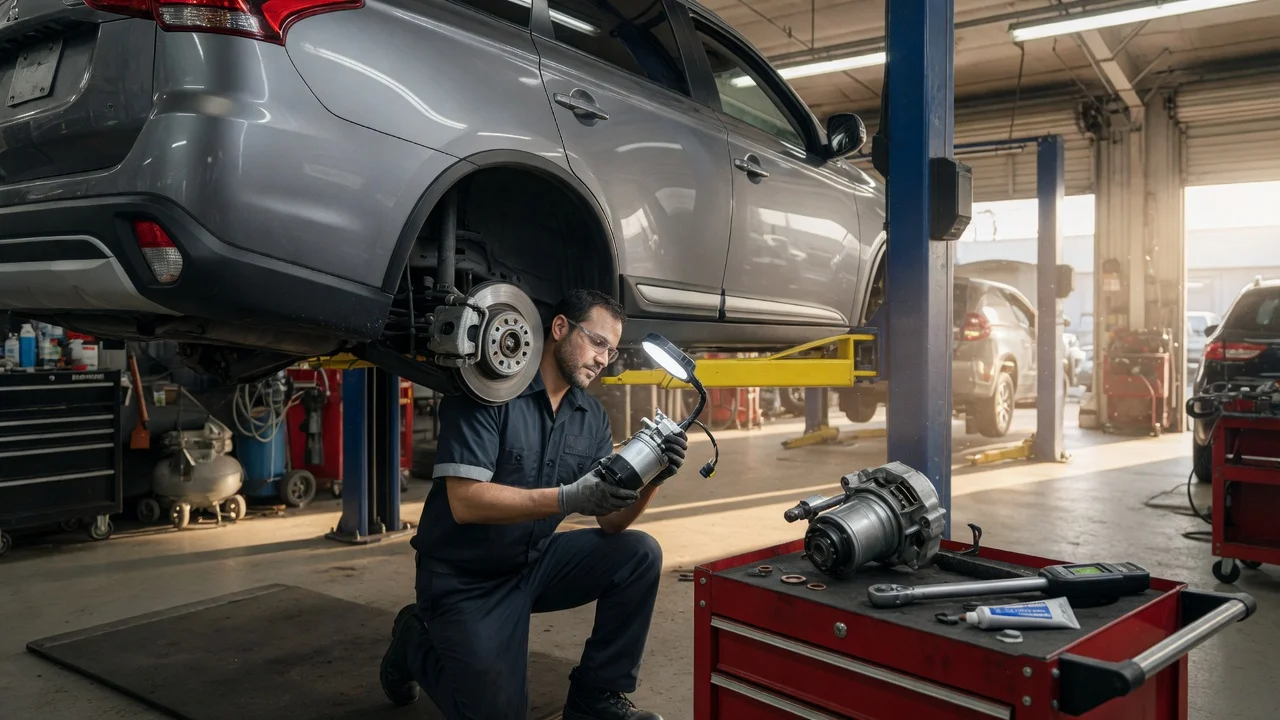
The 2020 Mitsubishi Outlander uses an electric parking brake actuator that operates the rear brake calipers. Replacement fitment depends on trim, build date, original equipment part number, and whether the vehicle has an electronic parking brake with auto hold. A replacement actuator must match the original component and the vehicle's brake control system. When the actuator is replaced, the parking brake system typically needs calibration or initialization with a scan tool so the control module can learn the new unit.
How it works
Instead of a hand lever pulling cables to the rear wheels, the electric parking brake uses a switch in the cabin to send a signal to a control module. The module then commands a motorized actuator at each rear caliper. The actuator presses the caliper piston against the inboard brake pad, clamping the brake rotor to hold the vehicle. The same mechanism releases the caliper when the system retracts the piston. Because the actuator is integrated with the rear caliper or mounted as a matched assembly, it also affects normal pad replacement and caliper service.
On this Outlander, the rear caliper combines hydraulic service braking with electric parking brake application. During routine driving, brake fluid pressure moves the caliper piston in the normal way. When the parking brake is applied, the electric motor creates mechanical clamping force without relying on brake fluid pressure. This design means correct actuator fitment involves both the electrical connector and the mechanical mounting pattern at the caliper.
What changes the answer
Fitment can change by market and production period. Some Outlander models may use a separate actuator motor bolted to the rear caliper, while other configurations use a caliper assembly sold with the actuator already installed. The connector shape, bracket orientation, and motor wiring can differ even when the visible caliper looks similar. For this reason, matching only by year and model is not enough. The original Mitsubishi part number, the vehicle identification number, or the specific calibration information from the vehicle data should be checked against the replacement part listing.
Mechanical condition also matters. If the actuator has failed but the caliper is sound, the actuator may be available separately. If the caliper is seized, leaking brake fluid, or has damaged slide pins, a complete matched rear caliper and actuator assembly may be the appropriate repair. In either case, the parking brake function must be verified after installation, not just the hydraulic brake function.
What the owner can do
Before ordering parts, record the vehicle identification number and compare it with the supplier's fitment data. If the car is equipped with an auto hold function, confirm that the replacement component is listed for that configuration. Inspect the failed side to see whether the problem is the actuator itself or a related fault such as a damaged connector, corroded wiring, or a caliper that cannot move freely.
Do not drive the vehicle with an unresolved parking brake fault. A parking brake that fails to hold can allow the vehicle to move when parked. A parking brake that fails to release can drag the rear brakes, overheat the rotor and friction material, and create a safety risk. If the warning light is on and the system does not engage or release reliably, have the vehicle inspected before further use.
Limitations and next step
The correct replacement cannot be confirmed from year and model alone because market-specific and production-period differences are common. A Mitsubishi parts catalog and the vehicle's exact identification information are the authoritative fitment reference. Because calibration requires a compatible scan tool, many owners will need a professional workshop to install the actuator, initialize the parking brake module, and confirm that the system engages and releases within the specified parameters.
A professional inspection is necessary when there is uncertainty about the fault, warning lights remain after a repair attempt, or the parking brake does not hold or release correctly. Braking system faults that affect vehicle holding or stopping should be treated as a reason to stop using the vehicle until the system has been inspected and repaired.