2020 Kia Sorento TCC Solenoid Identification
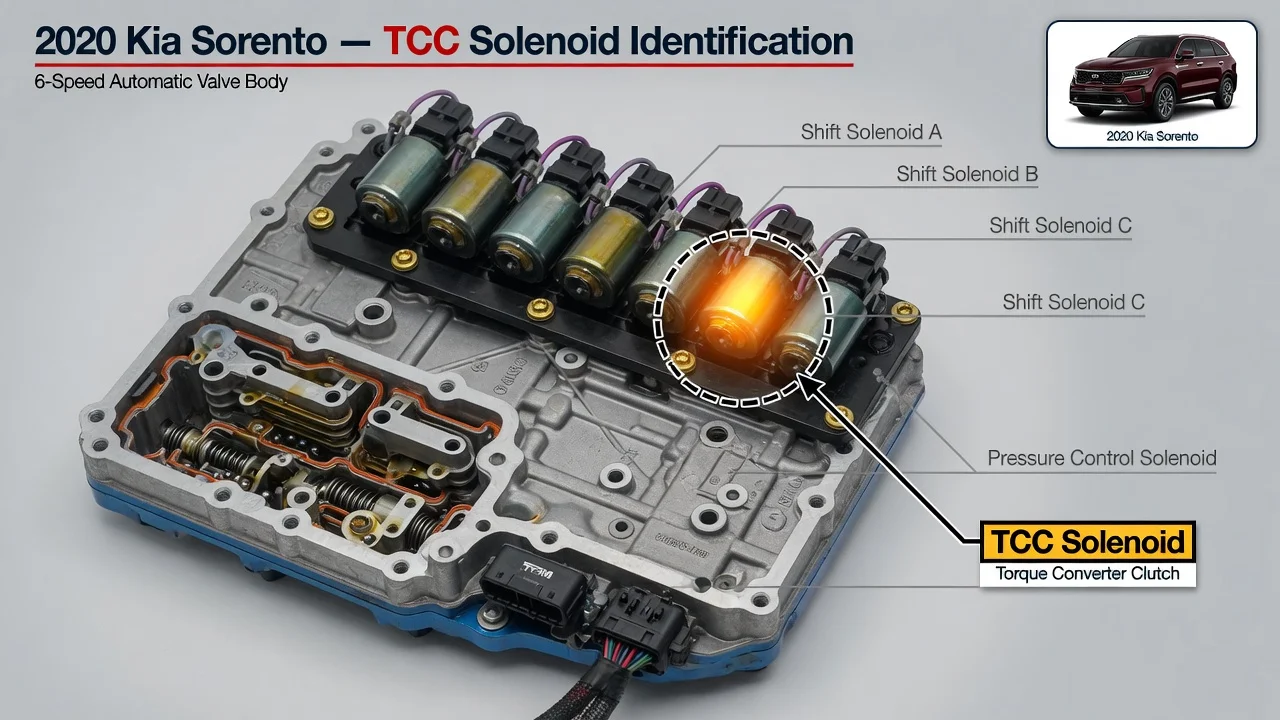
Finding the right torque converter clutch solenoid for a 2020 Kia Sorento starts with the drivetrain, not the part catalog. The Sorento was sold with more than one engine and automatic transmission combination, and the solenoid, its connector, and the way it is serviced depend on which one your vehicle has. This guide explains where the part lives, how it works, what changes the answer, and what an owner can sensibly check before paying for parts or labor.
Where the TCC Solenoid Is and What It Is Called
On a 2020 Sorento, the torque converter clutch (TCC) solenoid is not an external bolt-on part. It is an electrically controlled valve mounted on the valve body inside the automatic transmission, grouped with the other shift and pressure control solenoids. Reaching it means draining the fluid and removing the pan or cover that exposes the valve body. Kia service literature may call it the damper clutch control solenoid rather than the TCC solenoid, so if a parts counter or repair manual uses that term, it is generally describing the same function: controlling lockup of the torque converter clutch.
Identifying the correct part therefore means identifying the transmission first. Depending on the unit and how Kia supplies parts for it, the solenoid may be available individually, as part of a solenoid set, or only as part of a complete valve body assembly. The part number printed on a solenoid you have removed is useful for confirmation, but the most reliable way to confirm fitment is a lookup by your 17-digit VIN.
How the Torque Converter Clutch Is Controlled
A torque converter couples the engine to the transmission through fluid, which allows the vehicle to stop in gear without stalling. That fluid coupling also allows some slip, which wastes energy at steady speeds. The torque converter clutch removes that slip by mechanically locking the converter once road speed, load, and temperature allow it. The transmission control module commands the TCC solenoid, which regulates hydraulic pressure to apply or release the clutch, often in a controlled partial-apply state rather than a simple on-off switch.
Because the solenoid only directs fluid, correct operation depends on more than the solenoid itself. Fluid level and condition, valve body passages, wiring and connectors, the control module and its software, and the clutch lining inside the converter all play a part. A shudder at light throttle, engine speed that stays higher than expected at cruise, or stalling when coming to a stop can all point toward the lockup system, but none of those symptoms confirms that the solenoid has failed.
Engine, Transmission and Drive Configuration
The transmission type is the main variable. In the 2020 model year, the Sorento with the 2.4-liter four-cylinder is typically paired with a six-speed automatic, while the 3.3-liter V6 is typically paired with an eight-speed automatic. These are different transmissions with different valve bodies, solenoid hardware, fluid capacities and service procedures. Front-wheel-drive and all-wheel-drive versions may also differ in parts and labor details. Production date, regional specification and any earlier component replacement can further affect fitment, which is why the VIN matters more than the model name alone.
Be careful not to mix information from neighboring years. The 2021 Sorento belongs to a new generation with different powertrains, so procedures, parts and diagnostic routines written for it do not carry over. Even within the 2020 model year, confirm the engine and transmission on your own vehicle rather than relying on trim names or listings that cover several years at once.
Practical Steps Before Buying a Solenoid
Start by confirming the configuration. The owner's manual, the original window sticker if you have it, the engine itself and a VIN lookup at a Kia parts counter can establish the engine and transmission. Some transmissions also carry an identification tag or stamping on the case. Next, read the stored diagnostic codes with a scan tool that can access the transmission module, not only the engine module. Codes in the P0740 to P0744 range relate to the torque converter clutch circuit or its performance, but an electrical circuit code and a performance code point toward different diagnostic paths, and neither identifies the failed part on its own.
Note how the shift behavior and lockup problem appear: at what speed, under what throttle, hot or cold, and whether it is constant or intermittent. That detail helps a technician reproduce the fault. Review the service history as well, including when the fluid was last serviced and whether any software updates, recalls or service bulletins have been applied. Kia periodically issues transmission control updates, and a dealer can check whether any apply to your VIN.
Fluid matters on these units. Use only the fluid specification Kia lists for your exact transmission, and follow the manufacturer's procedure for checking level, which on many modern automatics involves a check plug and a specific fluid temperature rather than a dipstick. An incorrect level or fluid type can produce lockup complaints by itself. Repair options then range from addressing wiring or connector faults, to fluid service and software, to replacing the solenoid or valve body, to converter or transmission repair if internal damage is found. After any solenoid or valve body work, the control module may need an adaptive values reset or relearn procedure with a capable scan tool.
Limits of Owner Diagnosis and the Next Step
Owners can gather useful evidence, but confirming a TCC solenoid fault normally requires testing that most home tools cannot do: checking circuit resistance and wiring at the correct points, watching commanded versus actual converter slip on a scan tool, and sometimes measuring line pressure. Replacing a solenoid based on a symptom alone can leave the real cause untouched, especially when the problem is wiring, fluid, software or wear inside the torque converter.
If your Sorento shows a transmission warning, stalls when stopping, or shudders consistently, have it inspected by a Kia dealer or a transmission specialist with model-specific service information. Bring the stored codes, your notes on when the problem occurs and the service history. Also ask whether any remaining powertrain warranty coverage applies to your vehicle, since that can change which repair route makes the most sense.