2020 Hyundai Santa Fe TCC Solenoid: Identification and Diagnosis
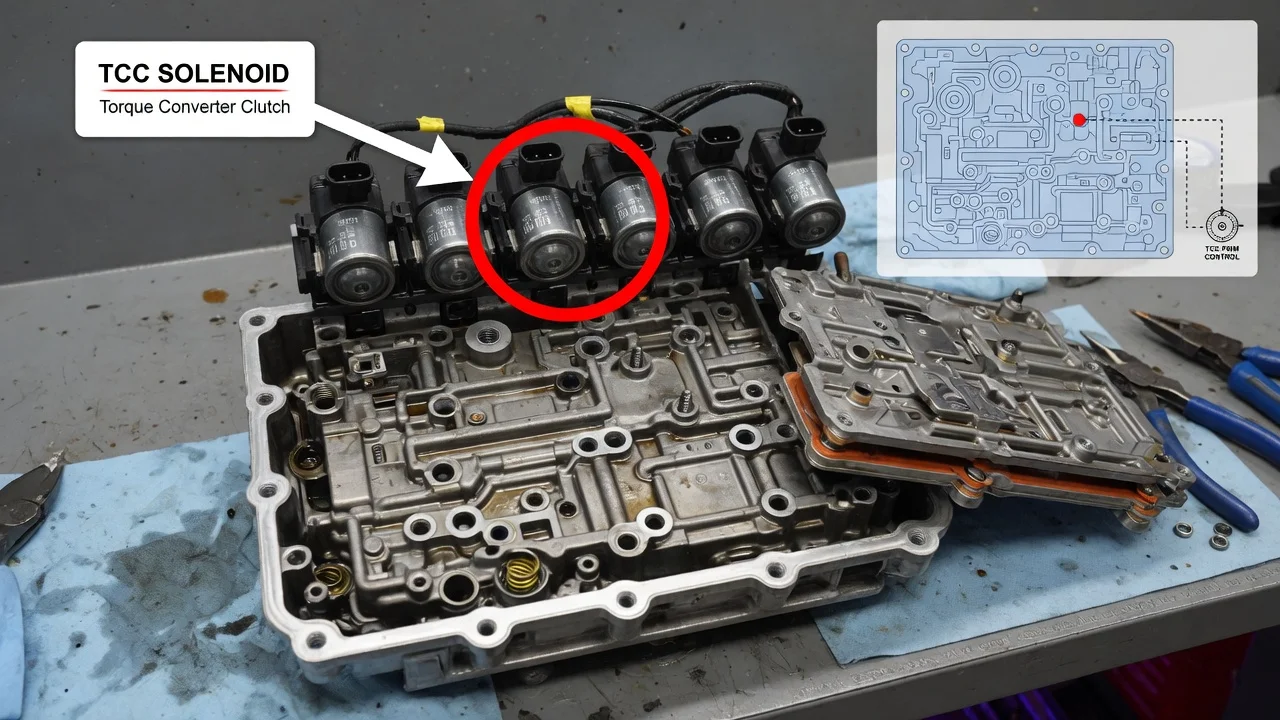
If a scan tool or shop has pointed to the torque converter clutch (TCC) solenoid on a 2020 Hyundai Santa Fe, start by identifying exactly which transmission you have and what the code says. This guide explains where the TCC control sits, how it works, what varies by configuration, and how to move from a code to a confirmed diagnosis without replacing parts on a guess.
Where the TCC solenoid sits on a 2020 Santa Fe
For the U.S. market, the 2020 Santa Fe came with either a 2.4-liter four-cylinder or a 2.0-liter turbocharged engine, and both were paired with Hyundai's eight-speed automatic transmission. The torque converter clutch solenoid on this unit is not an external sensor you can unplug from under the hood. It is one of several electronically controlled solenoid valves mounted on the valve body inside the transmission. The transmission control module operates it through the internal wiring harness and the main transmission connector.
Identifying the correct part therefore starts with the vehicle, not the solenoid itself. The VIN determines the engine, drivetrain and transmission build. A dealer parts catalog lookup by VIN shows whether the TCC solenoid is listed as an individual service part or only as part of a valve body assembly. Equally important, a TCC-related trouble code identifies a fault in the converter clutch control system, not necessarily a failed solenoid. Wiring, connectors, fluid condition, the valve body, the converter clutch itself and control software can all produce similar codes.
How torque converter clutch control works
A torque converter transmits engine power through fluid. That lets the vehicle stop in gear, but it also creates slip and heat. The torque converter clutch removes that slip by mechanically linking the engine side of the converter to the transmission input once conditions allow. This typically happens at steady cruising speeds after the fluid has warmed up. Locking the converter lowers engine speed at cruise, reduces fluid heat and improves fuel economy.
The control module does not simply switch the clutch on or off. It varies the electrical command to the solenoid, which regulates the hydraulic pressure applied to the clutch. Engagement can therefore range from controlled partial slip to full lockup. The module compares engine speed with transmission input speed to calculate actual slip and checks it against the target. If the electrical circuit reads out of range, or the actual slip does not follow the command, the module stores a diagnostic code and may disable lockup. Owners usually notice this as a shudder at light throttle, engine speed that seems high or fluctuating at highway cruise, or lower fuel economy. A clutch that stays applied when it should release can cause a harsh feel or stalling as the vehicle comes to a stop.
What changes the diagnosis
The type of code matters most. Generic codes in the P0740 to P0744 range describe the converter clutch circuit, and their wording differs. Some point to an electrical fault such as an open, short or out-of-range signal. Others describe performance, meaning the clutch is stuck off, stuck on or slipping beyond the target. An electrical code points the diagnosis toward the solenoid coil, harness, connector and control module. A performance code can also result from low or degraded fluid, a sticking valve in the valve body, worn clutch material in the converter or a software calibration issue, so a new solenoid may not fix it. Hyundai may also use manufacturer-specific codes that require factory service information to interpret.
Configuration also affects the answer. The 2.4-liter and 2.0-liter turbo models use different transmission calibrations. Internal parts or assembly numbers can differ by engine and by front-wheel or all-wheel drive build, which is why fitment should be confirmed by VIN. Operating conditions matter as well, because lockup is normally not commanded until the fluid reaches operating temperature. A complaint that appears only when cold, only under load or only after the transmission is hot points in different directions. Service history counts too, including any fluid service, the fluid used, prior transmission work and whether the control module software has been updated.
Practical steps for the owner
Start by reading and saving every stored and pending code along with its freeze frame data. Freeze frame records conditions such as vehicle speed, engine speed and fluid temperature when the fault set. Note any other transmission or engine codes, because a sensor fault elsewhere can affect TCC control. Then describe the symptom precisely: the speed range, throttle position, whether it happens warm or cold, and how shift behavior feels during upshifts, downshifts and coming to a stop. A short written log over several drives is more useful to a technician than a single impression.
Check the fluid only by the procedure in the owner's manual or Hyundai service information, and use only the fluid specification listed for your transmission. Many current Hyundai automatics do not have a conventional dipstick, and the level is set at a specified fluid temperature, so an improvised check can lead to overfilling or underfilling. Ask a Hyundai dealer whether any software updates or technical service bulletins apply to your VIN, since a calibration update is sometimes the prescribed repair for converter clutch complaints. Also confirm warranty status. Hyundai's U.S. powertrain limited warranty covers the original owner for 10 years or 100,000 miles, with shorter coverage for later owners, so a dealer diagnosis and repair may be covered.
Repair options depend on what testing confirms. They include a wiring or connector repair, replacement of the solenoid or the valve body assembly as the parts catalog allows, a control module reprogram, or torque converter or transmission replacement when the clutch itself is damaged. The test results, not the code title, should decide which of these applies.
Limits and when to see a professional
This guide cannot supply resistance values, pressure figures, connector pin locations or torque specifications for your exact transmission, and generic numbers from other vehicles should not be substituted. Confirming a TCC solenoid fault normally starts with a scan tool that shows commanded versus actual converter slip, followed by electrical tests at the transmission connector. If those point inside the unit, the valve body may need to be removed. The job then requires the correct fluid fill and level procedure and sometimes a relearn of transmission adaptive values. These steps call for factory service information and transmission experience.
Have the vehicle inspected soon if the code returns after being cleared, the shudder is getting worse, or the vehicle stalls or drives erratically when stopping. Continuing to drive and hoping it resolves can turn a control fault into wider damage. A dealer or transmission specialist can confirm the actual cause, check warranty eligibility and identify the correct part for your VIN before any money is spent on components.