2020 Chevy Equinox Wastegate Actuator: Identification
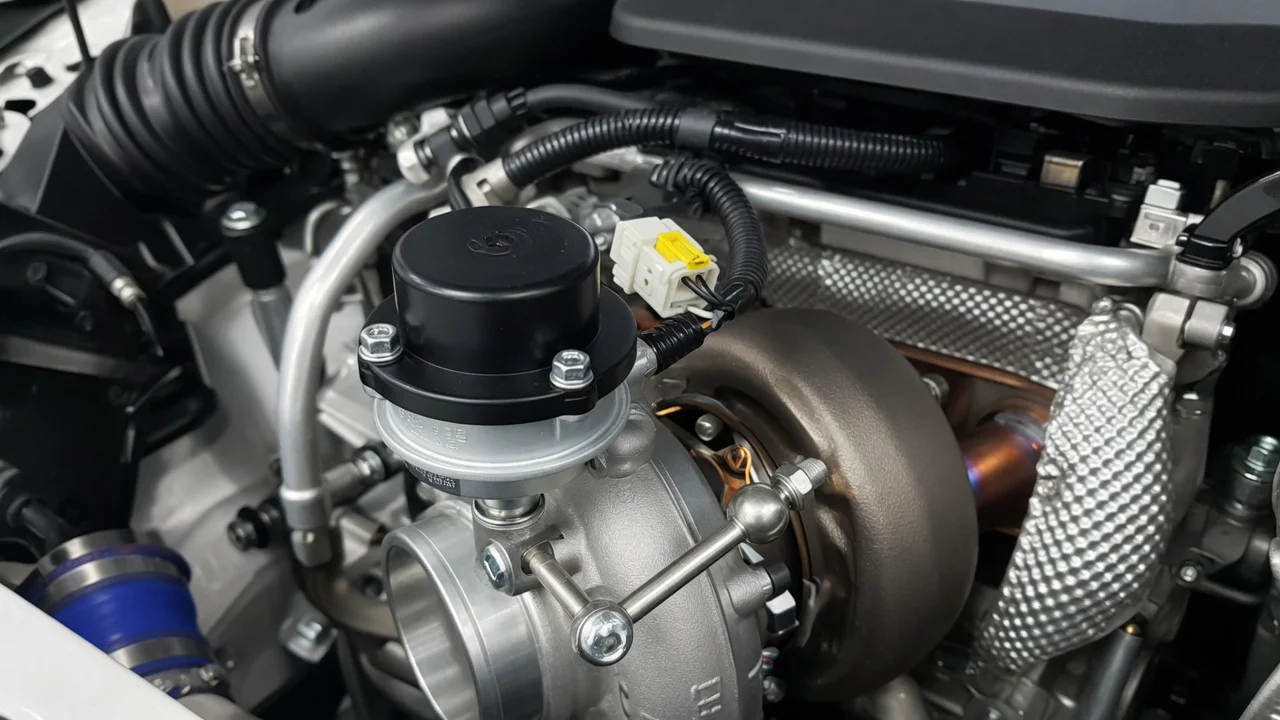
The wastegate actuator on a 2020 Chevy Equinox controls how much exhaust gas bypasses the turbocharger turbine, which limits boost pressure. Every 2020 Equinox is turbocharged, but the actuator you find depends on which engine the vehicle has. This guide explains how to identify the actuator, how to confirm your vehicle configuration, and what the part's design and location tell you before you buy or replace anything.
Identifying the Wastegate Actuator on a 2020 Equinox
On a 2020 Equinox, the wastegate actuator is mounted on the turbocharger assembly, which is bolted to the exhaust side of the engine. The actuator connects to the wastegate valve through a short rod or linkage arm, so look for the component that drives that arm. The 2020 model year was offered with a 1.5-liter turbocharged engine and a 2.0-liter turbocharged engine. The actuator design, electrical connector, mounting, and part number can differ between these engines. On some turbochargers the actuator is serviced only as part of the complete turbo assembly rather than as a separate part. Identification therefore follows a fixed order: confirm the engine, determine the actuator type, then get the exact part information for your VIN.
To confirm the engine, check the eighth character of the VIN, which is the engine code on GM vehicles. You can also read the Service Parts Identification label, which lists the RPO codes for the vehicle. On that label, LYX indicates the 1.5-liter turbo and LTG indicates the 2.0-liter turbo. The label is usually inside the vehicle, often in the glove box area. Under the hood, an engine cover or emissions label may also help, but the VIN and RPO codes are the more reliable references.
How the Wastegate and Its Actuator Work
A turbocharger is driven by exhaust gas flowing through its turbine. The wastegate is a valve that lets part of that exhaust bypass the turbine, which keeps boost from climbing past the level the engine needs. The actuator opens and closes the valve. The engine control module decides the target position from inputs such as boost and manifold pressure, throttle position, and engine load.
Wastegate actuators come in two broad designs. An electric actuator uses a small motor and usually an internal position sensor that reports the valve position back to the engine control module. A pneumatic actuator uses a diaphragm canister moved by vacuum or boost pressure, regulated by a control solenoid and connected by a hose. Whichever design your engine uses, the failure patterns are similar. A wastegate stuck open or slow to close tends to cause underboost and weak acceleration. A wastegate that stays closed can cause overboost, and the engine control module may then cut power to protect the engine. Wear in the linkage or valve pivot can produce a rattle, often heard at idle or when lifting off the throttle.
What Changes the Answer
The engine is the biggest variable. Parts for the 1.5-liter and the 2.0-liter are not interchangeable simply because both vehicles are 2020 Equinox models. Parts can also be revised during production or superseded later, so two vehicles with the same engine may call for different replacement part numbers. Service history matters too. If the turbocharger was already replaced, the installed unit may be a revised design, and an aftermarket or remanufactured turbo may not match the original part at all.
Operating conditions affect how a fault shows up. Heavy loads, towing, high outside temperatures, and altitude all increase boost demand, so a weak actuator may only become obvious under those conditions. Remember also that identifying the actuator does not prove it is the faulty part. Underboost and overboost symptoms can come from boost leaks, cracked intake ducts, faulty pressure sensors, wiring problems, or other turbo components. A diagnostic code that mentions boost or the wastegate points to a circuit or a condition, not necessarily to a failed actuator.
What the Owner Can Do
Start with a careful visual inspection while the engine is fully cold, because the turbocharger and exhaust parts get extremely hot. A heat shield may block part of the view. Locate the turbocharger and follow the wastegate arm to the actuator. Note whether it has an electrical connector, a vacuum or pressure hose, or both. Check for an unplugged or corroded connector, a cracked or disconnected hose, broken clips, or a loose or disconnected linkage. Photograph the part and any visible labels or numbers, which helps with parts lookup later.
Record the symptoms precisely: when the rattle happens, whether power loss appears only under load, and what dashboard messages show up. Read the stored codes with an OBD-II scanner and save any freeze-frame data, which shows the engine conditions when the fault was set. Give the VIN to a dealer service or parts department to check for open recalls or service bulletins and to get the correct part number. Do not buy parts by model year alone. Avoid adjusting the actuator rod or linkage, because its setting affects boost control. Electric actuators may also need a relearn or calibration with a scan tool after replacement, as described in the service information.
Limitations and Next Step
Without inspecting the vehicle and reviewing its codes, no one can confirm which actuator is installed or whether it has failed. The wastegate actuator is not a scheduled maintenance item, so there is no universal replacement interval. Follow the maintenance schedule in the owner's manual for oil changes and other services, because oil condition matters to turbocharger health in general. Rely on the manufacturer specifications and service information for your exact vehicle configuration rather than general rules.
See a qualified technician if the vehicle shows a reduced engine power message, logs overboost codes, makes a persistent metallic rattle from the turbo area, or loses power during merging or towing. A technician can command the actuator with a scan tool, compare actual and desired boost, and test for leaks before recommending parts. Before paying for a repair, ask the dealer whether any warranty, extended coverage, or open campaign still applies to your VIN.