2019 Mitsubishi Outlander Rear Caliper With Electronic Parking Brake: Fitment Guide
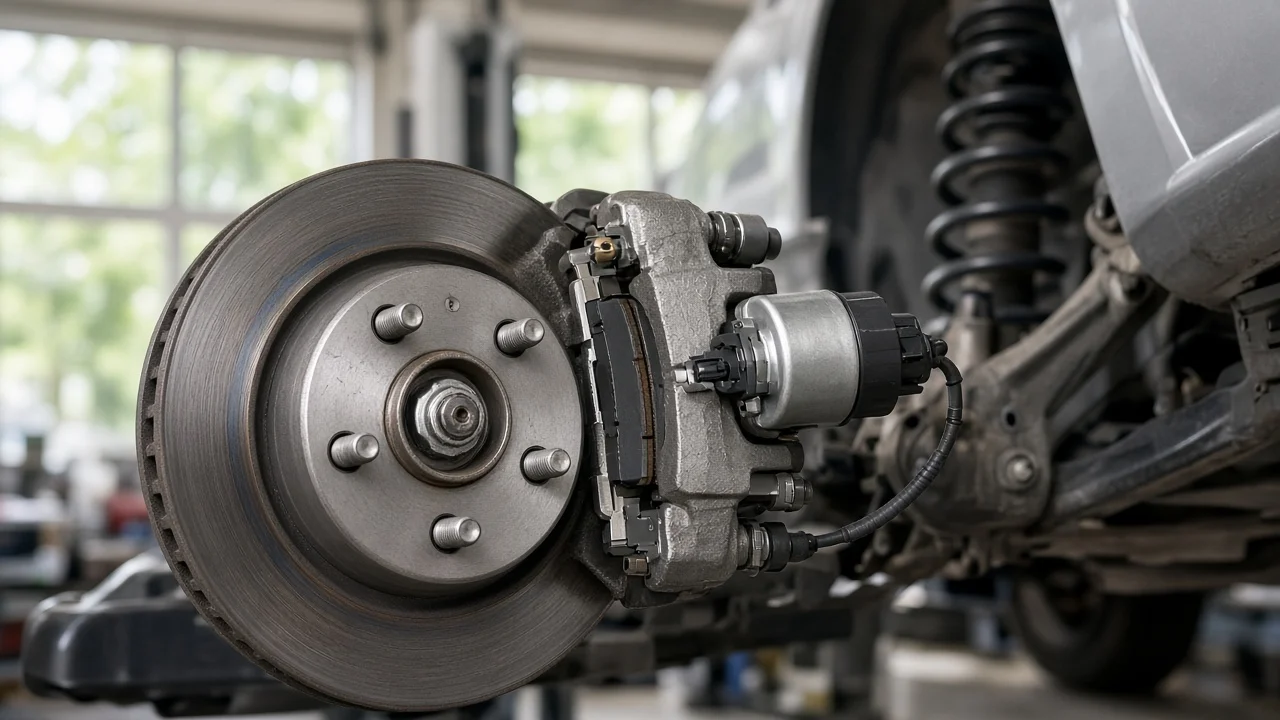
Buying a replacement rear brake caliper for a 2019 Mitsubishi Outlander is simple only after you confirm how your vehicle applies its parking brake. If the rear brakes are held by an electric motor instead of a cable, the caliper is a different part with its own housing, actuator mounting and service steps. This guide explains how to match the right unit, what affects fitment and when the job belongs in a shop.
The short answer on fitment
A caliper built for an electronic parking brake is not interchangeable with a standard hydraulic rear caliper, even within the same model year. Order a unit described for the electric parking brake system and for the correct side of the vehicle, and check it against your VIN rather than the model name alone. Some replacement calipers ship with the actuator motor attached, while others are bare housings that require you to transfer the original motor. Confirm which version you are buying, whether a core return applies, and whether the listing covers your powertrain, because gasoline and plug-in hybrid versions of the 2019 Outlander may be listed separately.
If you are not sure your vehicle has the system, look at the center console. An electronic parking brake uses a small switch, usually marked with a P symbol, instead of a hand lever or foot pedal. A wiring connector on the back of each rear caliper is another clear sign.
How the electric parking brake caliper works
For normal braking, this caliper works like any rear disc caliper: brake fluid pressure from the pedal pushes the piston, which clamps the brake pads against the brake rotor. The parking function is separate. A small electric motor and gear unit mounted on the back of the caliper turns a threaded spindle inside the piston, mechanically pressing the pads onto the rotor and holding them there without hydraulic pressure.
Because the piston is driven by that spindle, it cannot simply be pushed back with a clamp or wind-back tool. The parking brake control module has to command the motors to retract, typically through a maintenance or service mode on a scan tool, before pads or a caliper can be removed. Forcing the piston can damage the spindle, the gear unit or the motor. After installation, the actuators usually need to be re-engaged and checked so the module recognizes the correct pad position.
What changes the right part
Several details decide which caliper actually fits. Side matters: left and right units are mirror images, and the bleeder screw must sit at the top once the caliper is mounted. Powertrain matters because the plug-in hybrid and gasoline models do not necessarily share rear brake hardware. Market and production date can matter too, so a part listed for a vehicle sold outside the United States, or for a different model year, should not be assumed to fit.
Rotor size and bracket design also have to match. A caliper that bolts to the bracket but is intended for a different rotor diameter will not center the pads on the friction surface. The connector on the motor must match your harness, and if you are transferring a motor, its mounting pattern must match the new housing. The most dependable vehicle fitment check is a VIN-based lookup at a dealer parts counter or a supplier that catalogs by VIN, compared with the part number on your old caliper where it is still legible.
What you can check and do yourself
Start by confirming the caliper is really the problem. Signs that point to it include a parking brake warning light or message, a parking brake that fails to apply or release, an actuator motor that runs noisily or longer than usual, one rear wheel running hot after a drive, uneven wear between inner and outer pads, a burning smell, or a fluid leak at a rear wheel. A stored fault code from the parking brake module helps separate a motor or wiring issue from a seized caliper.
When you inspect the brakes, measure the remaining friction material and the rotor thickness against the wear limits in the service information for your vehicle, not a generic figure. A caliper that has been dragging often leaves pads and rotors overheated or worn below specification, and those should be replaced at the same time. Pads are normally replaced as a set across the axle.
If you do the job yourself, you need a scan tool that supports the parking brake service function for this vehicle, the correct torque specifications for the caliper and bracket bolts, fresh brake fluid of the type listed in your owner's manual, and a way to bleed the system. After installation, bleed the replaced caliper, confirm the parking brake applies and releases on both sides, and test the brakes at low speed before returning to normal driving.
Limits of a general guide and when to get help
This guide cannot confirm the exact part number, torque values or scan tool procedure for your Outlander; those depend on your specific vehicle and the current factory service information. Electronic parking brake systems differ in how they handle retraction and calibration, and a generic tool may not offer the right function for this model.
Stop driving and arrange professional service if the parking brake will not release, a rear wheel is dragging or overheating, brake fluid is leaking, the pedal feels soft or sinks, or a brake warning stays on. A shop with suitable diagnostic equipment can determine whether the caliper, the motor, the wiring or the control module is at fault before you buy parts, so you avoid replacing a caliper when the actual cause lies elsewhere.