2018 Toyota Camry Brake Vacuum Pump: Part Identification and Compatibility
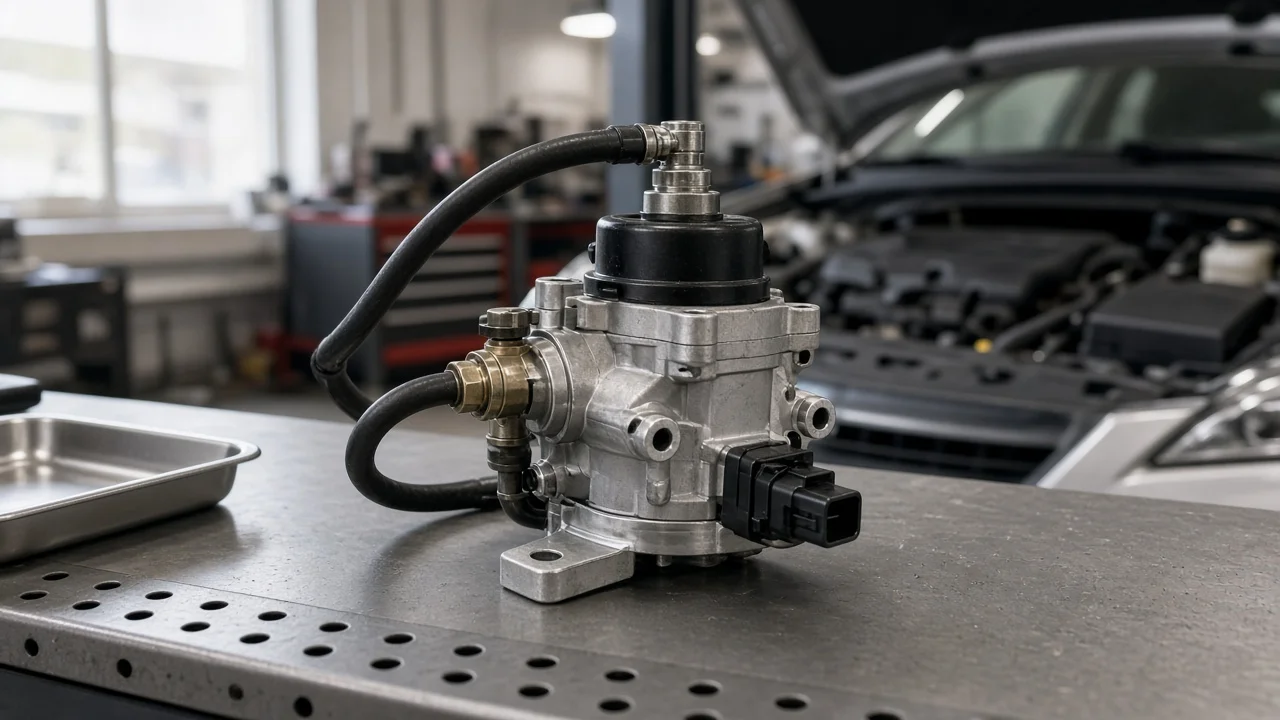
If you are shopping for a brake vacuum pump for a 2018 Toyota Camry, first confirm that your car actually uses one and which version fits. The 2018 Camry was sold with different powertrains, and they do not all supply brake assist the same way. This guide explains how to identify the part, how fitment is decided, and when a hard brake pedal points somewhere else.
Short answer: does your Camry use a vacuum pump?
It depends on the powertrain, so the engine code and VIN decide fitment, not the model year alone. On gasoline models, the brake booster needs a steady vacuum source. Where the engine cannot supply enough intake manifold vacuum, an engine-driven mechanical pump fills the gap. If your engine has one, it is typically mounted on the cylinder head and driven by a camshaft. A hose runs from it to the booster through a one-way check valve. The hybrid model is a different case. It uses an electronically controlled braking system with its own electric pump and pressure components instead of a conventional vacuum booster, so a gasoline-engine vacuum pump does not apply to it.
A replacement pump must match the engine code shown on the vehicle identification label and confirmed in a VIN-based parts catalog. A similar-looking pump from another Toyota engine can differ in drive coupling, mounting pattern, outlet angle or seal design. Treat any listing that says only 2018 Camry, without engine and drivetrain details, as incomplete until a VIN lookup confirms the vehicle fitment.
How the vacuum pump supports braking
When you press the pedal, the brake booster multiplies your foot force before it reaches the master cylinder. It does this using the pressure difference between vacuum on one side of its diaphragm and atmospheric air on the other. The master cylinder then pushes brake fluid to each caliper, which clamps the brake pads against the brake rotors. The vacuum pump never touches the hydraulic side or the friction material. Its only job is to keep the booster supplied with vacuum.
Modern direct-injection engines with wide variable valve timing and efficiency-focused combustion can produce less intake manifold vacuum than older designs under some operating conditions. A camshaft-driven pump supplies vacuum whenever the engine turns, regardless of throttle position. Engine oil normally lubricates this type of pump. That is why a failing seal can show up as an oil leak at the pump body or as oil inside the vacuum hose.
What changes the fitment answer
The main variable is the powertrain. The 2018 Camry was offered with a 2.5-liter four-cylinder, a 3.5-liter V6 and a 2.5-liter hybrid system, and these do not share one brake assist design. Before ordering, confirm whether your specific engine has a pump at all. An owner searching for this part may actually need a booster, check valve, hose or hybrid brake component instead.
Even within one engine, the part number can change through a supersession when the manufacturer revises a design, and production date can matter. Vehicles built for markets outside the United States may use different hardware. When comparing OEM and aftermarket pumps, check three things: the listing includes the correct gasket or O-ring, the drive tang or coupling matches, and fitment is stated by engine code. Seals are generally not reusable once disturbed, so plan to replace the seal along with the pump.
Symptoms that point to the pump, and ones that don't
A weak vacuum supply usually shows up as a hard, high-effort brake pedal. It is most noticeable on the first stops after start-up or after several brake applications in a row. You may also see oil leaking at the pump mounting or hear unusual ticking or whining from the pump area. Some systems that monitor booster vacuum may set a warning light or diagnostic code, but not every system reports low vacuum.
Other complaints usually have different causes. A soft or sinking pedal points to the hydraulic system, such as air in the lines, low brake fluid, a leaking caliper or a master cylinder fault. Grinding, pulsation and squealing relate to brake pads and brake rotors rather than vacuum assist. A new pump will not fix pads worn past their wear limits or rotors below minimum thickness.
What the owner can check before buying
Start with a simple booster test. With the engine off, pump the brake pedal several times to use up stored vacuum. Hold light pressure on the pedal and start the engine. On a working system, the pedal drops slightly as assist returns. If it does not, inspect the vacuum hose from the pump or intake to the booster for cracks, loose clamps and oil saturation. Also confirm that the one-way check valve lets air flow only toward the vacuum source. A failed hose or check valve causes similar symptoms and costs far less than a pump.
Before ordering, record the VIN and engine code and note any part number visible on the existing pump. Also note whether the pump is leaking oil, failing to produce vacuum, or both. A shop can measure pump output at the booster hose with a vacuum gauge and compare it with the specification in factory service information. That measurement is the reliable way to confirm the pump itself has failed.
Limitations and when to get professional help
This guide cannot confirm the exact part for your car. Fitment, part numbers, vacuum specifications and torque values come from Toyota service information and a VIN-specific parts lookup, and they may differ from the general descriptions here. Hybrid brake systems store high pressure and require specific service and bleeding procedures. Leave that work to someone with the correct information and diagnostic equipment.
Stop driving the car as soon as it is safe and have it inspected if any of the following happen: the pedal becomes hard enough to lengthen stopping distance, a brake warning light stays on, or the pedal feels soft or sinks. Losing brake assist does not disable the hydraulic brakes, but the extra pedal effort can make an emergency stop much longer. Installing a camshaft-driven pump also involves engine sealing and correct coupling alignment. If you are not confident with that work, have a qualified technician do it.