2018 Ford Fusion Shift Lock Release: How to Get Out of Park
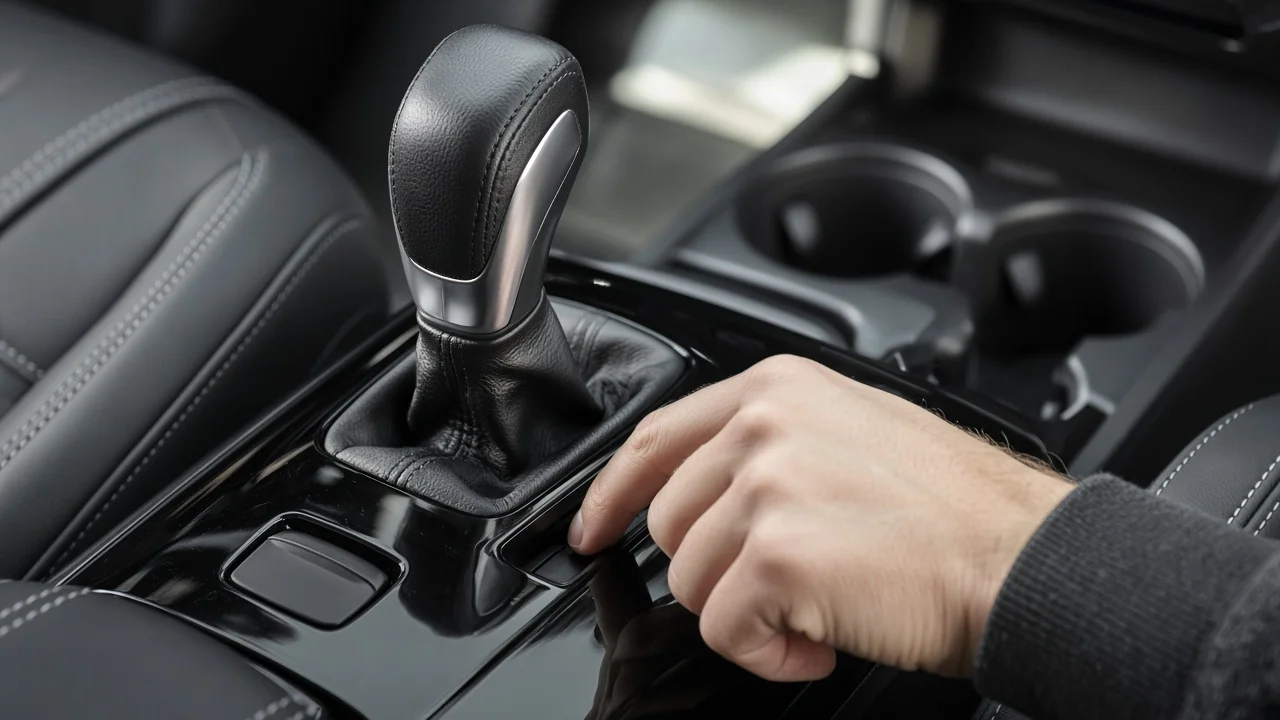
When a 2018 Ford Fusion refuses to leave Park, the fix depends on which shifter the car has. Depending on trim and powertrain, the Fusion may use a traditional console lever with a brake-shift interlock or Ford's electronic rotary shift dial. This guide explains how the shift lock release works on each setup and when a manual override is appropriate. It also covers what a stuck shifter can and cannot tell you about the underlying fault.
The short answer
On a Fusion with a conventional lever, the normal release is simple. Switch on the ignition or start the engine, press the brake pedal firmly, then press the shifter button and move out of Park. If that fails, the lever-type shifter has a manual shift lock override. This is a mechanical release reached through a small access point or trim cover near the lever. Set the parking brake and switch the ignition off. Then insert a thin tool into the access point and press down while moving the lever. This lets you shift the car to Neutral, usually so it can be pushed or towed. Your owner's manual shows the exact location and steps for your car.
The rotary dial works differently. It has no lever to unlock. It sends an electronic request, and the car decides whether to shift. If the dial will not leave Park, the usual causes are a missing brake signal, an ignition or engine state the system does not accept, low battery voltage, or a fault the system has logged. Any emergency park release on dial-equipped cars is a towing or service procedure, not something to improvise in a parking lot, so follow the manual for your specific vehicle. With either shifter, the override only gets the car moving. It does not fix the reason the lock engaged.
How the brake-shift interlock works
The interlock stops the car from being shifted out of Park unless the driver's foot is on the brake. On a lever shifter, a small electric solenoid inside the shifter assembly holds a mechanical stop in place while the car is in Park. When the ignition is on and the brake pedal switch reports that the pedal is pressed, the solenoid releases the stop and the lever can move. The manual override simply pushes that stop aside by hand, bypassing the solenoid.
With the rotary dial, turning the dial sends an electronic message, and the transmission control system carries out the actual shift into or out of Park. The same basic conditions apply: the brake must be applied and the ignition or engine must be in an acceptable state. However, the checks happen in software and control modules rather than in a single solenoid. That is why dial-equipped cars can also shift themselves back into Park under certain conditions, such as when the engine is switched off while in gear. It is also why a weak battery can cause confusing shift behavior.
What changes the answer
Shifter type is the first variable. It depends on trim and powertrain, not model year alone, so confirm what is in your car before following any procedure. Transmission type matters too. Gasoline Fusions use a conventional six-speed automatic, while Hybrid and Energi versions use an electronically controlled continuously variable transaxle. The interlock concept is the same, but the diagnostic paths differ. Hybrid models also have to be in their ready state before they will leave Park.
Operating conditions also matter. On a steep slope, the car's weight can load the parking pawl so heavily that the shifter feels locked even when the interlock has released. Setting the parking brake before shifting into Park, and pressing the brake firmly before shifting out, reduces this. Cold weather, a weak 12-volt battery, and a recent jump start or battery replacement can all affect how the electronic shifter behaves. Service history counts as well. Previous console work, aftermarket accessories, spilled drinks in the console and earlier shifter repairs can each change where the problem lies.
What the owner can do
Start with simple observations. Have a helper confirm whether the brake lights come on when you press the pedal. If they do not, the brake pedal switch, its wiring or a fuse is a likely suspect, because the interlock relies on the same signal. Note whether the problem happens every time or only sometimes. Note whether it started after a battery or console issue, and whether any warning messages appear in the instrument cluster. If the lever moves freely but the gear indicator does not change, the problem may be in the linkage rather than the lock itself.
If you need to move the car now, chock the wheels, set the parking brake and use the override procedure exactly as your owner's manual describes for your shifter. Do not force a lever or dial. Forcing it can break internal parts and turn a small electrical fault into a larger repair. Once the car is moved, have it checked rather than relying on the override repeatedly. A scan tool that reads transmission and body modules, not just engine diagnostic codes, gives a technician a starting point. Also check for open recalls and service campaigns by VIN with a Ford dealer. Ford has issued shifter-related recalls on various models, and only a VIN lookup confirms whether one applies to your car.
Repair options depend on the confirmed cause. Possible culprits include a failed brake switch, a fuse, a connector, the shift lock solenoid, the shifter assembly, or a cable or bushing. The symptom alone does not identify which one. When replacing parts, confirm fitment by VIN, because shifter assemblies and related parts differ between lever and dial versions and between powertrains. Transmission fluid level or fluid specification is rarely the reason a shift lock will not release, so a fluid change is not a substitute for diagnosis.
Limitations and next step
This article describes how the system works in general terms. It cannot confirm which shifter or override your particular Fusion uses, where the release is located, or which component has failed. Those details come from the owner's manual, the vehicle's service information and hands-on testing. A shifter that will not leave Park is an inconvenience. A shifter that leaves Park without the brake pressed, or a car that rolls while the indicator shows Park, is a safety issue. In those cases, do not drive the vehicle until it has been inspected.
Contact a Ford dealer or a qualified transmission shop in any of these situations: the override does not work, a dial-equipped car will not leave Park with the brake pressed, warning messages appear, or you are not comfortable removing trim. If the car needs a tow, use a method that suits its drivetrain. The towing section of the owner's manual explains which method is appropriate.