2018–2020 Ford F-150 Rear Calipers With Electronic Parking Brake: Fitment Guide
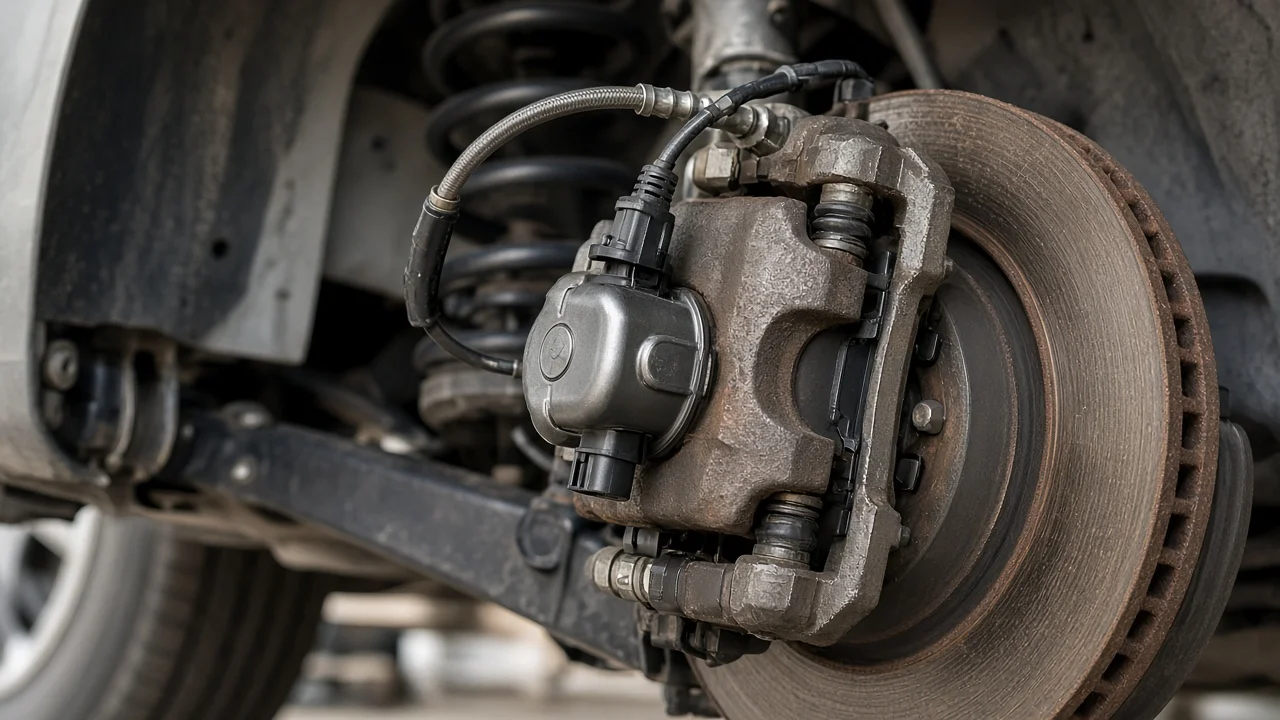
If your F-150 applies its parking brake with a switch, its rear calipers are not the same part used on trucks with a conventional parking brake. This guide explains how to identify the correct rear brake caliper for a 2018, 2019 or 2020 F-150 with an electronic parking brake. It covers why the motor-equipped design changes fitment and service, and when a brake fault means the truck should not be driven until it is repaired.
The short answer on fitment
A 2018–2020 F-150 equipped with an electronic parking brake needs rear calipers built for that system. These calipers carry an electric actuator, usually a motor and gear unit mounted on the back of the caliper body, and the housing is made to accept it. A caliper made for a truck with a conventional parking brake has no provision for the actuator and cannot apply the parking brake. The two are not interchangeable, even when they look similar from the wheel side. Within the electronic parking brake version, vehicle fitment still depends on the side of the truck and the brake hardware the truck was built with. The safest way to confirm the correct part is to match it against the vehicle identification number or build data rather than the model year alone.
How the electronic parking brake works at the rear caliper
During normal driving, the rear caliper behaves like any hydraulic brake. Pressing the brake pedal pushes brake fluid into the caliper, the piston moves out, and the brake pads clamp the brake rotors. The electronic parking brake adds a second way to move that same piston. When the switch is applied, a control module powers an electric motor on each rear caliper. The motor turns a gear reduction and a threaded spindle behind the piston, which drives the piston forward mechanically and holds it there without relying on hydraulic pressure.
This design has practical consequences for service. Because the spindle sits behind the piston, the piston cannot simply be pressed back into its bore with a clamp when new pads are fitted. The mechanism must first be retracted, normally by putting the system into a service or maintenance mode with a capable scan tool or by following the procedure in the vehicle's service information. Forcing the piston back can strip the spindle, damage the actuator or leave the parking brake unable to apply correctly. The actuator also depends on stable battery voltage and an intact wiring connector, so electrical faults can produce parking brake warnings even when the friction material and rotors are in good condition.
What changes the correct part
Several details decide which caliper is correct. First is the parking brake type: a truck with an electronic parking brake needs actuator-equipped calipers, while one with a conventional parking brake does not. Second is the side. Left and right rear calipers are mirror images, and the positions of the actuator, bleeder and hose fitting differ between them. Third is the brake hardware itself. Trucks in this generation can differ in rotor diameter and caliper bracket depending on configuration, including payload and towing equipment, so the caliper must match the rotor and mounting bracket actually installed on the truck.
The way a replacement is sold also matters. Some calipers come with the electric actuator already fitted, others are sold as the caliper body only and expect the original motor to be transferred, and some include or omit the mounting bracket. Remanufactured units commonly carry a core charge that is refunded when the old caliper is returned. Loaded calipers include pads and hardware, which simplifies matching but means those pads must suit how the truck is used. Check exactly what is included before ordering, because a mismatch is often discovered only after the old caliper is already off the truck.
What an owner can check and do
Start by confirming the system on your truck: note how the parking brake is applied and check the parts listing against the full VIN. Then decide whether the caliper truly needs replacement. Common reasons include a seized or sticking piston, a leak at the piston seal or bleeder, uneven wear between the inner and outer pads, a pull to one side under braking, or a parking brake fault that persists after the actuator and wiring have been checked. A parking brake warning alone does not prove the caliper body is bad; the actuator, connector or control module may be the actual cause.
If you replace the caliper, measure the brake pads and brake rotors against the wear limits in the service information rather than a general rule, and replace pads in axle sets. Retract the parking brake mechanism through service mode before removing the caliper, chock the wheels because the rear parking brake will not hold, and support the caliper so the hose is not stretched. Use new sealing washers where the hose connection requires them, tighten fasteners to the specified torque, and bleed the brake fluid in the specified sequence. Afterwards, exit service mode, cycle the parking brake several times and confirm the warning lights are off before a careful low-speed test.
Limits of this guide and when to stop driving
Parts and options can change during production, so the model year is only a starting point; the VIN and build data are the reliable reference for a 2020 truck just as for a 2018. Exact torque values, bleeding sequences, wear limits and the correct service mode procedure are vehicle-specific and should come from the service information for your truck. Not every scan tool can command the parking brake on this platform, and without one the job may not be possible to finish correctly at home.
Stop using the truck and arrange professional service if the brake pedal feels low or soft, brake fluid is leaking at a wheel, the truck pulls hard when braking, a rear wheel is very hot after a short drive, or the brake warning light stays on. A parking brake that will not release, or will not hold the truck on a slope, also needs repair before you rely on it. A technician with suitable diagnostic equipment can confirm whether the fault lies in the caliper, the actuator or the control system before any parts are bought.