2018–2019 Honda Accord Wastegate Actuator: Identification
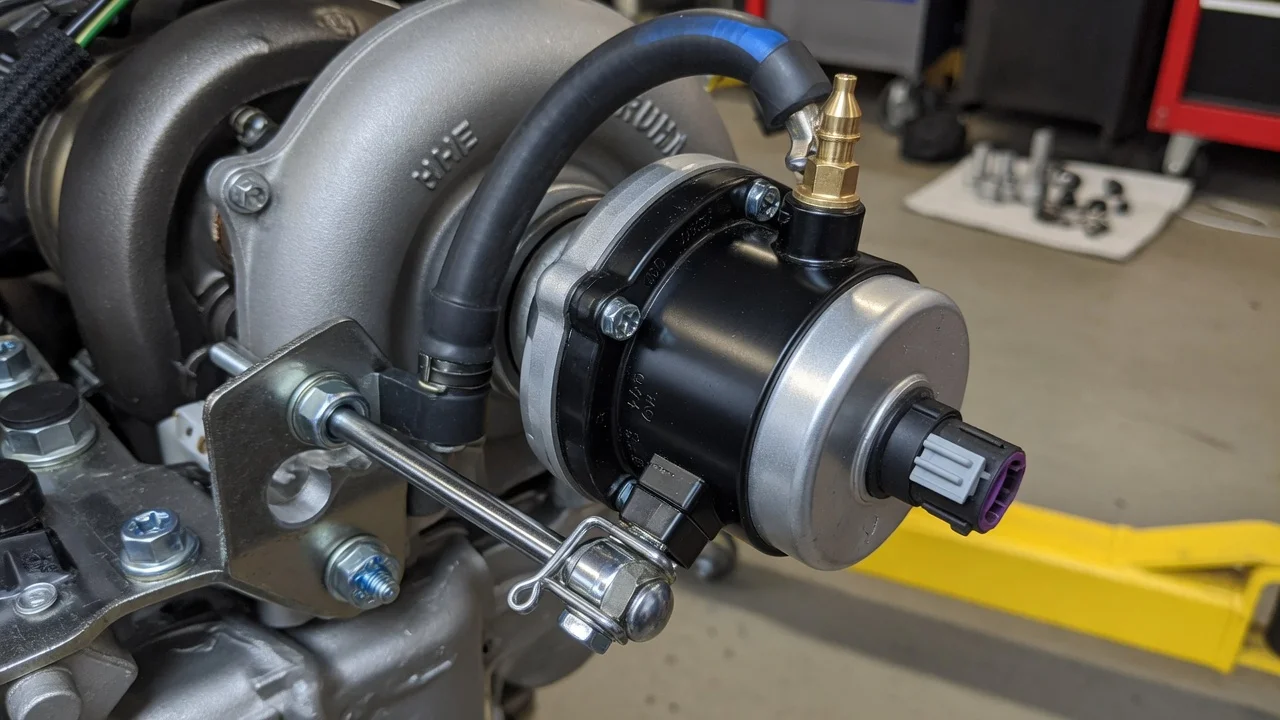
If you are trying to locate or identify the wastegate actuator on a 2018 or 2019 Honda Accord, start by confirming which powertrain the car has. This guide explains where the actuator sits in the turbo system, how to tell it apart from nearby parts, how the engine choice changes the answer, and when a VIN-based parts lookup or a qualified technician is the safer route.
The short answer for 2018 and 2019 models
On the tenth-generation Accord, a wastegate actuator matters only for the turbocharged gasoline versions: the 1.5-liter turbo and the 2.0-liter turbo four-cylinder engines. The Accord Hybrid from these years uses a naturally aspirated engine, so it has no turbocharger and no wastegate actuator. On the turbo models, the actuator is mounted on the turbocharger assembly and connects to the wastegate valve through a short rod or linkage. It is controlled electronically by the engine computer, so the most obvious identifying feature is an electrical connector on the actuator body rather than a vacuum hose feeding a diaphragm canister.
The 2019 Accord carries over the same engine lineup as the 2018, so the identification approach is the same for both model years. The two turbo engines use different turbochargers, however, and the actuator listed for your car depends on its exact vehicle configuration. A parts lookup tied to the VIN is more reliable than a search by year and model alone.
How the wastegate actuator works
A turbocharger is spun by exhaust gas flowing through its turbine. The wastegate is a small valve that lets part of that exhaust bypass the turbine, which limits turbine speed and therefore the boost pressure delivered to the engine. The actuator is the component that opens and closes this valve. In an electronic design like the one used on these Accords, a small motor inside the actuator moves the linkage, and the engine control module commands its position based on boost demand and sensor readings. Older or simpler systems use a spring-loaded diaphragm moved by pressure or vacuum, which is why some generic guides describe a canister with a hose.
This matters for identification and diagnosis. Because the engine computer monitors the electronic actuator, a problem is more likely to show up as a warning light, stored trouble code or reduced power than as something you can confirm by sight. The valve and linkage also sit on the hot exhaust side of the turbo, so heat and wear affect the moving parts over time.
What changes the answer
Engine choice is the main variable. A 1.5-liter car and a 2.0-liter car each have their own turbocharger and actuator, so do not assume a part or a description written for one applies to the other. If you are unsure which engine you have, check the original window sticker, the vehicle registration documents or the emissions label under the hood, which lists engine displacement. A Honda dealer can also confirm the configuration from the VIN. If the car is a hybrid, there is no wastegate actuator, and any boost-related advice does not apply.
Service history can also change what you see. If the turbocharger or actuator has been replaced, the installed part may be a dealer replacement, a remanufactured unit or an aftermarket part that looks different from the original. Operating conditions such as frequent heavy loads or lots of short trips do not change which part the car uses, but they can affect the condition you find during an inspection.
What you can check as an owner
With the engine off and fully cooled, locate the turbocharger on the exhaust side of the engine. The actuator is a compact housing attached to the turbo assembly, with a wiring connector and an arm or rod running to the wastegate lever. Heat shields and surrounding components may limit your view, and on some cars a clear look requires removing parts or viewing from underneath. If that is beyond your comfort level, stop at identification rather than disassembling anything. Never touch the turbo area after driving, because it stays very hot for a long time.
If you suspect a problem, record what you notice: warning lights, a drop in power, a rattle from the turbo area, or trouble codes read with a scan tool. Write the codes down before clearing them, since they help a technician narrow the cause. Avoid bending or adjusting the linkage yourself. Electronic actuators can require a specific setup or learning procedure after replacement, and that procedure is defined in Honda service information rather than something to improvise.
When buying a replacement, give the VIN to a Honda parts counter or use a catalog that filters by VIN. If a part number or label is visible on the existing actuator, compare it with the listed part before ordering. Keep in mind that the actuator is generally not a routine maintenance item with a set replacement interval; it is inspected or replaced when diagnosis points to it.
Limitations and when to get help
This guide covers identification only. It does not provide part numbers, torque values, calibration steps or test specifications, all of which come from manufacturer specifications and service information for your specific car. Seeing the actuator also does not prove it is faulty. Symptoms such as low boost or reduced power can come from boost leaks, sensors, wiring or other turbo components, so a proper inspection with scan data is needed before replacing parts.
As a next step, confirm your engine and VIN, note any symptoms and codes, and ask a Honda dealer whether any service bulletins, campaigns or warranty coverage apply to your vehicle. If a warning light is on or the car has noticeably less power, have it diagnosed by a technician with access to Honda service procedures rather than relying on visual identification alone.