2017 Jeep Grand Cherokee Shift Lock Release: What Owners Should Know
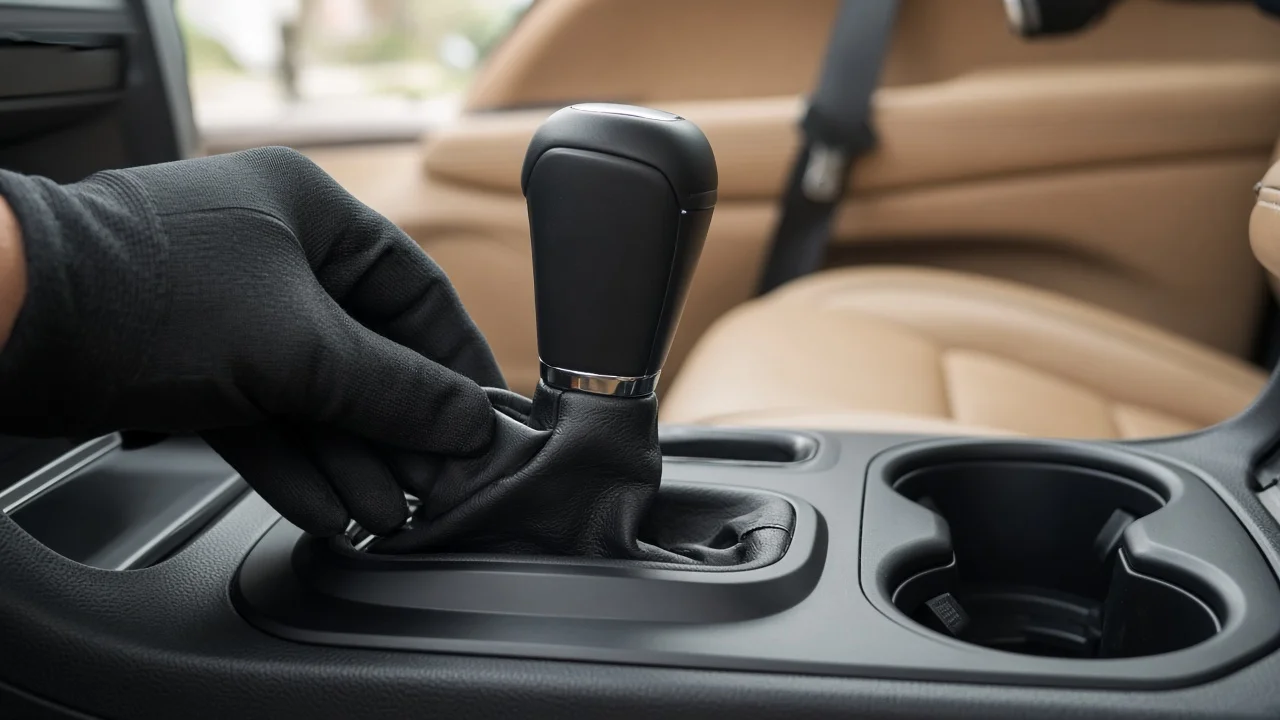
If your 2017 Grand Cherokee won't come out of Park, the fix is rarely a hidden button next to the shifter. This model year uses an electronically controlled 8-speed automatic, so the shifter sends a request instead of moving the transmission directly. This guide explains what a shift lock release means on this vehicle, why the lock engages, and what you can safely check before calling for help.
The short answer for the 2017 model
The 2017 Grand Cherokee does not use the traditional shift lock override slot found on older cable-operated shifters. Its electronic shifter needs several conditions before it will request a gear other than Park. The ignition must be in the run position or the engine running, the brake pedal must be applied, and the electrical supply must be healthy. When those conditions are met and the vehicle still won't leave Park, the cause is usually a signal or power problem, not a mechanical lock you can push past.
For situations where the vehicle must be moved without power, such as a dead battery or loading onto a tow truck, Jeep provides a manual park release procedure in the owner's manual. It mechanically disengages Park, which is different from a shift lock override. Once it is used, the vehicle can roll freely, so it is not a substitute for diagnosing why normal shifting stopped working.
How the electronic shift interlock works
On a conventional automatic, a solenoid physically blocks the lever until you press the brake. On the 2017 Grand Cherokee, the shifter is essentially a sensor assembly. Moving it sends a position request to the transmission control system, which decides whether to command the gear change. The brake-transmission shift interlock logic checks the brake pedal signal, vehicle speed, ignition state and other inputs before allowing a shift out of Park.
Because the lever is not connected to the transmission by a cable, forcing it achieves nothing and can damage the shifter. The gear indicator on the instrument cluster, not the lever's position, tells you which gear is actually selected. If the lever moves but the display stays in P, the system has declined the request. The cluster will often show a message explaining why, such as a reminder to press the brake.
Factors that change the diagnosis
Configuration matters. Every 2017 Grand Cherokee uses an 8-speed automatic, but engine choice, drivetrain and trim affect the specific transmission type, its fluid specification and the software that controls it. SRT, diesel and four-wheel-drive versions with a two-speed transfer case may have different service and towing procedures. Use your VIN to confirm exact fitment before ordering parts or following instructions written for another configuration.
Operating conditions also change the result. A weak battery can let the dash light up while leaving voltage too low for the shift system to respond reliably. A brake pedal that feels normal may still fail to send its signal if the brake light circuit has a fault. Because shift logic is controlled by software, dealer updates and any open recalls are worth checking in the service history. Fluid level is an unlikely cause of a Park lockout, although low or incorrect fluid does affect engagement once the vehicle is in gear.
Checks you can do before calling for help
Start with the basics. Confirm the ignition is in run, press the brake firmly and watch the cluster for messages. Ask someone to check whether the brake lights come on when the pedal is pressed. If they do not, the interlock may not be seeing the brake signal, although confirming the cause still requires testing the circuit and reading codes. Check battery condition as well: dim lights, slow cranking or several warning lamps at once point toward a power problem.
If you have a scan tool that can read transmission and body modules, record any diagnostic codes before clearing anything. Codes indicate which circuit or input the system flagged, not necessarily which part failed. Note when the problem happens, for example only when hot, only after rain or only intermittently, because that pattern helps a technician narrow down the cause.
If you must move the vehicle without power, follow the manual park release steps in your owner's manual exactly. Before releasing Park, set the parking brake, chock the wheels and make sure the vehicle is on level ground, because nothing in the transmission will hold it once the release is engaged. Afterward, restore the mechanism to its normal position as the manual describes.
Limitations and when to get professional help
A shift lock problem on this vehicle is an electronic diagnosis, and the symptoms overlap. A faulty brake signal, low system voltage, a shifter sensor fault, a wiring issue or a transmission control concern can all produce the same refusal to leave Park. Replacing parts based on the symptom alone often wastes money. Repair options range from a battery or switch replacement to shifter or module work, and only testing separates them.
Seek professional help if the problem persists after you have confirmed battery health and brake light operation, or if warning lights or diagnostic codes involve the transmission. If the vehicle shifts unexpectedly or fails to hold Park, treat it as a safety issue: stop driving and have it towed. Bring your VIN, service history and a description of the shift behavior so the shop can check recalls, software level and the correct procedures for your configuration.