2017 Chevrolet Camaro Torque Converter Shudder Diagnosis
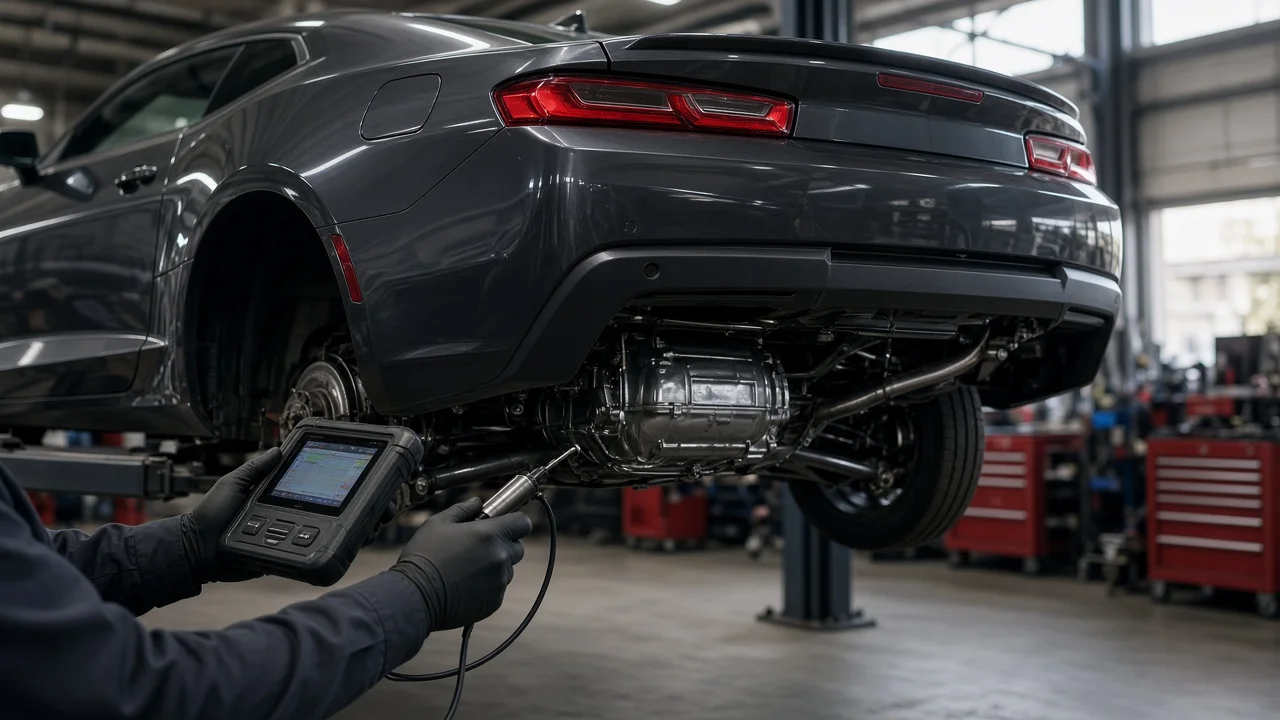
A shudder that feels like driving over rumble strips at a steady cruising speed is a common complaint on 2017 Camaros with an automatic transmission. On many cars the cause is the torque converter clutch and the fluid it works in. Misfires, driveline faults and tire problems can feel very similar, though. This guide covers how to describe the symptom, separate the likely causes, run checks in a sensible order and decide what to do next without replacing parts on a guess.
Establish the symptoms
Start by confirming exactly which transmission the car has, because the diagnostic path depends on it. Most automatic 2017 Camaros with the 2.0-liter turbo four or the 3.6-liter V6 use the 8L45 eight-speed. The SS with the 6.2-liter V8 uses the 8L90 eight-speed, and the ZL1 uses the 10L90 ten-speed automatic. A Camaro with a manual gearbox has no torque converter, so a vibration in that car needs a different diagnosis. The transmission type appears on the Service Parts Identification label. A dealer can also confirm it from the VIN and check for open campaigns or service updates at the same time.
Next, write down when the shudder happens. Torque converter clutch shudder typically shows up at light throttle or steady cruise and often fades under heavier acceleration or when coasting. Note the speed range, the gear if you can see it, whether the engine is cold or fully warm, and whether it happens on flat roads, on hills or both. Also record any other signs: a check engine light, harsh or delayed shifts, flares in engine speed between gears, noises, or a rough idle. Finally, list recent changes such as a fluid service, a performance tune, new tires or wheels, suspension work or a lowered ride height. Any of these can shift the diagnosis.
Distinguish plausible causes
The leading suspect is the torque converter clutch. On the GM eight-speed units it often runs in a controlled-slip mode instead of locking fully, which makes it sensitive to the friction properties of the fluid. GM addressed many eight-speed shudder complaints by exchanging the original fluid for an updated transmission fluid specification. Several observations support this cause. The shudder appears only in the light-load range where the clutch is applied. It stops when the clutch is released. There are no engine misfires at the same moment, and it began gradually with mileage. It becomes less likely if the vibration occurs at idle, in park or neutral, or while coasting with the throttle closed.
An engine misfire under light load is the most common look-alike. Worn spark plugs, a weak ignition coil or a fuel delivery problem can produce a pulsing that feels almost identical, especially in the low-rpm, high-gear conditions where the converter clutch is also applied. Misfire codes, rising misfire counters or a rough idle support this explanation. Clean misfire data recorded during the shudder weakens it.
Driveline and chassis problems complete the list. An out-of-balance driveshaft, worn joints in the rear axle shafts, a tire that is out of round, or a wheel that has lost a balance weight usually produce a vibration that follows road speed regardless of gear or throttle. Worn engine or transmission mounts tend to show up as a thump or buzz on load changes. Internal transmission damage, such as a failing converter or a valve body or solenoid fault, is less common. It is suggested by stored transmission codes, slipping, flaring or debris in the fluid.
Checks in a useful order
Begin with checks any owner can safely do. Look for warning lights, inspect the tires for uneven wear, bulges or flat spots, set pressures to the door-jamb specification, and look under the car for transmission fluid leaks. Review the service history for when the transmission fluid was last serviced, which fluid was used and whether a shudder-related fluid exchange has already been done. On the road, only where it is safe, note whether a slight increase in throttle or easing off changes the shudder. Lightly touching the brake pedal while holding speed releases the converter clutch on many vehicles. If the shudder stops the instant the brake lights come on, that points toward the converter clutch. Using manual gear selection to change engine speed at the same road speed also helps separate engine-related vibration from speed-related vibration.
The next step needs a capable scan tool. Read stored and pending codes from both the engine and transmission control modules. Basic code readers often miss transmission-specific codes. Useful live data includes commanded converter clutch state, converter slip speed, misfire counters per cylinder and transmission fluid temperature. If slip speed oscillates while the shudder is felt and misfire counters stay at zero, that is strong evidence. These transmissions have no conventional dipstick. Checking fluid level correctly requires the engine running, the fluid within a specified temperature window and a defined check-plug procedure. This is best handled by someone with the service information and a scan tool.
Some tests belong with a qualified transmission technician. These include inspecting the fluid for burnt odor, discoloration or metallic debris, and performing a machine-based fluid exchange with the currently specified GM fluid. Software updates and transmission adaptive value resets also fall in this group. If the cause is still unclear, a vibration analyzer can match the frequency of the shudder to engine speed, driveshaft speed or tire speed, which separates converter, engine and driveline sources far more reliably than feel alone.
Interpret the findings
Each result narrows the possibilities without proving a failed part on its own. A shudder that disappears with a light brake touch, coincides with fluctuating converter slip and shows no misfire activity points strongly to the converter clutch and its fluid. That does not mean the converter is mechanically damaged. Many shudders of this kind respond to a correct fluid exchange. If the shudder returns soon after a proper exchange, the converter, the clutch control solenoid or the valve body becomes the focus. Rising misfire counts during the event shift attention to the engine first. A vibration that tracks road speed whatever the gear or clutch state points to tires, wheels or the driveshaft.
Confirm several things before approving major work. A converter clutch performance code such as P0741 means the clutch did not achieve its commanded state. That can result from fluid condition, a solenoid, a valve body fault, wiring or the converter itself, so the code alone does not condemn the converter. Metallic debris or badly degraded fluid suggests internal wear and raises the chance that more than the converter needs attention. Replacing a converter means removing the transmission, so the diagnosis should rest on recorded data. Make sure fluid-related causes have been ruled out first. Also ask the dealer whether any updated parts, software or remaining coverage applies to the car.
Urgency and next action
A mild shudder on its own does not usually mean the transmission is about to fail. Continued slipping of the converter clutch does generate heat and wear, and it can contaminate the fluid, so it should not be ignored. There is no reliable way to say how many more miles the car can be driven safely, and that depends on the actual cause. Stop driving and arrange inspection or towing if any of these appear: slipping or flaring between gears, delayed or missing engagement into drive or reverse, a burning smell, a fluid leak, a transmission overheating message, reduced-power or limp mode, loud clunks, or a flashing check engine light, which indicates a severe misfire.
Bring the shop the information that speeds up an accurate diagnosis. That includes the transmission type and VIN, current mileage, and the full service history, including the fluid type and date of any previous fluid exchange. Mention modifications such as engine tunes, wheel and tire fitment changes or suspension work, along with your written notes on when the shudder occurs. Include any codes with freeze-frame data you have already retrieved. When discussing repair options, ask which test confirmed the cause and what result would justify moving from a fluid exchange or software update to valve body, converter or transmission replacement. That way each step is based on evidence rather than assumption.