2016 Kia Sorento Shift Lock Release: How to Move a Stuck Shifter
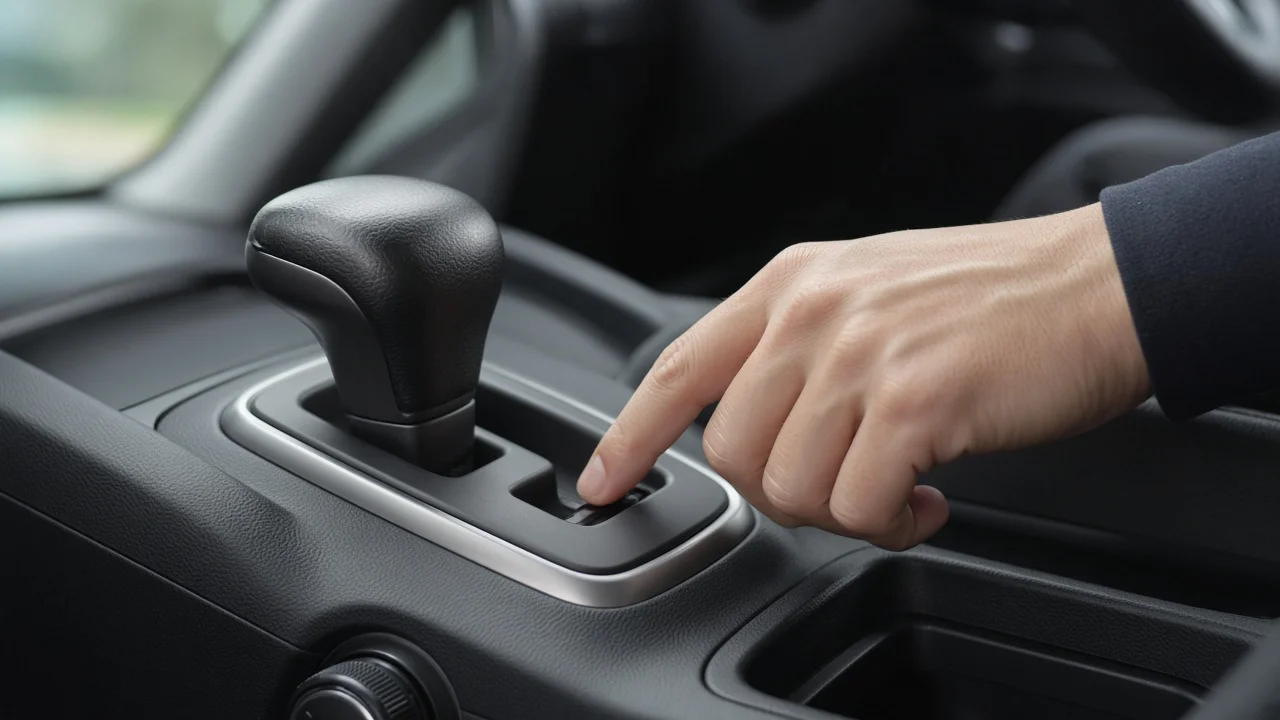
If the shifter on your 2016 Kia Sorento won't come out of Park even with your foot firmly on the brake, the console has a manual shift lock release that lets you move the lever to Neutral. The override exists so the vehicle can be pushed, towed or diagnosed. It is not meant as a daily workaround. Below is how to use it, how the interlock works, what changes the situation, and what a stuck shifter may be telling you.
Using the shift lock release on a 2016 Sorento
Automatic-equipped 2016 Sorento models have a small access slot near the shift lever on the center console, hidden under a removable cap. The general procedure follows the usual Kia sequence. Park on level ground if you can and set the parking brake firmly. Turn the ignition off. Carefully pry off the cap with a thin tool, taking care not to scratch the trim. Insert a small flat-blade screwdriver or a similar tool into the slot and press down. While you hold it down, press the brake pedal and move the lever out of Park into Neutral. Then remove the tool and refit the cap. The exact slot position and wording vary by trim, so confirm both against the owner's manual for your vehicle.
Once the lever is in Neutral, nothing holds the vehicle but the parking brake. Chock the wheels before anyone works around it or pushes it. If the engine starts and the Sorento drives normally after the override, the condition that blocked the shifter is still there. It will likely return the next time you park, so treat the release as a temporary measure and have the cause found soon.
How the shift interlock works
The shift lock is part of a brake-transmission shift interlock. A small electrically controlled solenoid at the base of the shifter mechanically blocks the lever in Park. It releases only when the system sees the ignition on and the brake pedal pressed, a signal normally supplied by the brake pedal switch that also operates the brake lights. This design keeps the vehicle from being shifted into gear without the driver's foot on the brake. The release slot gives you direct mechanical access to that lock, so pressing down pushes it aside without any electrical signal.
The interlock sits in the shifter and its control circuit, not inside the transmission. The 2016 Sorento uses a six-speed automatic across its engine choices, but the transmission type, internal condition and fluid specification have little to do with whether the lever can leave Park. A shifter stuck in Park is usually a question about the interlock's power, its signals or the shifter mechanism itself. Harsh or delayed shift behavior while driving is a separate concern with its own diagnostic path.
What changes the answer
Battery condition matters first. With a dead or very weak battery the solenoid cannot release, so the lever stays locked no matter what you do with the brake. In that case the manual release is the intended way to get to Neutral for pushing or loading onto a tow truck. Ignition type also matters. Sorentos with a mechanical key may also have a key interlock that keeps the key from coming out unless the lever is in Park. Push-button smart key models handle this electronically, and their ignition-mode behavior is described in the owner's manual.
The brake lights offer a useful clue. If they don't come on when the pedal is pressed, the shared brake switch circuit, a fuse or the wiring becomes a reasonable suspect. That is a pointer, not a confirmed failed part. If the brake lights work but the lever stays locked, the solenoid, its connector, the shifter assembly or debris from a spill in the console are more likely candidates. One more situation can feel like a shift lock problem: parking on a steep slope without setting the parking brake first loads the transmission's parking pawl. The lever can then be very stiff even after the interlock releases.
What the owner can do
Start with simple observations before replacing anything. With the ignition on, have someone confirm that the brake lights illuminate when you press the pedal, or check their reflection against a wall or garage door. Note whether the dash lights look normal or dim, which can point toward a weak battery. In a quiet cabin, press the brake with the ignition on and listen for a faint click from the console, which suggests the solenoid is being commanded. Also record whether the problem is constant or intermittent, and whether it follows hot weather, cold weather or a drink spilled near the shifter.
Check the relevant fuses using the fuse box diagrams in the owner's manual. A scan tool may show diagnostic codes related to the brake switch in some modules. Keep in mind that a lack of codes does not prove the circuit is healthy. Review the service history and ask a Kia dealer to look up the VIN for any open recalls or service campaigns that apply to your vehicle. Repair options generally range from replacing or adjusting the brake pedal switch to repairing wiring or replacing the shift lock solenoid or shifter assembly. Parts fitment can differ by trim and production date, so order components by VIN rather than by model year alone.
Limitations and next step
The procedure above describes how the override generally works. Your own owner's manual is the authority on slot location, ignition position and any trim-specific steps. A stuck shifter can come from several sources, and the symptom alone cannot confirm which component has failed. Testing the switch signal, the solenoid supply and ground, and the shifter mechanism is what separates them. If the brake lights are out, the vehicle is not safe to drive regardless of the shifter, because following drivers will not see you braking.
If the release does not free the lever, or the vehicle won't move once it is in Neutral, stop forcing it and arrange professional help. Check the towing section of the owner's manual before transport. A flatbed is generally the safest choice, especially for all-wheel-drive models. A technician with a scan tool and wiring information for your specific Sorento can confirm the cause and recommend the right repair, so you don't have to keep relying on the override.