2016 Kia Sorento Shift Interlock Solenoid Location
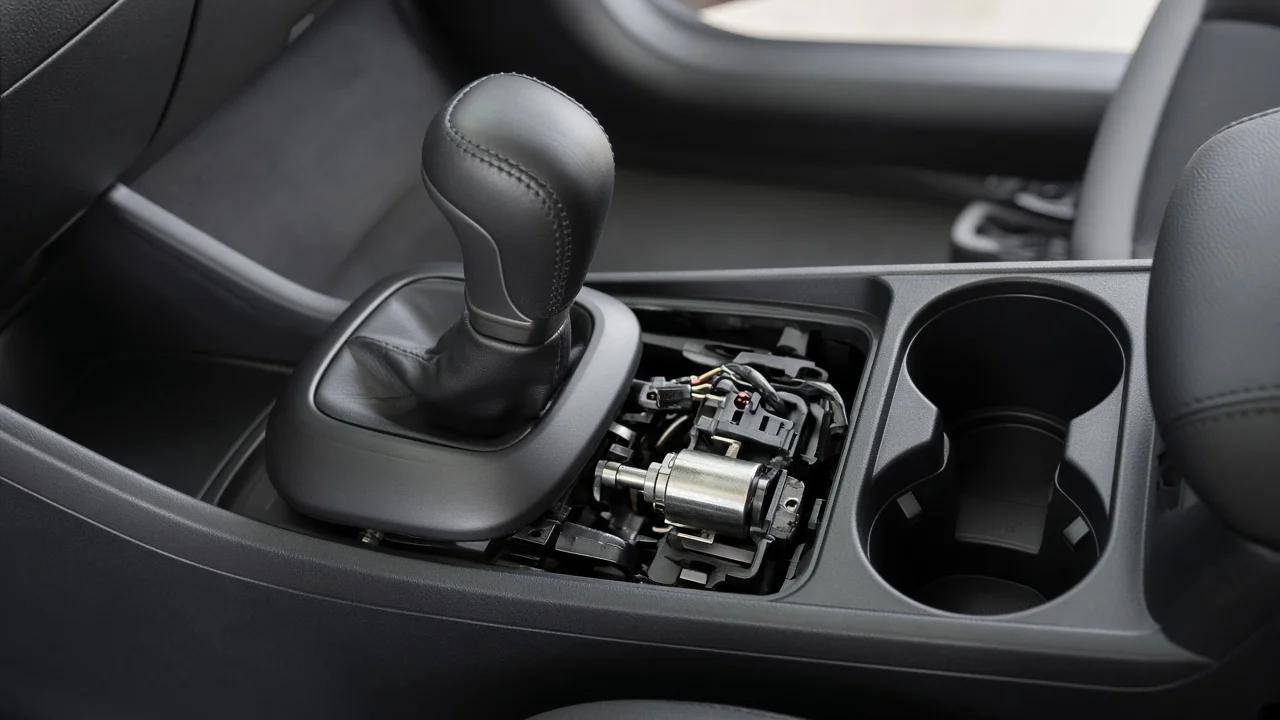
If your 2016 Kia Sorento will not shift out of Park, the shift interlock solenoid is one of the first parts people look for. On this generation it is not a separate component mounted somewhere in the engine bay or transmission. It is part of the shifter mechanism under the center console. Knowing where it sits, and what else controls it, helps you avoid buying a part the vehicle may not need.
Where the solenoid is on a 2016 Sorento
On the 2016 Sorento, the shift interlock solenoid, often called the shift lock solenoid, is built into the floor-mounted shift lever assembly. It sits at the base of the shifter, under the center console trim, next to the mechanism that holds the lever in Park. It is not located on or inside the transmission case. To reach it, you remove the trim around the shift lever, which typically includes the shift boot or indicator bezel and the surrounding console panels. Then you can see the shifter base and its wiring connectors.
An important qualification is that Kia generally supplies this solenoid as part of the complete shift lever assembly, not as a standalone part. Whether a separate solenoid can be purchased depends on the exact part catalog listing for your vehicle identification number. Confirm fitment with a parts counter or a VIN-based catalog before ordering anything.
How the shift interlock works
The interlock is a safety feature that stops the lever from leaving Park unless the brake pedal is pressed and the ignition is on. When those conditions are met, the brake pedal switch sends a signal and the solenoid is energized. The solenoid then pulls a small plunger or lock pin out of the way so the shifter can move. When you release the brake or switch the vehicle off, the solenoid de-energizes and the lock returns to place.
The solenoid only acts on what it receives, so it depends on several other parts. These include the brake pedal switch (also called the stop lamp switch), the related fuse and wiring, the ignition or smart key system, and the connectors at the shifter. A failure in any of these can produce the same result as a dead solenoid: a shifter that stays locked in Park even with the brake pressed. That is why a stuck shifter is a symptom, not proof that the solenoid itself has failed.
What changes the answer
In the United States the 2016 Sorento was offered with several engines, including a 2.4-liter four-cylinder, a 2.0-liter turbocharged four-cylinder and a 3.3-liter V6. All of them are paired with a six-speed automatic, in front-wheel-drive or all-wheel-drive form. The interlock is a function of the shifter and brake circuit, not the internal transmission type. Still, shifter assemblies, wiring and trim pieces can differ between trims, drivetrains and production dates, so your VIN is the reliable reference for part numbers and fitment.
The ignition type also matters. Vehicles with a push-button start and smart key handle the ignition-on signal differently from keyed ignitions, and that affects the diagnostic path. Your service history matters too. Recent console work, liquid spills near the shifter, aftermarket accessories tapped into the brake light circuit, or a previous brake switch replacement can all point the diagnosis in a particular direction.
What the owner can do
Start with simple checks. With the engine off and the ignition on, have someone watch the rear while you press the brake pedal. If the brake lights do not come on, the brake pedal switch, its fuse or its wiring is a more likely cause than the solenoid. Next, sit in a quiet cabin with the ignition on and press and release the brake several times while listening near the shifter. A faint click usually means the solenoid is receiving power and moving. Silence suggests either a missing signal or a failed solenoid.
If you need to move the vehicle, many Kia models of this era have a shift lock release next to the shift gate. It is usually under a small removable cover, and the owner's manual describes how to use it. Pressing the release while you hold the brake lets you select Neutral so the vehicle can be towed or pushed. This is a temporary workaround and does not fix anything. Keep the parking brake applied until you are ready to move the vehicle, and do not drive regularly with the interlock bypassed.
If you have scan equipment that reads body and transmission modules, check for stored diagnostic codes. A code is not required for an interlock fault, but stored codes can reveal a related brake switch or communication problem. Your repair options then range from replacing the brake pedal switch or a fuse, to repairing a connector, to replacing the shift lever assembly. Only move on to the shifter assembly once you have confirmed that power and signal are reaching it.
Limitations and next step
This guide describes the general layout and logic of the interlock. It does not replace the factory service information for your specific vehicle. Trim removal steps, connector locations, wire colors and test values should come from the repair procedure that matches your VIN. Prying console panels without that guidance can break clips or damage the airbag-related wiring routed nearby.
Get professional help in a few situations. Go to a qualified technician if the brake lights work but the shifter still will not release, if you also notice unusual shift behavior once the vehicle is moving, or if a warning lamp is on. These point to a wider electrical or transmission control problem. A technician can measure voltage at the solenoid connector, confirm the brake switch signal and verify the correct replacement part. That turns a likely cause into a confirmed one before any money is spent.