Choosing Transmission Cooler Lines for a 2016 Ford F-150
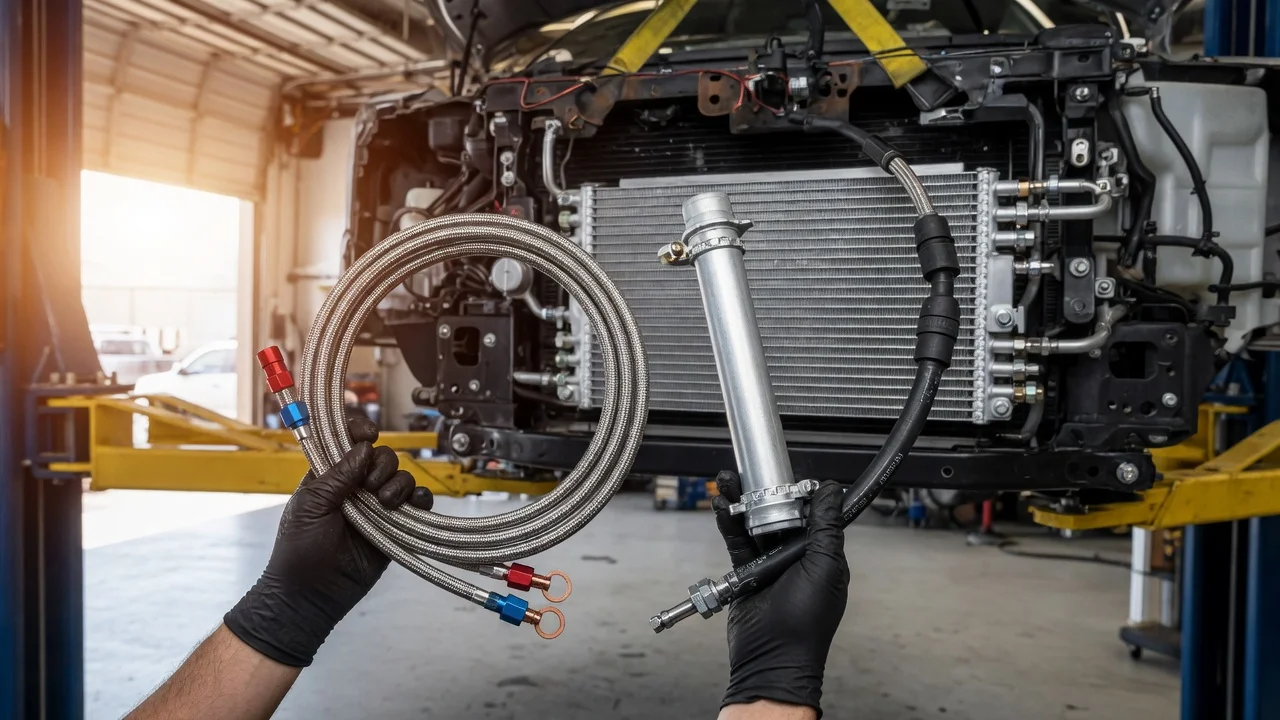
Transmission cooler lines on a 2016 Ford F-150 carry automatic transmission fluid between the transmission and the cooler, which sits in the radiator, in a separate auxiliary cooler, or both. When a line weeps, corrodes or gets crushed, the replacement has to match your engine, cooler setup and fittings. This guide covers how to confirm what your truck needs, which features matter, what the job really involves and how to compare options before you buy.
Define the job the replacement lines must do
Start by confirming that the lines are actually the problem. Fluid residue near the front of the truck can come from a cooler line, but also from a radiator or cooler fitting, the transmission pan, a case seal or an unrelated fluid such as coolant or power steering fluid on some vehicles. Clean the area, drive the truck, then trace the wet spot to its highest point. On cooler lines, seepage often appears where rubber sections are crimped to steel tubing or at the connector ends. Low fluid can cause slipping, delayed engagement, harsh or erratic shift behavior and over-temperature diagnostic codes such as P0218, yet each of those symptoms has other possible causes. Scan for codes and inspect the system before treating a symptom as proof that a line has failed.
Next, consider how the truck is used. A pickup that tows regularly or works in hot weather puts more heat into the fluid, so the lines and connections need to be sound for the cooler they serve. Trucks in road-salt regions often show corrosion on both lines and their brackets, which can make replacing the supply and return lines together more sensible than patching one. Your service history matters too: if the transmission has run low or overheated, note it, because it affects whether the fluid and cooler need attention along with the lines. Finally, decide whether you will do the work yourself or have a shop install parts you supply, since that changes which tools and hardware you need.
Check compatibility for your truck
A 2016 F-150 should have the 6R80 six-speed automatic regardless of engine; the ten-speed automatic arrived in later model years. Still confirm the transmission type from the build information or the transmission identification before ordering, especially on a used truck with unknown history. Engine choice matters more for cooler line fitment than the transmission does. Lines for a 2016 F-150 5.0 V8 follow a different path from those on the 2.7L EcoBoost, 3.5L EcoBoost or 3.5L V6, because the engine bay layout, radiator plumbing and surrounding components differ. Drivetrain (4x2 or 4x4) and whether the truck has an auxiliary transmission cooler, typically associated with towing equipment, can also change the part number.
Check exactly what a listing includes. Some parts are a single supply or return line, some are a pair, and some cover only the section between the radiator and an auxiliary cooler. Compare the end connections with what is on your truck: the transmission end and cooler end use specific fittings, and a line with the wrong connector will not seal even if its length looks right. The most reliable approach is to look up the part by VIN in a parts catalog, then compare the bends, bracket points and connector ends in the product photos against the lines on the truck. A broad listing that simply claims to fit several model years is a starting point, not confirmation.
Features that affect the choice
There are three main paths. Original Ford Motorcraft lines match the factory routing and fittings and are the safest choice for fitment, usually at a higher price. OE-style aftermarket lines copy the factory design for less money, but quality varies, so look for clear photos of the connector ends, crimp joints and any included clips or seals. Repair kits that splice in new hose cost less still and can work on a damaged section, but they require cutting the old line, careful clamping and hose rated for transmission fluid and its operating temperature. Fuel or heater hose is not a substitute.
When comparing construction, useful details include the tubing material and corrosion coating, the hose rating, whether new O-rings or retaining clips come in the box and whether bracket mounting points match the original. Labels such as heavy duty, upgraded or premium do not prove anything on their own; a stated material, rating or included hardware list is more meaningful. Braided or custom lines can look appealing, but on a daily-driven truck the priority is a correct, leak-free fit at the factory connections, so treat aftermarket styling as secondary to matching the original interfaces.
Limitations and ownership costs
Replacing cooler lines means opening the transmission fluid circuit, so plan for fluid loss, a drain pan and fresh fluid. The 6R80 uses Mercon LV; confirm the fluid specification in the owner's manual or on the dipstick before buying. Quick-connect fittings typically need the correct disconnect tool, and reusing old clips or seals invites a new leak. Access around the radiator can be tight, and some routing requires removing shields or other parts to reach the brackets. After installation the fluid level must be checked using Ford's procedure, which depends on fluid temperature and engine running conditions, so budget time for that rather than just topping off by guesswork.
Know what new lines cannot do. They will not repair internal transmission wear, a leaking or clogged cooler, a failed seal elsewhere or a control problem. New lines also do not add cooling capacity; if the truck runs hot under load, that is a separate question about the cooler itself. If the old fluid looked dark, smelled burnt or showed debris, the cooler may need flushing and the transmission may need further diagnosis. Among your repair options, a DIY install saves labor but carries the cost of tools and the risk of an incorrect level check, while a shop install adds labor cost but usually includes the level verification.
Build a practical shortlist
Before comparing prices, write down the facts that control fitment: model year, engine, drivetrain, cooler configuration and VIN. Confirm the leak source and decide whether you need the supply line, the return line, both, or only a repairable section. Then narrow the field to parts that match your truck by VIN lookup and visual comparison of the connector ends and bends.
For each candidate, compare whether it is Motorcraft, OE-style aftermarket or a repair kit; what hardware is included, such as clips and O-rings; the stated materials and hose rating; warranty terms; and the return policy if the part does not fit. Add the cost of Mercon LV, a disconnect tool if needed and any shop labor to get the real total. Once installed, run the truck, inspect every connection for seepage, recheck the fluid level with the correct procedure and watch shift behavior over the next few drives. If symptoms remain after a confirmed leak-free repair at the proper fluid level, the lines were not the whole story and further transmission diagnosis is the next step.