2016 Ford Escape Shift Lock Release: How to Use It and Why It Sticks
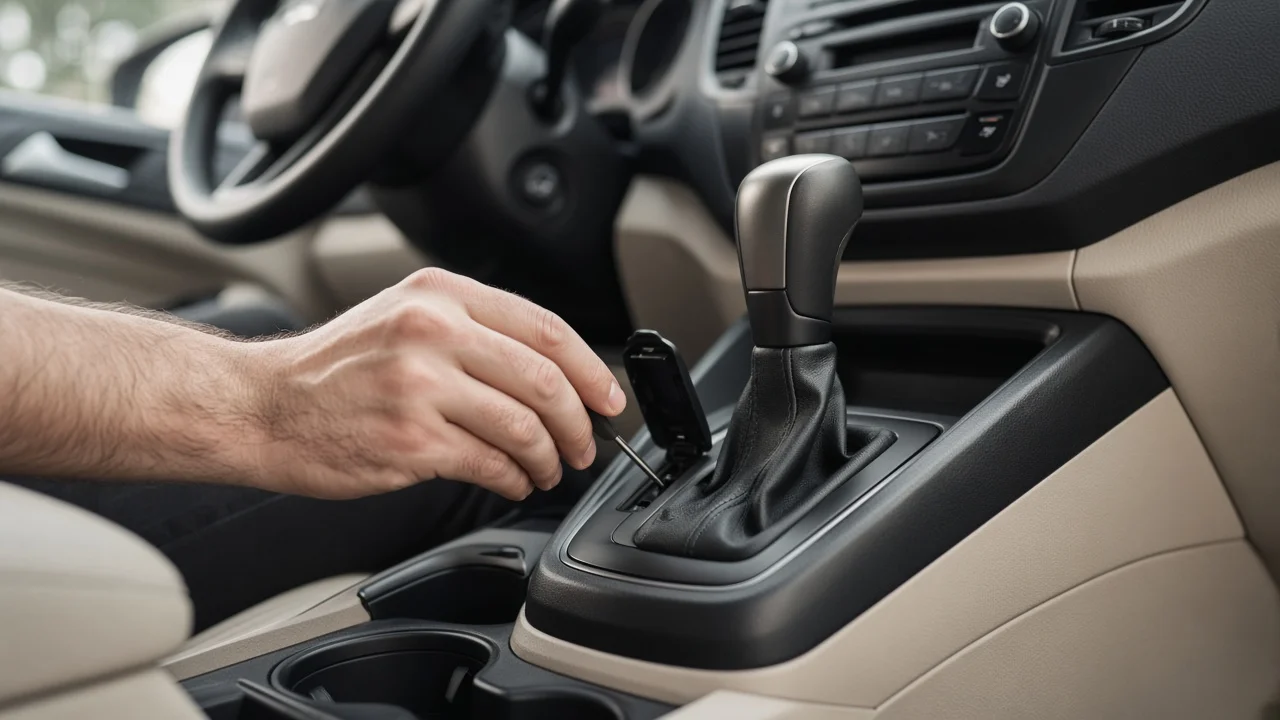
If the gear selector in your 2016 Ford Escape won't come out of Park even with your foot on the brake, there is a manual shift lock release for that situation. It lets you move the lever to Neutral so the SUV can be pushed, towed or loaded onto a flatbed. It does not fix whatever stopped the interlock from releasing normally. This guide explains how the override works, what changes the procedure, and how to narrow down the cause.
The short answer
The 2016 Escape has a brake-shift interlock override. Set the parking brake and switch the ignition off. Then open the access point near the gear selector, usually a small trim cover or part of the shifter surround. Insert a thin tool, such as a small flat screwdriver, to press the release, and hold it down while you move the selector out of Park. Check the owner's manual for the exact access point and order of steps. Console trim can vary, and prying the wrong panel can break retaining clips.
Treat the override as a way to move the vehicle, not as a repair. If the lever only leaves Park through the manual release, part of the interlock circuit isn't doing its job. Find the cause before the Escape goes back into daily use.
How the shift interlock works
The 2016 Escape pairs a six-speed automatic transmission with a console-mounted selector. A brake-shift interlock keeps the lever locked in Park unless the ignition is on and the brake pedal is pressed. Pressing the pedal sends a signal from the brake pedal switch to the vehicle's electronics. They then energize a small solenoid in the shifter assembly, which withdraws a locking pin so the lever can move.
Because the lock releases electrically, anything that interrupts the signal or the power leaves the pin in place. Common causes are a weak or dead battery, a blown fuse, a faulty brake pedal switch, damaged wiring, or a solenoid that has stopped responding. Mechanical problems, such as a sticky residue from a spilled drink, can also bind the mechanism. The manual release moves the lock mechanically and bypasses the solenoid, so it works with no power.
What changes the answer
Start with the battery. If it is flat, the interlock cannot release, and the override is the only way to move the lever until the battery is charged or jump-started. Often normal operation returns once voltage is restored. If the battery is healthy, check whether the brake lights work, whether the problem is constant or intermittent, and whether it shows up in heat, cold or after rain. Any of these narrows the search considerably.
Service history matters too. Recent console removal, aftermarket remote start or trailer wiring, or a replaced shifter assembly can all affect the circuit. A non-original shifter, or one from a different model year, may also not match the manual's description of the release. Finally, keep the symptom precise. A lever stuck in Park is a different problem from poor shift behavior once the vehicle is in gear. Slipping, flare or harsh engagement call for transmission diagnosis, including a check of fluid condition and the correct fluid specification. They are not a shift lock problem.
What the owner can do
Have a helper watch the rear of the vehicle while you press the brake pedal with the ignition on. If none of the brake lights come on, the brake pedal switch, its fuse or its wiring becomes a strong suspect. Driving without working brake lights is also unsafe. Watch the battery too: dim dash lights or slow cranking point to low voltage. Use the fuse chart in the owner's manual to find and inspect the fuses for the brake lamp and shifter circuits.
With the ignition on and the cabin quiet, press the brake and listen near the shifter for a faint click. A click suggests the solenoid is receiving power. If you hear no click but the brake lights work, the solenoid, its connector or the signal to it deserves attention. A click with no release can mean mechanical binding or contamination around the lock. These observations are clues, not proof that a specific part has failed.
If you have a scan tool that can read body and chassis modules, check for diagnostic codes. Basic engine-code readers may not see the relevant modules. Write down any codes, when the problem occurs and any recent work on the vehicle. That record helps a technician confirm the fault faster and avoids replacing parts on guesswork.
Limitations and next step
A stuck selector has several possible causes, and the symptom alone cannot confirm which one you have. A shop can check switch operation, solenoid voltage and module data directly. A Ford dealer can also look up open recalls or service bulletins for your VIN. Your repair options range from a fuse or brake switch replacement to shifter repair, so diagnosis comes before ordering parts.
Don't force the lever if the release doesn't free it. Also stop if the selector moves but the transmission doesn't seem to follow, which can indicate a shift cable or linkage problem. In both cases, have the Escape towed rather than driven. After using the override, return the lever to Park and set the parking brake whenever you leave the vehicle. Don't rely on the override for regular driving.