2015 Silverado Rear Axle Shafts: How to Confirm Fitment
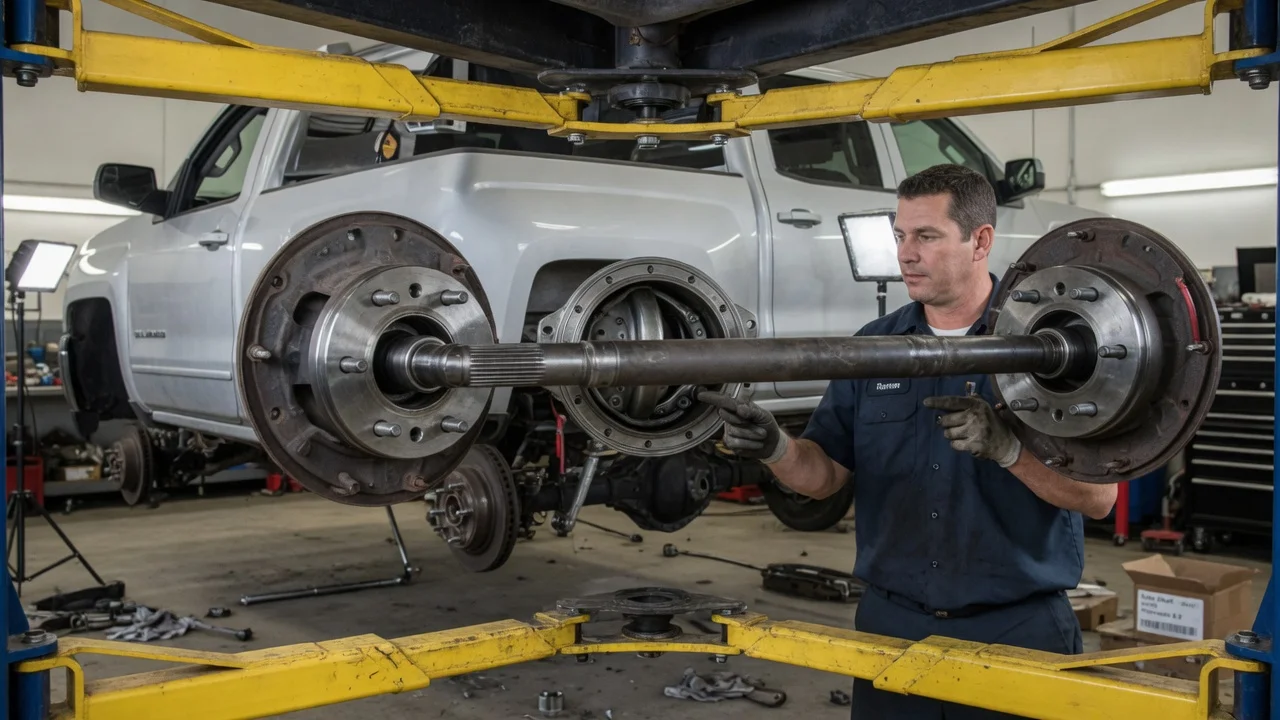
Not every truck wearing the 2015 Silverado badge takes the same rear axle shaft. The 1500 and the heavy-duty 2500HD and 3500HD use different rear axle designs. Even within the 1500 lineup, the factory axle assembly depends on how the truck was built. Before ordering a replacement shaft, confirm the exact vehicle configuration from the truck itself, not from the model year alone. This guide covers what to check, why it matters, and when to hand the job to a shop.
The short answer on fitment
The correct shaft depends on three things. The first is which Silverado you have: a 1500 or a heavy-duty model. The second is which rear axle assembly the factory installed. The third, on axles where left and right shafts differ, is which side of the truck needs the part. Model year alone is not enough. To confirm fitment reliably, read the axle-related RPO codes on the Service Parts Identification label and compare them with the part listing. Then check the old shaft once it is out: overall length, spline count, flange and stud pattern. If any of these do not match the listing, do not install the part.
There is also a quick visual shortcut. A 2015 Silverado 1500 has six-lug rear wheels and a semi-floating rear axle. The 2500HD and 3500HD have eight-lug wheels and a full-floating rear axle. These two families do not share rear axle shafts, so place the truck in the right family before you compare anything else.
How the rear axle shaft does its job
On the 1500, the rear axle shaft is semi-floating. Its inner end is splined into a side gear inside the differential, and its outer end carries the wheel flange and studs. A bearing pressed into the end of the axle tube rides directly on the shaft. That means the shaft both drives the wheel and carries part of the truck's weight. A C-clip holds the shaft in place at its inner end. To remove the shaft, you open the differential cover, remove the pinion cross shaft, and push the shaft inward to free the clip. Because the bearing runs on the shaft surface, a worn bearing journal is a common reason to replace the shaft. Bent shafts, damaged splines and stud problems are others.
Heavy-duty full-floating axles work differently. The wheel hub rides on its own bearings on the axle housing, and the shaft only transmits torque. The shaft bolts to the hub through an outer flange and can usually be pulled without opening the differential. Because the construction is so different, a heavy-duty shaft and a 1500 shaft are not interchangeable, even though the trucks share a model year.
Configuration details that change the part
GM fitted more than one rear axle assembly to the 1500, depending on powertrain and options. The Service Parts Identification label lists the build as three-character RPO codes. Look for it in the glove box or around the driver-side door area. Axle ratio codes such as GU5, GU6 or GT4 identify the gear ratio. The code G80 means the truck has the factory automatic locking differential. Parts catalogs often combine these codes with engine and drivetrain to separate shaft listings. A different ratio does not always mean a different shaft. Still, if a listing names a specific axle or code, match it exactly instead of guessing.
Some catalogs also split listings by two-wheel drive versus four-wheel drive, or by cab and bed combination. Follow the listing's own qualifiers rather than assuming they do not matter. Service history matters too. If a previous owner replaced the rear axle assembly or differential, the label may no longer describe what is under the truck. In that case, trust the axle housing markings and the measurements of the removed shaft over the original build data.
Steps to confirm fitment before you buy
Start with the VIN and the Service Parts Identification label. Write down the engine, drivetrain, axle ratio code, and whether G80 is present. Search the parts catalog with those details, not just year and model. Read every qualifier on the listing, including axle code, side, and any note about locking or open differentials. A listing for the heavy-duty full-floating axle is the wrong part for a 1500, and the reverse is also true.
Once the old shaft is out, lay it next to the new one and compare: • overall length; • spline count and spline length at the inner end; • the C-clip groove; • flange diameter and stud count; • bearing journal diameter; A shaft that is too long, too short, or has a different spline will not seat correctly with the C-clip and should go back. If the journal or bearing shows wear, replace the axle bearing and seal at the same time. Refill with the gear oil type and level given in the manufacturer specifications. On trucks with the G80 locker, access to the cross shaft and C-clips differs from an open differential, so follow the service procedure for that unit.
When to rely on a dealer or shop
Catalog data can be incomplete, and a truck with unclear service history may not match its label. Get professional help if the label is missing, the codes and catalog disagree, or the removed shaft matches no listing. A dealer parts department can look up the original build by VIN, and a driveline shop can measure the shaft and identify the axle. A shop also makes sense if the housing or differential is damaged, if the shaft was bent in an impact, or if you lack the tools to remove the cross shaft and reinstall the C-clips correctly.
Rear axle shafts have no universal replacement interval; they are replaced when inspection shows damage or wear. Towing, heavy payloads and off-road use all put more load on the rear axle. Follow your truck's maintenance schedule for differential fluid service. Have the rear axle checked if you notice new noise, vibration, or gear oil around a rear wheel.