2015 Isuzu NPR Turbo Boost Control Solenoid Location
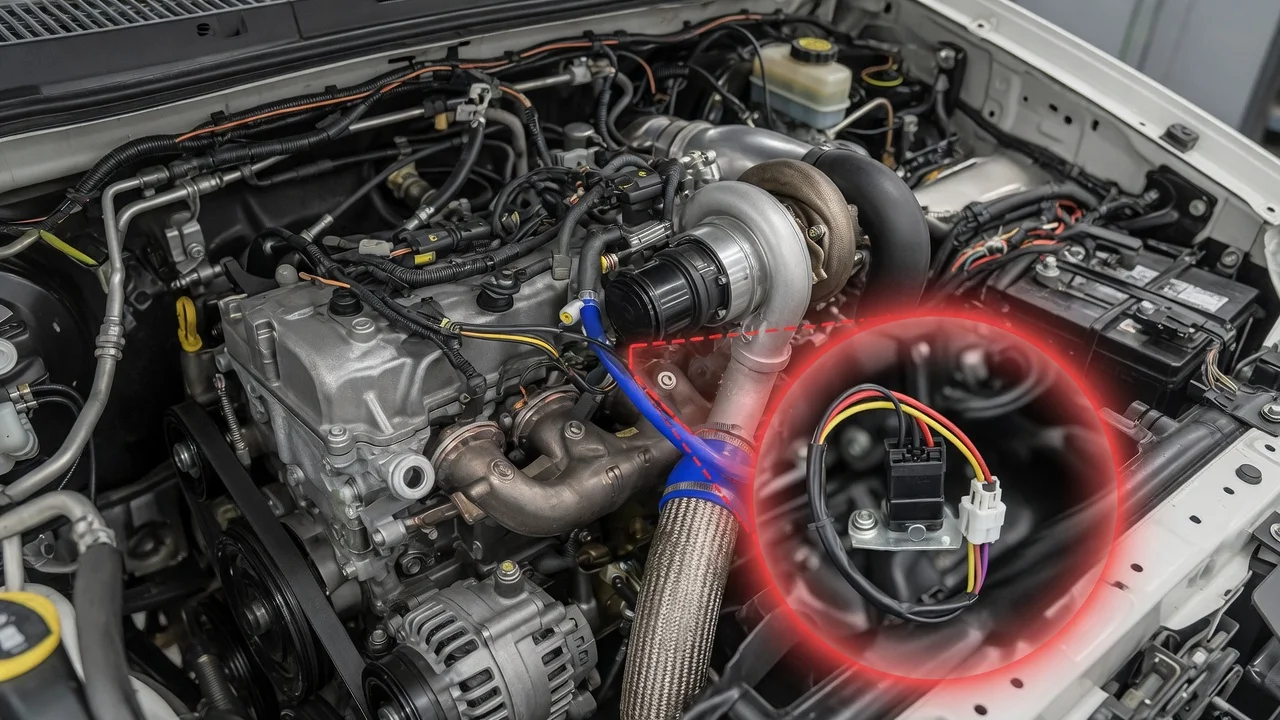
If your 2015 Isuzu NPR has low power, a boost-related warning or a fault code pointing to turbo control, the boost control solenoid is a reasonable place to look. There is no single universal spot to point to, because the answer depends on which engine and turbocharger your truck has. This guide explains where to start looking, how the part works, what changes its location and what you can safely check before deciding on a repair.
Where to find the boost control solenoid
The first qualification is the engine. A 2015 NPR with the gasoline V8 is naturally aspirated, so it has no turbocharger and no turbo boost control solenoid. Only diesel-powered NPR variants have one, and even then, some turbo designs do not use a separate vacuum solenoid at all.
On a diesel NPR that uses vacuum to control the turbo, the solenoid is an engine-compartment component. Because the NPR is a cab-over truck, you reach it by tilting the cab forward. The solenoid is usually mounted on a bracket near the engine rather than on the turbocharger itself, because heat would shorten its life. It sits in the vacuum line between the vacuum source and the turbo actuator. The exact bracket position varies with engine version and production details, so the most reliable way to find it is to start at the actuator on the turbocharger and follow its vacuum hose back. The first small electrically connected valve you reach on that hose is the part you are looking for.
How the solenoid controls boost
The engine control module decides how much boost the engine needs based on inputs such as boost pressure, engine speed and load. It sends a pulsed electrical signal to the solenoid, which opens and closes rapidly to meter vacuum to the turbo actuator. The actuator then moves either a wastegate or a set of variable vanes, depending on the turbo design, to raise or lower boost. Diesel engines produce little manifold vacuum, so the vacuum for this circuit comes from a separate vacuum pump.
When something in this chain fails, boost no longer matches what the control module commands. A sticking solenoid, a cracked or disconnected hose, a weak vacuum supply or a wiring fault can all cause underboost or overboost, and the module may store a fault code and reduce engine power to protect the engine. Boost leaks, faulty pressure sensors and seized actuators produce similar symptoms, so a turbo control code alone does not prove the solenoid is bad.
What changes the answer for your truck
Vehicle configuration matters most. Beyond the gas-versus-diesel split, the diesel engine version determines the turbocharger type. A wastegate turbo or a vacuum-operated variable geometry turbo will typically use a boost control solenoid. A variable geometry turbo with an electric actuator is controlled directly by the engine module, and in that case there is no separate solenoid to find. Confirm your engine from the emissions information label, the VIN or the truck's paperwork before ordering parts or following a diagram.
Service history and how the truck has been used also play a role. Previous repairs may have relocated a bracket, rerouted hoses or installed a replacement part that looks different from the original. Aftermarket bodies and added equipment can make the area harder to reach. Operating conditions common to work trucks, such as engine heat, road salt, vibration and frequent short trips, wear out rubber hoses and electrical connectors faster, which affects both where problems show up and what you will find during inspection.
What the owner can do
Start with safety. Park on level ground, shut the engine off and let it cool, then follow the cab-tilting procedure in your owner's manual and make sure the cab is fully secured before reaching underneath. Keep hands away from the turbocharger and exhaust parts until they are cool. If you have a scan tool that can communicate with your truck's engine module, record any stored codes and freeze-frame data before clearing anything, because that information helps whoever finishes the diagnosis.
For a visual inspection, locate the actuator on the turbocharger and trace its hose to the solenoid. Look for cracked, collapsed, swollen, oil-soaked or disconnected hoses, loose or corroded connectors, chafed wiring and broken mounting brackets. Before removing anything, photograph the hose routing and note which port each line connects to, because reversed hoses are a common cause of boost problems after a repair.
If you own a hand vacuum pump, you can check whether the actuator holds vacuum and moves smoothly. Electrical checks of the solenoid, such as coil resistance or signal tests, are only meaningful when compared with the manufacturer specifications for your engine, so do not rely on generic numbers. If replacement is justified, match the new part to your VIN and engine rather than to the model name alone.
Limitations and next step
This guide cannot give the exact bracket position, hose routing or test values for your truck, because those depend on the specific engine and turbo setup. For that detail, use the Isuzu service information for your VIN or ask an Isuzu commercial truck dealer. Get professional help if the truck goes into reduced power, if you suspect an overboost condition, if codes return after a repair, or if the turbo uses an electronic actuator that may require dealer-level software for testing or setup.
Before visiting a shop, write down the engine code, any stored fault codes, when the symptoms appear (under load, on grades or when cold), and recent work from the service history. Also note where the truck stands in its maintenance schedule. That record shortens diagnosis and helps the technician separate a solenoid fault from leaks, sensor faults or actuator problems that cause the same symptoms.