2014 Jeep Grand Cherokee Brake Fluid Level Sensor: Identification and Location
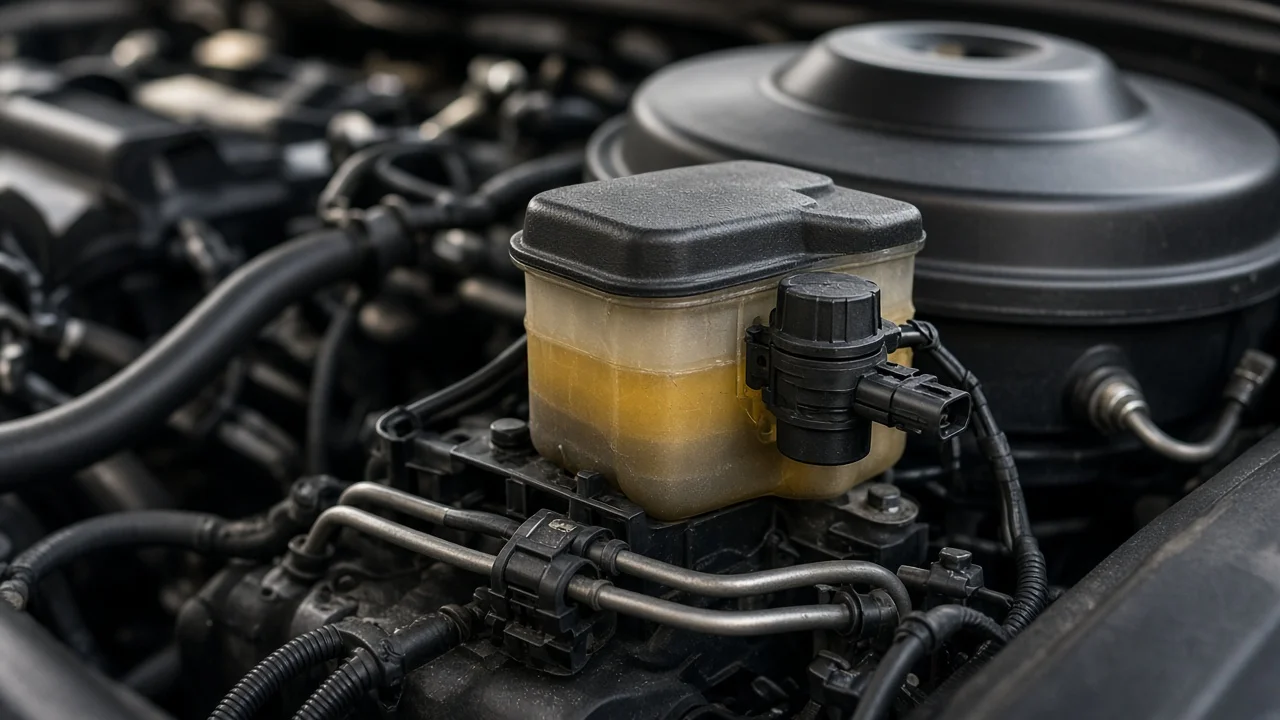
On a 2014 Jeep Grand Cherokee, the brake fluid level sensor is not hidden somewhere on the chassis. It is a float-operated switch built into or plugged into the brake master cylinder reservoir. If you know where that reservoir sits and how the switch reports to the instrument cluster, you can tell a truly low fluid level from a sensor or wiring fault. You can also decide whether the vehicle is safe to drive.
Where the sensor is and how to recognize it
The reservoir sits at the rear of the engine compartment on the driver's side. It mounts on top of the master cylinder, which bolts to the brake booster against the firewall. The reservoir is translucent plastic, with MIN and MAX marks molded into its side and a screw-on cap marked for brake fluid. The level sensor is mounted on the reservoir body, usually low on its side or underside. You can identify it by the small electrical connector and short wiring harness attached to it. No other fitting on the reservoir carries wiring, so the connector is the easiest way to spot it.
The switch may be molded into the reservoir, or it may be a separate plug-in unit held by a clip or tab. Look at the reservoir directly to see which design your Jeep has. Before ordering anything, check a parts catalog against the VIN. Reservoirs and switches may not fit every 2014 build the same way.
How the level sensor works
Inside the reservoir, a float carrying a small magnet rides on the surface of the brake fluid. As the level drops toward the MIN mark, the magnet moves close to a reed switch in the sensor body and changes the state of the circuit. The vehicle's electronics read that change and turn on the red brake warning lamp, often with a message in the instrument cluster display. The sensor does not measure fluid quality, moisture content or pressure. It only reports whether the level has fallen below a set point.
A slow drop in level is normal as the brake pads wear. As the friction material gets thinner, the caliper pistons sit farther out of their bores, and fluid from the reservoir fills the extra space behind them. A fast drop, or a drop while the pads are still thick, points to a leak somewhere in the hydraulic system.
Factors that change the diagnosis
Engine choice mainly affects how easy the sensor is to reach, not where it is. The 3.6-liter V6, 5.7-liter V8, 3.0-liter diesel and SRT 6.4-liter versions all place the reservoir in the same general area. Engine covers, intake ducting and wiring can make the connector easier or harder to reach depending on the engine. SRT models use larger high-performance brakes, so the amount of fluid that moves to the calipers as pads wear can differ from standard models.
Driving conditions matter too. Hard cornering, steep grades or heavy braking can slosh fluid away from the float and briefly trigger the warning when the level is near minimum. A lamp that flickers under those conditions usually means the level is already low. If the warning stays on while the reservoir is clearly between MIN and MAX, the cause is more likely a stuck float, a failed switch, a damaged connector or a wiring fault. The same red lamp can also mean the parking brake is applied or that the vehicle's modules have recorded another brake system fault. The lamp alone does not prove the sensor is involved.
What you can check yourself
Park on level ground, switch the engine off and let the engine bay cool. Wipe the reservoir and cap clean before opening anything so dirt cannot fall in. Read the level against the MIN and MAX marks through the plastic. Note the color: fresh fluid is clear to light amber, while dark fluid is usually old and has absorbed moisture. Check that the sensor connector is fully seated with its locking tab engaged. Make sure the wiring is free of chafing or corrosion.
If the level is low, inspect the brakes before you top up. Where you can see through the wheels, compare the remaining pad friction material with the wear limits in the service information. Check the brake rotors for deep scoring or a heavy lip at the outer edge. Look for wet spots or residue at each wheel, along the brake lines and where the master cylinder meets the booster. If you add fluid, use only the type shown on the reservoir cap or in the owner's manual, from a freshly opened sealed container. Fill no higher than MAX. Overfilling while the pads are worn can cause overflow later, when new pads push the caliper pistons back. Brake fluid damages paint, so wipe up spills immediately.
Topping up is reasonable only when normal pad wear explains the low level and you find no leak. If the switch itself has failed, follow the service procedure for your design. On some reservoirs the switch sits in a dry pocket outside the fluid and unclips once the connector is released. On others, the reservoir must be drained or replaced as an assembly. Never let the reservoir run empty during any work, because air can then enter the master cylinder.
When to stop driving and get professional help
Stop driving and have the Jeep inspected if any of these happen: • the pedal feels soft, sinks toward the floor or needs pumping; • the warning appears together with ABS or stability control warnings; • you see a visible leak; • the level keeps dropping after topping up; These signs point to a hydraulic problem that can reduce braking ability. Arranging a tow is safer than driving to a shop.
You can locate and inspect the sensor yourself, but some steps go beyond basic checks. A technician with a scan tool can read stored fault codes and watch the switch signal live. That shows whether the circuit or the sensor is at fault. A technician can also bleed the system properly if air has entered, which on vehicles with ABS may require a procedure run from the scan tool. Use vehicle-specific service information for procedures, torque values and wear limits. The general guidance here cannot replace it.