Identifying a 2013 Subaru Impreza Valve Body
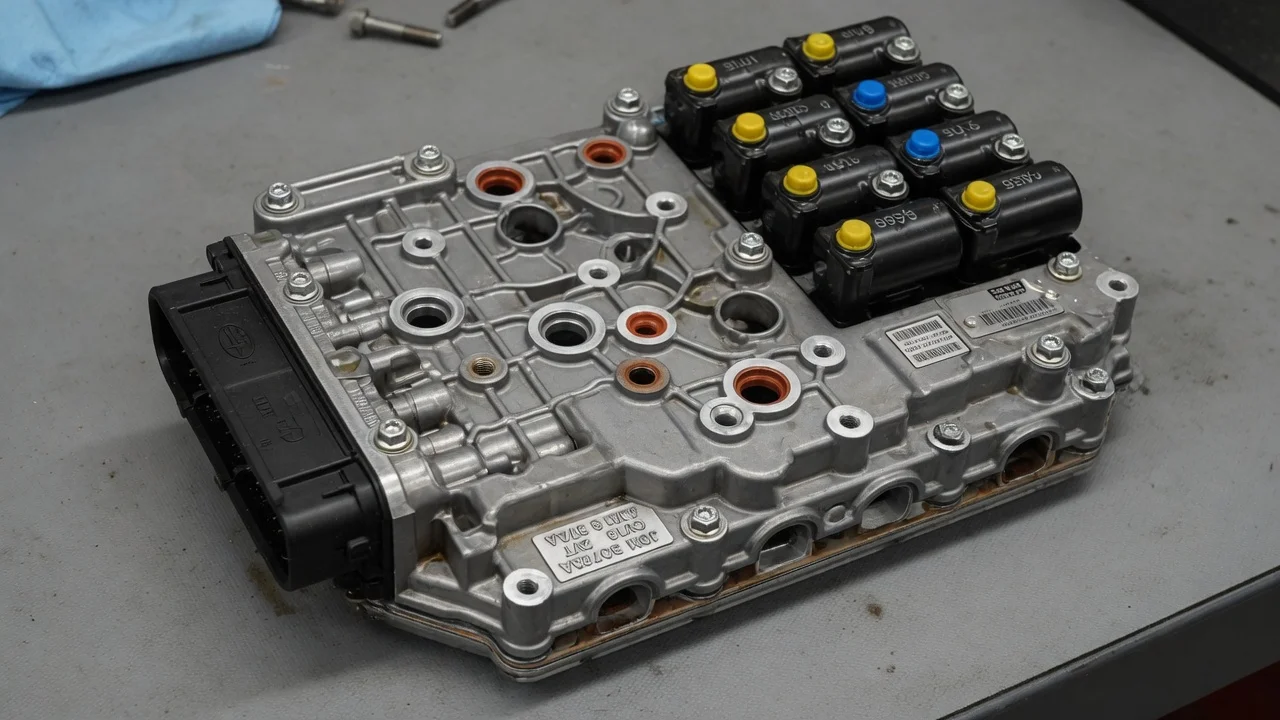
Before you buy or diagnose a valve body for a 2013 Subaru Impreza, you need to know which transmission the car actually has and which version of that unit was installed. A valve body that looks right on a shelf may not match your transmission, and a shifting complaint does not by itself prove the valve body is at fault. This guide covers how to identify the part, what it does and when to involve a shop.
The short answer
On a mainstream 2013 Impreza, a valve body only applies to cars with the automatic, which for this model year is the Lineartronic continuously variable transmission (CVT). Cars with the five-speed manual have no hydraulic valve body at all, because their gear selection is mechanical. If your car is a CVT model, identify the correct valve body by the transmission model code and the vehicle's VIN, not by year and model name alone. Parts are assigned by transmission code and production details, and a dealer parts counter or a VIN-based parts catalog can match the valve body or complete control valve assembly to your specific car.
Treat identification and diagnosis as two separate jobs. Knowing which valve body fits tells you nothing about whether yours has failed. Confirm the fault first, then confirm the fitment.
What the valve body does in the Impreza CVT
The valve body is the hydraulic control center mounted inside the transmission, under the oil pan. It contains spool valves, fluid passages and electrically controlled solenoids. The transmission control module reads inputs such as vehicle speed, throttle position, pulley speeds and fluid temperature, then commands the solenoids to direct pressurized fluid where it is needed.
In this CVT, that hydraulic pressure does several jobs. It clamps the drive chain between the primary and secondary pulleys, changes the pulley widths to vary the ratio, engages the forward clutch or reverse brake, and controls torque converter lockup. Because ratio changes are continuous, problems in this circuit tend to show up as shudder, a slipping feel, engine speed flare, delayed engagement into drive or reverse, or the transmission falling back into a reduced-power mode, rather than as a distinct missed shift.
What changes the answer
Transmission type is the first branch. Manual cars need no valve body, and clutch or gear problems follow an entirely different diagnostic path. Performance variants that carried the Impreza name in some markets, such as the WRX and WRX STI, used different drivetrains from the mainstream Impreza, so confirm what is physically installed rather than assuming.
Within CVT cars, the transmission code shown on the case label and the build date matter. Manufacturers revise internal parts during production and through later updates, so two 2013 Impreza transmissions can call for different part numbers. A used valve body pulled from another car may bolt in yet carry different calibration characteristics, which is why matching by part number and transmission code is safer than matching by appearance.
Service history changes the diagnostic picture too. Fluid that is low, overheated or the wrong specification can produce symptoms that mimic a valve body fault, and prior repairs, reprogramming or a previously replaced unit change what you should expect to find.
What the owner can do
Start with documentation. Note the VIN, the transmission code from the label on the case or your build information, and any record of fluid service or transmission work. Check the owner's manual or service information for the correct fluid specification. Subaru CVTs require a dedicated CVT fluid, and general-purpose automatic transmission fluid is not a substitute.
Next, record the shift behavior precisely: when the problem happens, at what temperature, speed and load, and whether it is consistent. Scan for diagnostic codes with a tool that can read transmission module data, not only generic engine codes, and save any freeze-frame and fluid temperature information. Stored codes point toward a circuit or condition, such as a solenoid, pressure or speed-sensor issue, but they do not confirm a failed valve body. Wiring, connectors, sensors, the control module and internal mechanical wear can all produce related codes.
Ask a Subaru dealer to check the VIN for open recalls, service bulletins, software updates or extended warranty coverage on the transmission before paying for parts. Typical repair options include a new or remanufactured valve body, a complete replacement transmission, or repair of other components identified by testing. Valve body replacement on these units can require entering data for the new part into the control module and running learning procedures with a capable scan tool, so confirm the shop can complete those steps.
Limitations and when to get help
Visual identification has limits. Markings on the valve body itself are only visible with the oil pan removed, and draining fluid from a CVT is not a casual job. Fluid level on these transmissions is checked using a specified procedure and fluid temperature, and an incorrect fill can cause damage of its own.
If the car shows harsh engagement, flaring, persistent shudder, warning lights or reduced-power operation, limit driving and have it diagnosed by a transmission specialist or Subaru dealer with access to factory service information and pressure-testing equipment. Confirm the fault and the exact part number from the VIN before ordering, because a wrong or unnecessary valve body adds cost without fixing the problem.