2013 Kia Optima Shift Lock Release: How to Use It and Why the Shifter Sticks
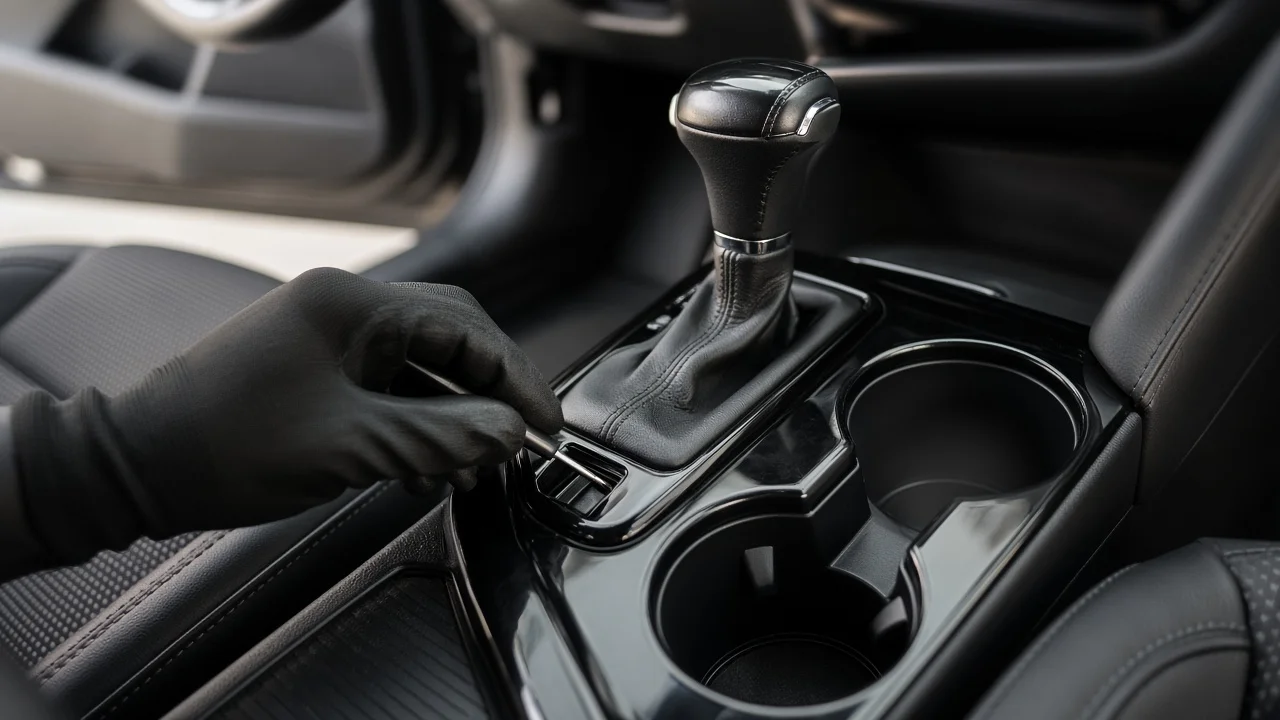
If the shifter on a 2013 Kia Optima won't leave Park even with your foot on the brake, the built-in shift lock release lets you move it manually. This guide explains where the override is and how to use it safely. It also covers why the lever locks in the first place and how to work out whether the cause is the brake light switch, a power problem or the shifter assembly itself.
Quick answer: how to release the shift lock
On a 2013 Optima with an automatic transmission, the shift lock release is a small access slot in the shift console trim. It is usually covered by a little cap next to the lever. Pressing down inside that slot pushes the interlock aside mechanically, so the lever can leave Park without the electrical brake signal. It is an emergency override for towing, a dead battery or a faulty interlock, not a repair. The owner's manual for your car shows the exact location of the cap and the recommended tool, so check it if the slot isn't obvious.
The usual sequence starts with stopping the engine or switching the ignition off, setting the parking brake firmly, and pressing and holding the brake pedal. Gently pry off the access cap with a small flat-blade screwdriver or the edge of the key. Insert the tool into the opening and press down. While holding it down, press the lever button and move the lever to Neutral. Remove the tool, refit the cap, and keep the parking brake applied until the car is secured or connected to a tow vehicle. If the fault was temporary, the lever should work normally once the engine is running again with the brake pressed.
How the brake-shift interlock works
Automatic Optimas use a brake-transmission shift interlock. A small solenoid in the shifter assembly holds a locking piece against the lever whenever the selector is in Park. When the ignition is on and the brake pedal is pressed, the brake light switch sends a signal. The solenoid is then energized and the lock retracts, letting the lever move. Without that signal, or without electrical power, the lever stays locked by design. That's why the override slot works with a dead battery: it moves the same locking piece by hand instead of with the solenoid.
The interlock is separate from the parking pawl inside the transmission. The shift lock only stops the lever, while the parking pawl is what actually holds the car. A lever that is hard to pull out of Park on a steep slope is usually caused by load on the parking pawl and linkage, not a shift lock fault. This is most common when the parking brake wasn't set before shifting into Park. Transmission fluid level and fluid specification do not control the interlock, so a stuck lever on its own is not a sign of low fluid.
What changes the procedure and the diagnosis
The 2013 Optima was offered with a 2.4-liter engine, a 2.0-liter turbo, or as a hybrid. The automatic versions all use a console-mounted selector with an interlock. The ignition type matters as well. Cars with a smart key and push-button start also need the brake switch signal before the engine will start. On those cars, a failed brake switch can cause both a no-start and a lever stuck in Park. Cars with a conventional key mainly show the shifter symptom. Confirm your transmission type and ignition setup before buying parts, because fitment of shifter assemblies and switches can differ between versions.
Operating conditions also change the picture. A lever that locks only when cold, only after a spilled drink, or only on a hill points toward different causes. If the brake lights stay on all the time or never come on, the brake switch circuit is the suspect. If the dash is dark and nothing powers up, start with the battery or main power supply rather than the shifter.
What you can check yourself
Start with the brake lights. With the car in Park and the ignition on, have a helper watch the rear of the car while you press the pedal. If none of the brake lights come on, inspect the stop lamp fuse and the brake light switch at the top of the pedal, including its adjustment. A switch that has shifted out of position, or a worn pad where its plunger contacts the pedal arm, can fail to send the signal. If the lights work normally, the brake signal is likely being produced. In that case, attention moves toward the shift lock solenoid, its connector or the shifter mechanism.
Listen near the console while you press the brake with the ignition on. Interlock solenoids often make a faint click when they move. No click with working brake lights suggests the solenoid isn't getting power or is stuck. Check the battery condition, because low voltage can cause erratic electrical behavior. Look around the shifter for sticky residue from spilled drinks or for debris in the gate. Note any recent console or trim work in the service history. A scan tool can read stored diagnostic codes, but a stored code only shows a circuit fault, not which part has failed.
Repair options and safe use of the override
Typical repair options include: • adjusting or replacing the brake light switch; • replacing a blown fuse after finding why it blew; • repairing a damaged connector or wiring; • cleaning contamination out of the shifter; • replacing the shift lock solenoid or the complete shifter assembly; Depending on the design, the solenoid may only be sold as part of the shifter assembly. Before ordering parts, ask a Kia dealer to check your VIN for open recalls or service campaigns. Confirm part fitment by VIN rather than by model year alone.
Use the override to move the car, not as a way to keep driving it. If the brake switch is at fault, your brake lights may not be working, which is a serious hazard for traffic behind you. Repeatedly releasing the lever manually also bypasses a safeguard meant to prevent unintended movement. Get the underlying fault fixed promptly.
Limitations and next step
This guide describes the general release procedure and the most common diagnostic path. It cannot confirm which component has failed on your car. A locked lever has several possible causes, and the access cap location, wiring and parts can vary by version. The owner's manual and Kia service information for your VIN are the authoritative references for the release procedure, switch adjustment and electrical test values.
See a qualified technician or dealer in any of these cases: • the lever stays locked even after using the release; • the brake lights don't work; • the car won't start in addition to the shifter problem; • you aren't comfortable testing electrical circuits; If the car has to be moved, follow the towing guidance in the owner's manual. A flatbed or a front-wheel lift is generally the safe choice for this front-wheel-drive sedan. Don't force the lever, because that can damage the shifter assembly and turn a minor electrical fault into a larger repair.