2013 Hyundai Elantra Front Wheel Bearing Symptoms and Replacement
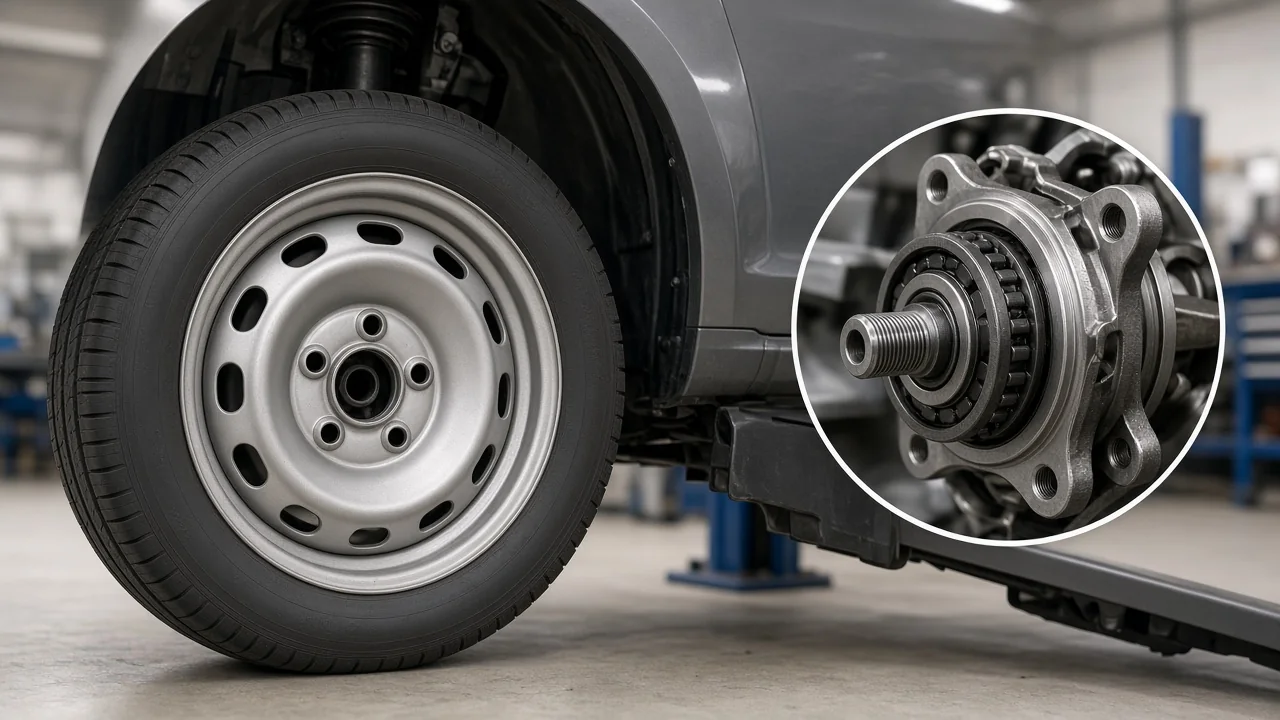
A 2013 Hyundai Elantra front wheel bearing issue often appears as speed-related humming or a change in feel at the wheel hub. Tires, brakes, and nearby suspension parts can mimic that noise, so sound alone is not a diagnosis. This overview covers observation, professional confirmation, matching the correct wheel bearing for a 2013 Hyundai Elantra, and what front bearing replacement typically involves.
Recognizing Possible Front Wheel Bearing Symptoms
Front wheel bearing noise on a 2013 Hyundai Elantra often presents as humming, rumbling, or growling that rises and falls with road speed rather than with engine rpm. That speed-related humming can feel like a drone through the floor or steering, and it may grow more noticeable on a smooth highway than on a rough street. Similar sounds also come from cupped tires, a feathered tread, or a dragging brake, so the noise is a reason to inspect the wheel hub area, not proof that a bearing has already failed.
Wheel vibration or a change in pitch during ordinary left and right turns can offer extra clues, yet it still cannot reliably identify which side is affected. Load shifts during a curve may make one corner quieter or louder without isolating the fault. The absence of obvious wheel looseness or bearing play at rest also does not rule out trouble, because a worn race can rumble under load long before the hub feels loose by hand. A technician still has to confirm the source.
Safe Observations Before a Shop Visit
Before a shop visit, note when the 2013 Hyundai Elantra wheel bearing concern appears during ordinary driving: the speed range, the road surface, and whether light braking changes the sound. Those notes help a technician separate a hub-related drone from tire roar or brake issues. Stay with normal driving; do not add swerving or other test maneuvers to force a noise. After parking on level ground, look for obvious tire damage, uneven tread wear, or a wheel that sits at a visibly abnormal angle, without lifting the vehicle.
Severe grinding, a pronounced wobble, or steering that feels unstable is a reason to stop driving as soon as it is safe and arrange professional assistance. Those signs can involve the wheel hub, the steering knuckle area, or related hardware, and they are not something to wait out. Mild humming does not prove the car is safe for a long trip either. Symptoms cannot establish a remaining driving distance, because a deteriorating bearing can change quickly once the race or rollers begin to break down.
How a Technician Confirms the Bearing Diagnosis
A technician typically starts with a controlled road assessment of the 2013 Hyundai Elantra, listening for how the noise tracks with speed, surface, and light steering input, then follows with a supported wheel inspection. That inspection is used to locate the source rather than to guess from the driveway. Tires, brakes, and nearby suspension parts must be checked at the same time, because a cupped tire, a worn pad, or a loose control-arm bushing can produce wheel-area noise that closely resembles a failing bearing.
Bearing play, roughness when the hub is rotated, and listening equipment can support the diagnosis, yet each has limits. A bearing can rumble on the road with little detectable play on a stand, and chassis noise can travel, so a stethoscope or chassis ear still needs correlation with the road test. An ABS warning light requires its own diagnostic checks of the sensor, tone ring, wiring, and related circuits. That lamp does not by itself confirm a failed wheel bearing, even when the two problems appear together.
Confirming the Correct Bearing for Your Elantra
Selecting a wheel bearing for a 2013 Hyundai Elantra starts with the VIN, body style, build information, and which front axle position needs service. Catalog listings for a standalone bearing, a wheel hub, or a hub-and-bearing assembly are not interchangeable by year alone. The vehicle's actual configuration and parts information have to match the listing, because trim, production changes, and ABS equipment can alter the hub design. Confirming the front position separately also avoids ordering a rear unit that will not fit the steering knuckle.
Any relevant ABS-related component details and installation hardware requirements should be verified against that same vehicle record rather than assumed to be universal. Sensor mounting, tone-ring style, and included fasteners can differ even among Elantra front hubs of the same model year. Ask the shop to put the confirmed part number and the scope of supplied components on the repair estimate, including whether the kit covers the bearing only, the hub assembly, or extra hardware. That documentation keeps the 2013 Elantra wheel bearing replacement aligned with the car actually in the bay.
What Professional Front Bearing Replacement Involves
Professional front bearing replacement on this Elantra begins with confirming whether the specific configuration needs a press, a hub-assembly swap, or other specialized equipment, then follows verified service information for that setup. The technician removes the necessary wheel-end components, replaces the bearing or hub assembly, and reassembles the corner in the documented order. That sequence is not the same for every listing, so the method is chosen after the part type is confirmed rather than from a generic year-and-model assumption.
Before the repair scope is finalized, the hub, bearing mounting surfaces, and nearby components are inspected for scoring, corrosion, or damage that would leave the new unit poorly supported. A distorted steering knuckle bore, a damaged axle spline, or a compromised tone ring can keep a new bearing from lasting or can recreate an ABS warning light. Specified fastener procedures and careful handling of ABS-related components are part of the job, because reused or incorrectly seated hardware can disturb preload, sensor air gap, or hub seating even when the replacement unit itself is correct.
Understanding the Estimate and Checking the Finished Repair
The estimate for a 2013 Hyundai Elantra front wheel bearing job reflects the confirmed part, the labor path, any specialized equipment, corrosion that slows disassembly, and additional damage found on related parts. Those factors change the bill without implying a single typical price. Ask the shop to separate the confirmed bearing replacement from extra work such as a knuckle, axle, or brake repair, and to explain the evidence for each item. That distinction keeps optional or discovered damage from blending into the original complaint.
After the work, the original humming or rumble should be rechecked on the same kinds of roads, along with normal steering and braking behavior and any warning lights. Persistent noise means the first diagnosis was incomplete and further inspection of tires, brakes, or the opposite hub is still needed. Replacing the other front wheel bearing is a separate decision and needs its own justification from play, roughness, or documented wear, not from habit. A quiet, stable Elantra after service is the practical check that the repair addressed the complaint.