2013 Ford F-150 Cranks but Won't Start: What It Means and Where to Look First
The short answer
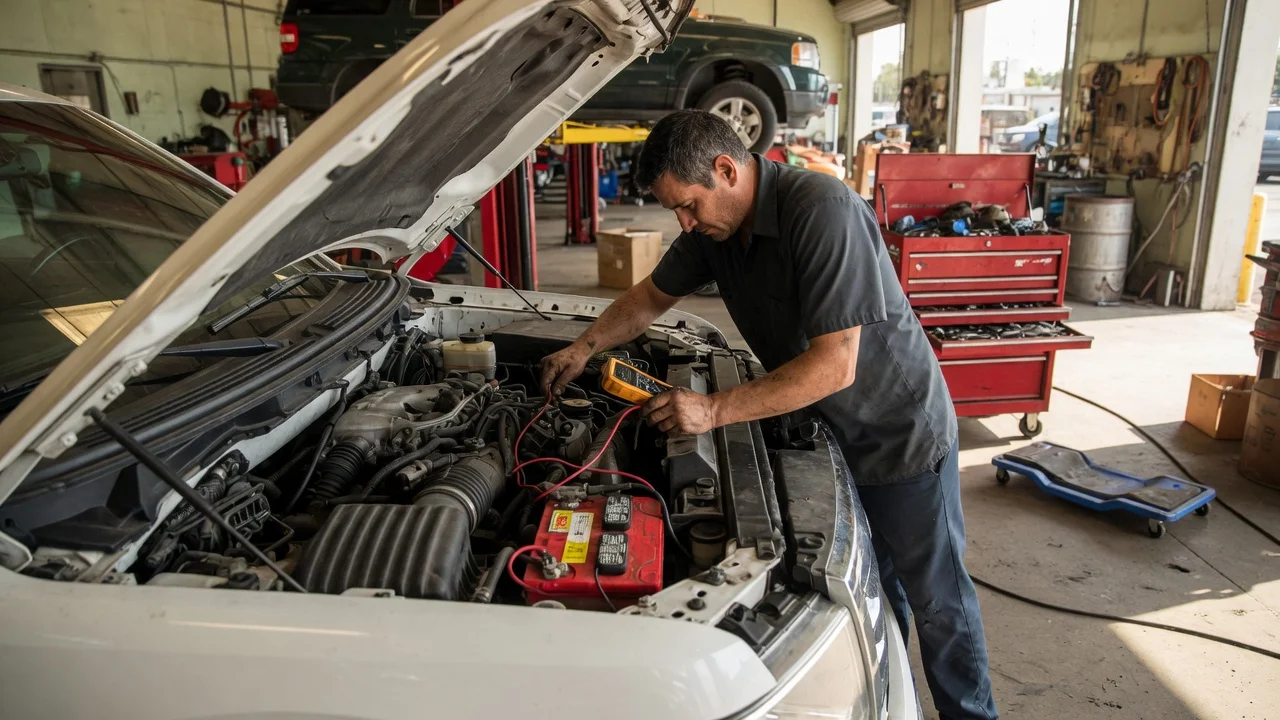
If your 2013 F-150 cranks normally but never fires, the starting system is doing its job. The battery, starter and ignition switch are turning the engine over. The fault lies with something the engine needs in order to run. To start, an engine needs fuel delivered at adequate pressure, spark at the right moment, enough air, adequate compression, and permission from the engine computer to run. A crank-no-start means at least one of these is missing. The engine computer is the powertrain control module, or PCM, and it can withhold fuel and spark if the anti-theft system does not recognize the key.
No single part is the answer for every truck. The most useful first step is to work out which of those requirements is absent. Each one is checked in a different way, and replacing parts on guesswork gets expensive.
Scope: why your exact truck matters
The 2013 F-150 was sold with several gasoline engines: a 3.7-liter V6, a 3.5-liter EcoBoost twin-turbo V6, a 5.0-liter V8 and a 6.2-liter V8. The basic diagnostic logic is the same for all of them. Component locations, fuel system design, sensor layout and access differ by engine and by configuration, such as cab, bed and fuel tank arrangement. Confirm details against service information for your specific engine before testing or replacing anything.
Several specifics are not covered here because no verified data was supplied for this guide. These include fuse and relay numbers, fuel pressure specifications, sensor resistance values and wiring locations. Use the owner's manual fuse chart and engine-specific service data for those.
Key terms used below
PCM (powertrain control module): the engine computer that controls fuel injection and ignition timing. PATS (Passive Anti-Theft System): Ford's key-recognition immobilizer. If it does not accept the key, the engine may crank but will not start. DTC (diagnostic trouble code): a stored fault code that can be read through the OBD-II (On-Board Diagnostics, second generation) port under the dashboard. CKP sensor (crankshaft position sensor): tells the PCM the engine is rotating and where the crankshaft is. Without its signal, the PCM typically will not fire the injectors or coils. Fuel pump driver module: on many Ford trucks of this era, a separate module controls the electric fuel pump rather than a simple relay alone. Confirm the arrangement for your truck in service information.
A practical order of checks
Work from the simplest and least invasive checks toward the more involved ones. Each step either rules out a whole system or points you toward it.
1) Check the anti-theft indicator
Look at the security light on the instrument cluster while you turn the key. On Ford vehicles, a security indicator that flashes rapidly or stays on during a start attempt points toward a PATS key-recognition problem rather than a mechanical fault. Possible causes include a damaged key chip, an unprogrammed key or a fault in the key reader. Trying a known-good spare key is a quick, useful test. If the spare starts the truck, the original key is the likely problem.
2) Read stored codes
Connect a scan tool to the OBD-II port and read any DTCs. Look for codes related to crankshaft or camshaft position, fuel pump control, the fuel pump driver module or anti-theft. A basic code reader may miss some module-specific codes. A scan tool that can also show live data, such as engine RPM while cranking, is more useful. If RPM reads zero while the engine is clearly cranking, suspect the crankshaft position signal. Codes indicate an area to test; they do not confirm a failed part.
3) Confirm fuel delivery
Start with the obvious: make sure there is fuel in the tank, because a faulty gauge can mislead you. Turn the key to the run position and listen near the tank for the fuel pump running briefly. Hearing nothing suggests a fuel pump, fuse, relay, wiring or pump-control problem, though some pumps are hard to hear. A fuel pressure gauge on the fuel rail is the reliable test, and you should compare the reading with the specification for your engine. Higher-pressure fuel systems, such as the direct-injection system on the EcoBoost, require care and proper procedures. Do not open them casually.
Owners of Ford trucks from this period frequently report fuel pump driver module failures linked to corrosion. No confirmed failure rate or affected-vehicle list for the 2013 F-150 was available for this guide. Treat it as a possibility to test for, not a presumed cause.
4) Confirm spark
If fuel delivery checks out, test for spark using a proper spark tester on one or more coils. No spark on any cylinder points toward a shared cause, such as a missing crankshaft position signal, a power or ground supply problem to the coils, or a PCM issue. A single bad coil normally causes a misfire, not a complete no-start.
5) Consider flooding, air and compression
Repeated long cranking attempts can flood an engine with fuel, especially in cold weather. If you smell strong fuel, stop cranking and allow time before trying again. A severely restricted air intake is uncommon but worth a quick look. If fuel, spark and security all check out, the remaining possibility is a mechanical problem such as low compression or a timing fault. That requires a compression test and possibly professional diagnosis.
Quick symptom guide
What you notice | Area to investigate first; Security light flashing or staying on during a start attempt | Anti-theft (PATS) key recognition; try a spare key; No fuel pump sound with key on | Fuel pump fuse, relay, pump control module, wiring or pump; Scan tool shows zero RPM while cranking | Crankshaft position sensor or its wiring; Fuel present but no spark on any cylinder | Crank signal, coil power or ground supply, PCM; Strong fuel smell after long cranking | Possible flooding; pause and retry; Fuel and spark both present | Compression, timing or other mechanical causes
When to get professional help
Some steps call for proper tools and procedures: • programming or replacing anti-theft keys; • testing high-pressure fuel systems; • diagnosing module communication faults; • confirming mechanical problems such as timing; If the basic checks above do not isolate the cause, a technician with Ford-capable diagnostic equipment can check module data and wiring directly. A clear record of what you already ruled out, such as security light behavior, pump sound, codes found and spark results, can shorten that diagnosis.