Ford F-150 Brake Booster Check Valve: Choosing the Correct Part
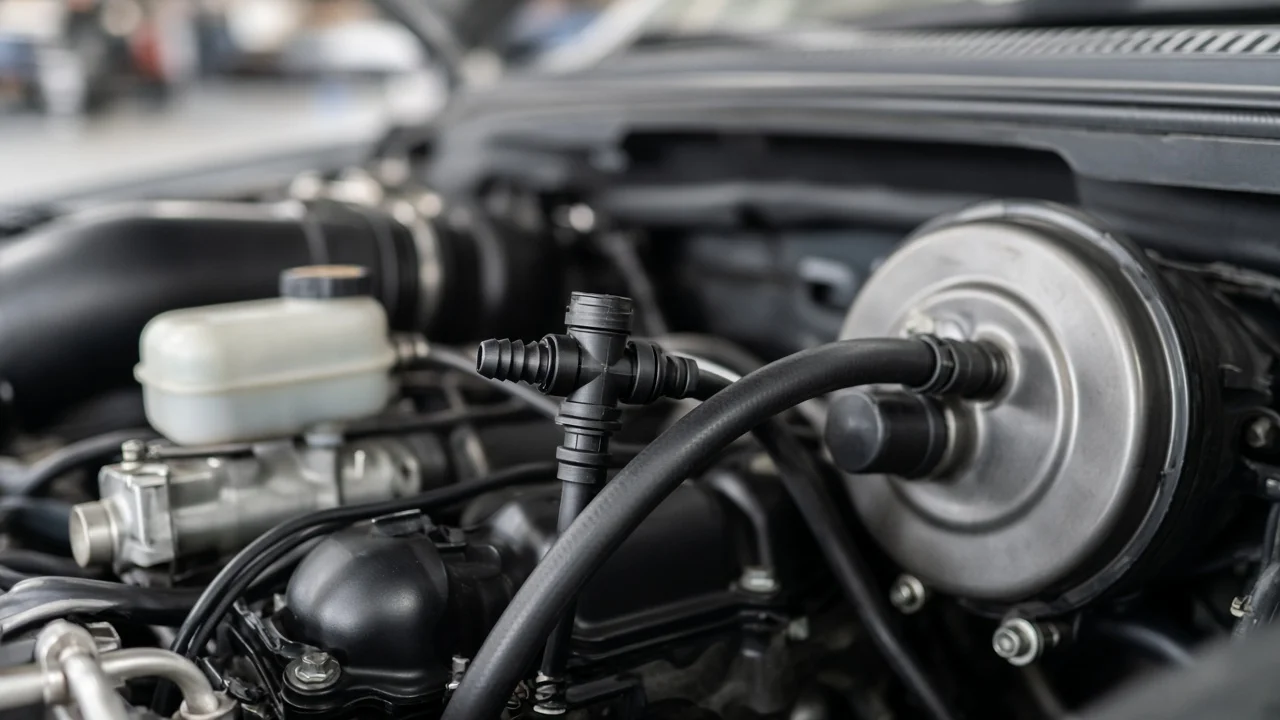
A failing brake booster check valve on a 2013 Ford F-150 usually shows up as a hard pedal after the truck has been parked, a hiss near the booster, or weak assist on the first stop of the day. The part is inexpensive, but ordering the wrong valve, hose or grommet costs time and can leave the brakes without proper assist. This guide explains how to confirm the valve is the real fault, match a replacement to your truck and compare options before you buy.
Define the job the check valve must do
The check valve sits between the engine's vacuum source and the brake booster. While the engine runs, it lets air be drawn out of the booster; when engine vacuum drops, such as under heavy throttle or after shutdown, it closes so the booster keeps a vacuum reserve. A healthy valve gives you a few assisted pedal applications with the engine off and a consistent pedal right after startup. When it leaks or sticks, that reserve disappears and the pedal turns firm, demanding far more leg effort to stop a heavy truck.
Before shopping, make sure the symptoms point here. A hard pedal can also come from a leaking booster diaphragm, a cracked vacuum hose, an engine condition that produces low vacuum or, on configurations that use one, a vacuum pump fault. A soft or sinking pedal is a different problem and is usually hydraulic: air in the brake fluid, a leaking caliper or line, or a master cylinder issue. Brake pads or brake rotors worn past their wear limits cause noise, pulsation and longer stops, but they do not remove booster assist.
Two simple checks help. With the engine off, pump the pedal until it is firm, hold light pressure and start the engine; the pedal should sink slightly as vacuum builds. With the valve removed, a hand vacuum pump applied to the booster-side port should hold vacuum, while air should pass freely when you draw from the engine side. A valve that fails either direction needs replacement.
Check compatibility for 2013 and 2014 trucks
The 2013 and 2014 F-150 belong to the same generation, so many parts listings cover both years, but booster vacuum plumbing is not necessarily identical on every truck. Engine choice matters most: the 3.7L V6, 5.0L V8, 3.5L EcoBoost and 6.2L V8 can use different hose routing and valve arrangements. Depending on configuration, the valve may be a separate inline unit, an elbow pressed into a rubber grommet on the booster shell, or part of a molded hose assembly. Some listings include only the valve, others add the grommet or the complete hose.
To confirm vehicle fitment, search by VIN rather than by year alone, then compare the candidate part with what is actually on your truck: the inner diameter of the hose on each side, the shape and angle of the valve body, the grommet size where it seats in the booster, and the type of connectors or clamps. Note the flow arrow or marking on the old valve before removing it, because a valve installed backward will prevent the booster from building vacuum. If the original valve is integrated into the hose, splicing a universal valve into the line is a compromise; it can work when diameters match and clamps seal, but a direct-fit assembly removes the guesswork.
Features that affect the choice
The meaningful differences between valves are construction and completeness, not marketing labels. Look at the internal check element, which is typically a rubber or silicone flap or disc, and the body material, since the valve lives in engine-bay heat for years. A part sold with a new grommet is worth considering because the original rubber often hardens and cracks, creating a leak that a new valve alone will not cure. If your truck uses a molded hose assembly, buying the full assembly also replaces aged hose that may be soft, swollen or split at the bends.
Treat words such as heavy-duty, premium or upgraded as unverified unless the listing backs them with specifics. Useful evidence includes exact engine coverage, stated port sizes, photos showing both ends and the flow marking, a clear list of included pieces, and a warranty or return policy. An original-equipment part removes most fitment doubt; a reputable aftermarket equivalent can be equally serviceable if its dimensions and configuration match. Buyer comments that name the same engine as yours are more informative than an overall star rating.
Limitations and ownership costs
The valve itself is a low-cost part, and replacement is usually straightforward with basic hand tools, although access around the booster can be tight on some engines. The job does not involve opening the hydraulic system, so no brake fluid is lost or needs bleeding. Plan to inspect the hose and grommet at the same time; replacing aged rubber now avoids repeating the job weeks later. Follow vehicle-specific service information for routing, clamp type and any connections on the engine side.
A new check valve cannot fix a leaking booster diaphragm, a weak vacuum source, worn friction material, damaged rotors, a sticking caliper or contaminated fluid. If assist is still poor after a correct valve and sealed hoses, the booster or vacuum supply needs diagnosis. Pads, rotors and fluid remain separate maintenance items checked against their own wear limits and service intervals. If the pedal is hard enough that stopping distance has increased, or you notice a sinking pedal, fluid leak or brake warning light, stop driving the truck and have the brakes inspected professionally before further use.
Build a practical shortlist
Narrow the options with a short checklist. First, confirm the valve is at fault using the engine-off pedal check and a directional vacuum test. Second, record your engine and VIN, and look up parts by VIN. Third, identify your configuration: inline valve, grommet-mounted elbow or integrated hose assembly. Fourth, match port diameters, valve angle, grommet size and connector style to the part on the truck. Fifth, check what the package includes and decide whether a new grommet or full hose is worth adding. Sixth, confirm the listing shows the flow direction clearly. Seventh, compare warranty and return terms. Two or three candidates that pass every step are enough; price only decides between parts that genuinely fit.
After installation, repeat the engine-off test: you should again get assisted applications before the pedal firms up, and the pedal should drop slightly at startup. Listen for hissing at the valve, grommet and hose ends with the engine idling. Then test the brakes at low speed in a safe, open area before normal driving. If the result is unchanged, return to diagnosing the booster and vacuum source rather than trying another valve.