Choosing Transmission Cooler Lines for a 2013 F-150
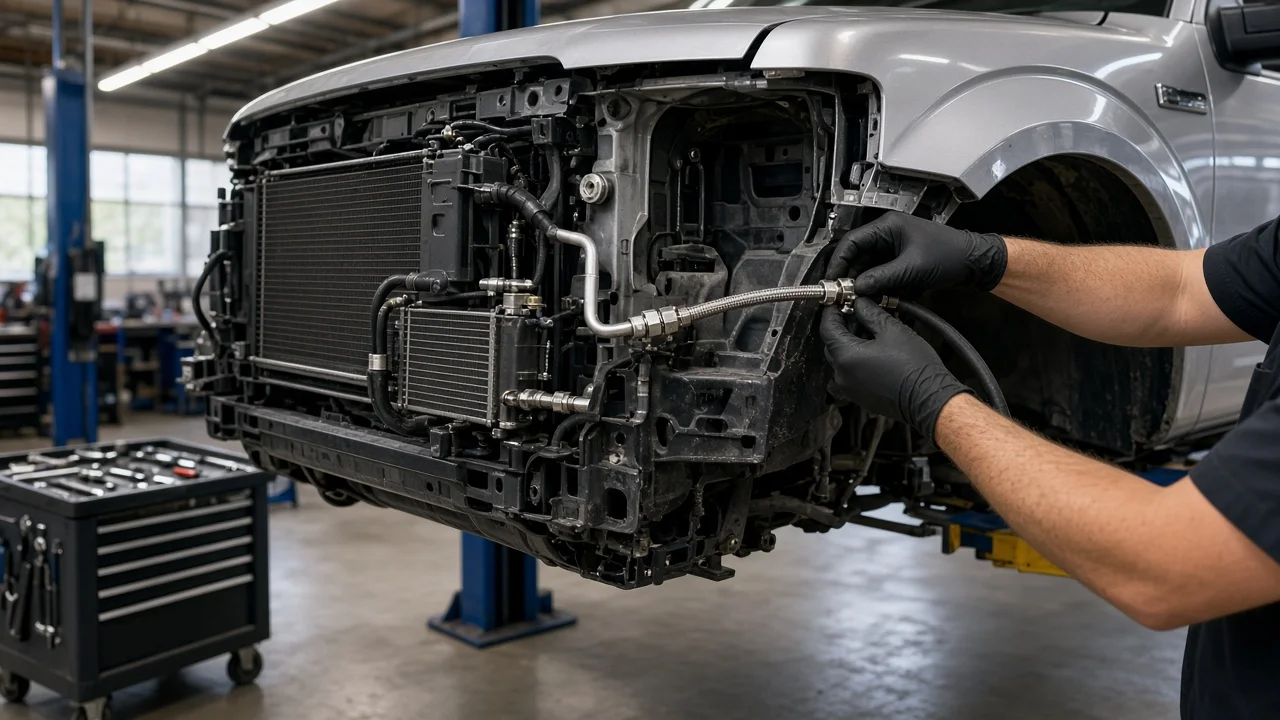
A leaking or corroded cooler line on a 2013 Ford F-150 can drain the six-speed automatic faster than many owners expect. The wrong replacement can leave you with a second leak or a line that rubs against the frame. Choosing well means matching the part to your engine, cooler setup and the way you use the truck. It also means confirming that the line, not a nearby component, is actually the source of the problem.
Define the job the product must do
Start with how the truck is used and where it lives. A commuter in a dry climate mainly needs a correct, leak-free replacement. A truck that tows, plows or hauls heavy loads runs hotter fluid for longer, so line quality and secure routing matter more. In salted rust-belt regions, corrosion resistance and the condition of the surrounding brackets and fasteners often decide whether a repair lasts. Your budget, your tools and whether you will do the work yourself or pay a shop also shape which option makes sense.
Before buying anything, confirm where the fluid is coming from. Clean the area, then look for wet residue along the lines, at the crimped joints where rubber meets steel, and at the fittings on each end. Red or brown fluid near the lines can also come from the radiator or auxiliary cooler, the pan gasket, the case-side fittings or an output seal, and fluid can travel along the frame before it drips. Diagnostic codes for transmission fluid temperature, an overheat warning or a change in shift behavior describe a condition, not a specific failed part. Harsh or delayed shifts after a leak often trace back to low fluid, so verify the level before assuming internal damage, and avoid driving the truck while it is significantly low.
Check compatibility
Identify the transmission type first. On the 2013 F-150, the automatic is the 6R80 six-speed across the engine lineup, including the 3.7L V6, 5.0L V8, 3.5L EcoBoost and 6.2L V8. Sharing a transmission does not mean the cooler lines are interchangeable. Routing depends on the engine, on whether the truck has only the radiator-integrated cooler or an additional auxiliary cooler from a towing package, and on some listings, on drivetrain or other build details.
Use your VIN with the parts supplier or a dealer parts counter to confirm fitment, and read every listing note carefully. Check whether the part is a single line, a supply-and-return pair or a full assembly, and whether it reaches the radiator, an auxiliary cooler or both. Compare the end fittings with what is on the truck: quick-connect fittings at the cooler end and threaded fittings at the transmission case are common, and some systems include a thermostatic bypass valve or other in-line component that must be accounted for. If the listing does not clearly match your engine and cooler configuration, treat it as unconfirmed.
Confirm the fluid specification at the same time. The 6R80 in this truck is specified for Mercon LV, but verify against your owner's manual or service information, and do not mix in a generic fluid because it was on hand. You will need the correct fluid to refill whatever drains during the job.
Features that affect the choice
Pre-formed replacement lines bent to the original shape are the simplest choice when they fit correctly, because they follow the factory routing and clip into existing brackets. Compare the construction details that actually affect durability: the protective coating on steel sections, the type of hose used in flexible sections, and how the hose is crimped to the hard line, since crimped joints are a frequent leak point on aging lines. Flexible sections should be rated for transmission oil cooler service and the heat this system sees, not just described as heavy duty.
Treat marketing labels with caution. Braided covers, colors and phrases such as severe duty or upgraded say little on their own; a material description, a stated hose rating and clear fitment notes are more useful evidence. Check whether new O-rings, retaining clips or fittings are included, because reusing worn seals on a new line is a common cause of repeat leaks. Universal hose-and-clamp repair kits and custom-bent lines are other repair options, but they require careful routing, correct hose rating and proper fittings, and they suit owners comfortable with fabrication more than a bolt-in replacement does. Warranty terms and return policy are worth weighing, especially if fitment is not fully confirmed.
Limitations and ownership costs
Replacing cooler lines usually means working under the raised truck, reaching fittings near the radiator and along the frame, and sometimes moving other components for access. Quick-connect fittings typically need the correct release tool to avoid damaging the fitting, and corroded brackets or fasteners can turn a short job into a longer one. Budget for the lines themselves, any new clips or seals, enough fluid to replace what drains out, and shop labor if you are not doing the work.
Refilling and checking the level correctly is part of the job. The 6R80 is not checked with a conventional under-hood dipstick; the level is checked at the transmission case with the fluid at the temperature specified in the service procedure. Follow the procedure for your exact truck, because an incorrect fill can cause its own shift problems.
Know what new lines cannot do. They will not fix a leaking or restricted cooler, a radiator tank leak, a faulty bypass valve, worn internal parts or damage caused by running the transmission low or hot. If the fluid smells burnt or contains debris, the cooler circuit and transmission may need further inspection rather than just new lines. Note the repair, parts used and fluid added in the truck's service history, which helps with future diagnosis and resale.
Build a practical shortlist
Narrow the candidates with a short checklist. First, confirm that the leak is from the lines and record any codes, warnings or shift behavior changes. Second, confirm fitment by VIN, engine and cooler configuration, including whether the truck has an auxiliary cooler. Third, check that the listing clearly states which lines are included and that the end fittings match yours.
Then compare the remaining options on construction and support: coating on steel sections, a stated rating for flexible hose, quality of the crimped joints, included O-rings and clips, warranty length and return terms. Finally, plan the installation: release tools, access to the work area, the correct quantity of Mercon LV and the case-side level check procedure. A part that meets every item on this list is a sound candidate, whichever brand or source it comes from, while one with vague fitment or unstated ratings is better left off the shortlist.