2013 Chevy Impala Pressure Control Solenoid Identification and Location
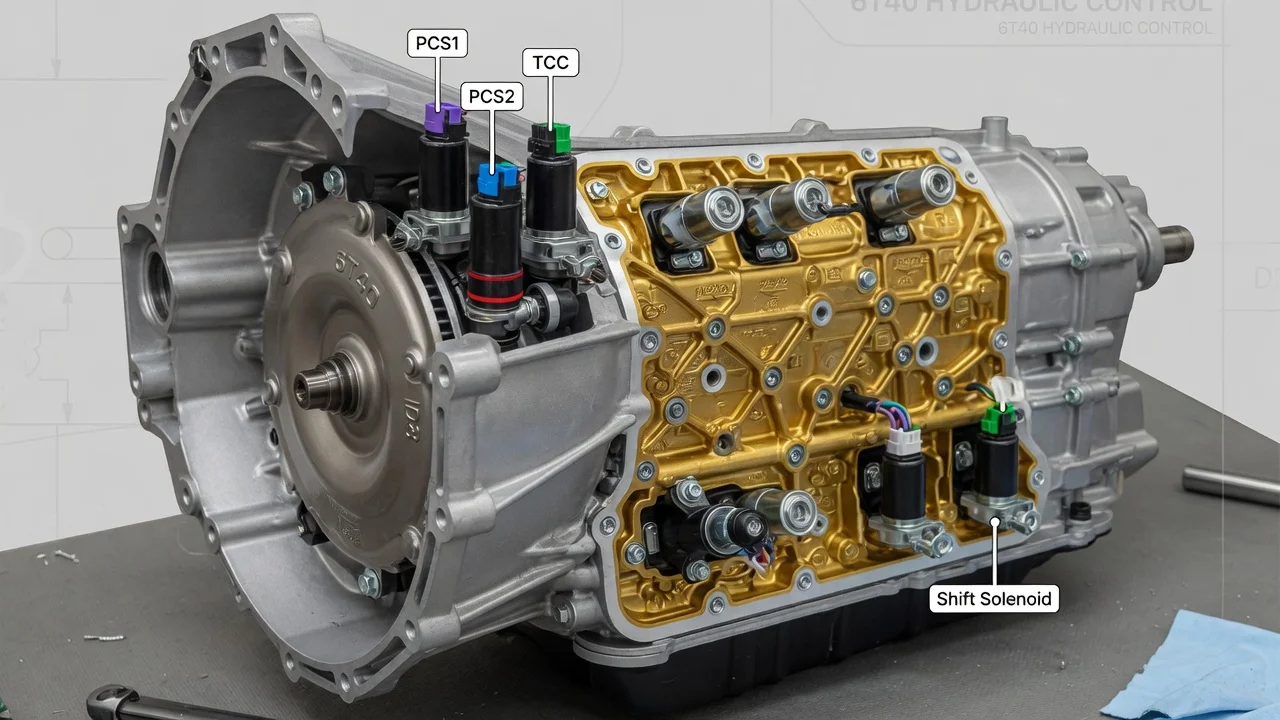
If your 2013 Chevy Impala is shifting harshly, slipping or storing transmission trouble codes, you may have been told to look at a pressure control solenoid. On this car the solenoid is not a separate part bolted to the outside of the case. It is inside the transmission as part of an electro-hydraulic control assembly. That affects how you diagnose it, what replacement involves and whether the job suits a home garage.
Where the pressure control solenoid sits on a 2013 Impala
Most 2013 Impala sedans use the GM 6T70 six-speed automatic transaxle paired with the 3.6-liter V6. In that unit, the pressure control solenoids are mounted on the control solenoid valve body. That body sits against the main valve body behind the transaxle side cover. The side cover is on the driver's end of the transaxle, facing the left front wheel well. You will not find the solenoid itself on the outside of the case. Locating it means draining the fluid and removing the side cover.
On this design the pressure control solenoids are not individual off-the-shelf pieces. They belong to the control solenoid valve and transmission control module assembly, often called the TEHCM. It combines the solenoids, internal sensors and the transmission control module itself. Replacement is generally done as a complete assembly. A new or used unit must be programmed to the vehicle before it will shift correctly. Reaching the side cover usually means removing the left front wheel and splash shield. Many installations also require supporting the powertrain or moving other components for clearance. Take the exact steps from the service information for your vehicle.
How pressure control solenoids work in this transmission
An automatic transmission changes gears by applying and releasing clutches with pressurized fluid. Pressure control solenoids are electrically controlled valves that set how much pressure reaches a given clutch or hydraulic circuit. The control module varies the current to each solenoid many times per second. This lets it build pressure smoothly for a firm but comfortable shift and then hold the gear once it is engaged. The 6T70 has several pressure control solenoids, plus a shift solenoid and torque converter clutch control. A reference to the pressure control solenoid could therefore mean one of several devices.
The solenoids meter fluid through very small passages, so they need clean fluid of the correct specification. GM specifies Dexron VI for this transaxle. Debris, varnish or the wrong fluid can make a solenoid stick or respond slowly. The module may then set a performance code even though the electrical circuit is intact. Low fluid level, worn clutches and valve body wear can cause similar shift behavior, so a symptom alone does not identify a failed solenoid.
What changes the answer
First, confirm the transmission type. Check the Service Parts Identification label for the regular production option codes; it is usually in the glove box or trunk. You can also have a parts counter decode the VIN. If the transaxle has been replaced or the vehicle modified, the fitted unit may not match the original build. Parts listings also mix generations. The redesigned Impala sold from the 2014 model year uses different hardware, while the Impala Limited that followed kept the earlier design. Some sellers group these cars together, so check fitment by VIN rather than by model name alone.
Diagnostic codes also change the picture. Generic codes from P0960 through P0971 refer to pressure control solenoid circuits. Which letter designation matches which physical solenoid is defined only in GM's service information for this transaxle. A gear ratio or clutch performance code can come from a solenoid, but also from low pressure, internal leaks or mechanical wear. Intermittent electrical faults may originate in the connector or harness rather than the solenoid body. GM has released calibration updates for this transmission family over its production life, so check the module software early in the process.
What owners can check before replacing parts
Start with information, not parts. Use a scan tool that can communicate with the transmission module to read and record all stored and pending codes, along with freeze-frame data. Note when the problem appears: cold or hot, light or heavy throttle, upshifts, downshifts, or coasting to a stop. A clear description of the shift behavior is useful to any technician. It also helps separate a solenoid fault from a fluid or mechanical problem.
Check fluid level and condition using the procedure for this transaxle. It typically uses a level check plug at a specified fluid temperature rather than a dipstick. Dark, burnt-smelling fluid or visible debris points toward broader wear. Review the service history: when the fluid was last changed, which fluid was used, and whether the transmission module has ever been replaced or reprogrammed. Inspect the external harness and connector for damage, oil intrusion or corrosion.
If testing points to the control solenoid assembly, there are three main repair options. You can fit a new GM assembly programmed with dealer-level software. You can fit a remanufactured unit, which may come pre-programmed for your VIN. Or you can fit a used assembly, which still needs programming. Replace the side cover gasket or seal whenever the cover comes off. Afterward, refill the transaxle with the specified fluid and check the level. Many shops also perform a shift adapt relearn after installation so the module can fine-tune shift quality.
Limitations and the next step
This article describes the general layout of the transaxle commonly fitted to the 2013 Impala. It cannot confirm which part has failed on a specific car. Torque values, removal sequence and fluid fill procedure must come from the factory service information. An owner who cannot program the transmission module may finish the mechanical work and still have a car that will not drive properly.
Get professional help if codes point to internal performance faults, the fluid shows signs of damage, or the car enters a reduced-power or limp mode. A transmission specialist can measure line pressure and run solenoid tests through the scan tool. They can then judge whether replacing the control assembly is enough or whether internal wear calls for a rebuild or replacement transaxle.