2013 BMW 328i Wastegate Actuator: Identifying the N20 Setup
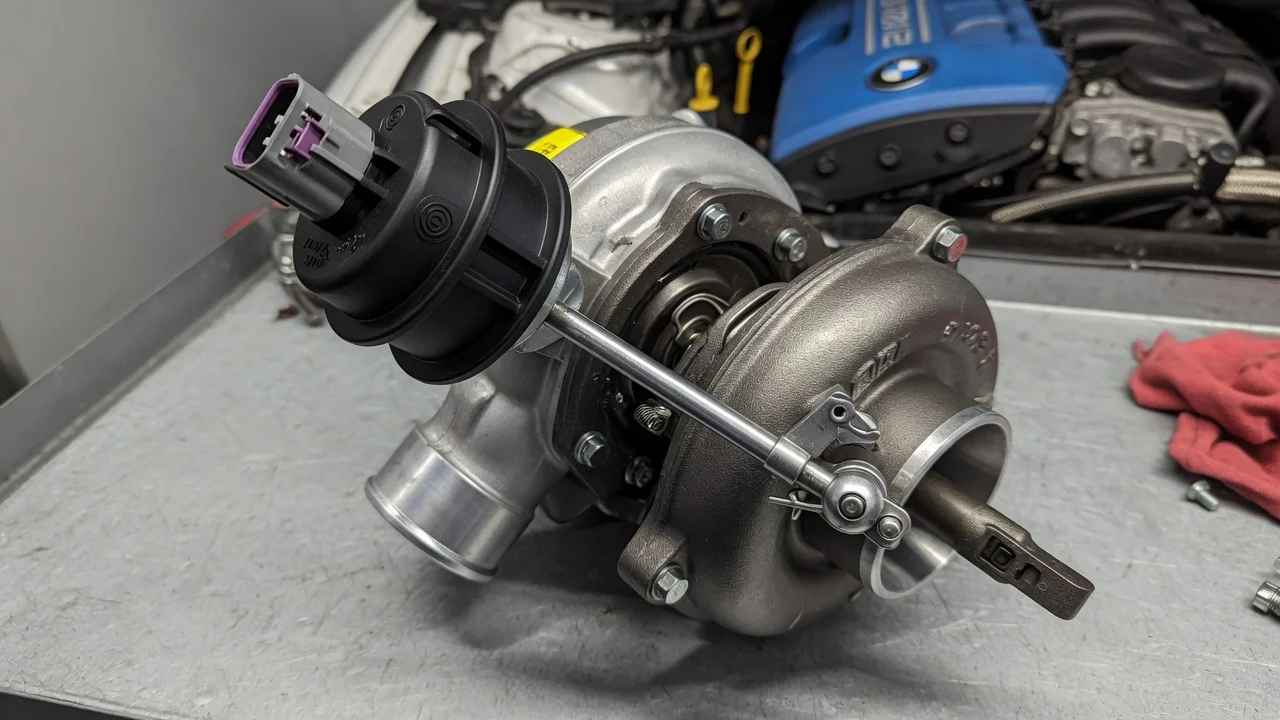
If you are chasing a boost fault or a rattle on a 2013 BMW 328i, start by confirming which engine the car has. Most 328i models from this period use the N20 turbocharged four-cylinder with an electronically controlled wastegate actuator, but not every car with a 328i badge does. This guide explains how to identify the setup, how the actuator works, and when the problem needs a professional diagnosis.
Does your 2013 BMW 328i have an N20 wastegate actuator?
The 2013 328i sedan, from the F30 generation, uses the N20 2.0-liter turbocharged four-cylinder. It has a single twin-scroll turbocharger. Boost is regulated by a wastegate flap, which is moved by an electric actuator mounted on the turbocharger rather than by a vacuum-operated diaphragm. The same arrangement continues in the 2014 328i, including the sedan, Sports Wagon and Gran Turismo body styles. Some cars certified to stricter emissions standards use a closely related variant designated N26. It shares the turbocharged layout, but parts should still be matched to the exact car.
The exception is the 2013 328i coupe and convertible. Those models stayed on the older E92 and E93 platform with a naturally aspirated inline-six, so they have no turbocharger and no wastegate actuator. If a parts listing or repair discussion does not state the body style and engine, it may not apply to your car.
How the N20 wastegate actuator works
Exhaust gas spins the turbine, which drives the compressor that pressurizes the intake air. The wastegate is a small flap in the turbine housing that lets some exhaust bypass the turbine. A closed flap builds boost faster, and an open flap limits it. On the N20, the engine control module calculates target boost from inputs such as throttle position, engine load and air temperature. It then commands the electric actuator to position the flap through a short rod and lever linkage. The actuator reports its position back to the module, which compares the commanded position with the actual one.
Because the module monitors this feedback, an actuator that sticks, moves slowly or loses its position signal usually sets a stored fault and puts the engine into reduced power rather than allowing uncontrolled boost. Mechanical wear in the linkage and flap bushing is a separate issue. It may not set a code, but it can cause a metallic rattle that owners most often report at cold start, at idle, or when lifting off the throttle.
What changes the answer for your car
Body style and engine code matter most, but the rest of the vehicle configuration also counts. Rear-wheel-drive and xDrive cars share the N20 engine, yet exhaust routing, heat shields and access can differ, and that affects labor time. Production changes during the model run mean a turbocharger or actuator listed for one build period may be wrong for another. A parts lookup by full VIN is therefore more reliable than one by model year alone.
Operating conditions and history also change the picture. A car used mostly for short trips in cold weather may develop linkage noise differently from one driven mainly on the highway. A car with an aftermarket tune or a modified intake or exhaust can have boost faults that originate outside the actuator. Service history matters too. A previous turbocharger replacement, an updated part or a software update can mean the original symptoms or parts information no longer apply, so check what work and dealer updates are already recorded for the VIN.
What you can check as an owner
First, confirm the engine. A VIN decode or your vehicle documents usually state it, and the engine code also appears on the engine and on labels under the hood. Next, describe the symptom precisely: a warning light with reduced power, slow boost build, a rattle at cold start, or a rattle only on deceleration. Note when it happens, the outside temperature, and whether the engine was warm. These details make later diagnosis faster.
Then read the fault memory with a scanner that can access BMW engine module codes, because a generic code reader may show only part of the picture. A wastegate position or boost control fault narrows the search, but it does not prove the actuator has failed on its own. Wiring, connectors, charge-air leaks and sensor faults can produce similar results. With the engine cold, you can reasonably inspect the actuator connector and harness for heat damage or corrosion. Checking play in the flap linkage usually requires removing heat shields and is better left to a shop.
When you buy parts, give the supplier your full VIN. BMW has commonly supplied the wastegate as part of the turbocharger assembly, while aftermarket suppliers offer a separate N20 wastegate actuator and linkage repair kits. The right route depends on whether the fault is electrical, mechanical wear in the flap, or both. A replacement electric actuator may need to be adapted or calibrated to the engine with suitable software, so check the installation instructions for that step rather than assuming the part is plug-and-play.
Limitations and when to get professional help
This article identifies the configuration and explains the system, but it cannot diagnose a specific car. Low power, a check-engine light or a rattle can also come from charge-air or vacuum leaks, ignition problems, timing chain noise, loose heat shields or exhaust leaks. Torque values, calibration procedures and part numbers should come from manufacturer specifications for your exact VIN, not from general guides. The maintenance schedule has no fixed replacement interval for the wastegate actuator; it is replaced based on inspection and fault findings.
If the car is in reduced-power mode, the check-engine light is flashing, or you hear loud metallic noise under load, limit driving and have it inspected by a technician experienced with BMWs who has dealer-level diagnostic software. Bring your service history and your notes on when the symptom occurs. This helps the shop separate an actuator fault from linkage wear or an unrelated problem before you pay for a turbocharger.