2013–2015 Chevy Cruze Serpentine Belt Routing and Replacement
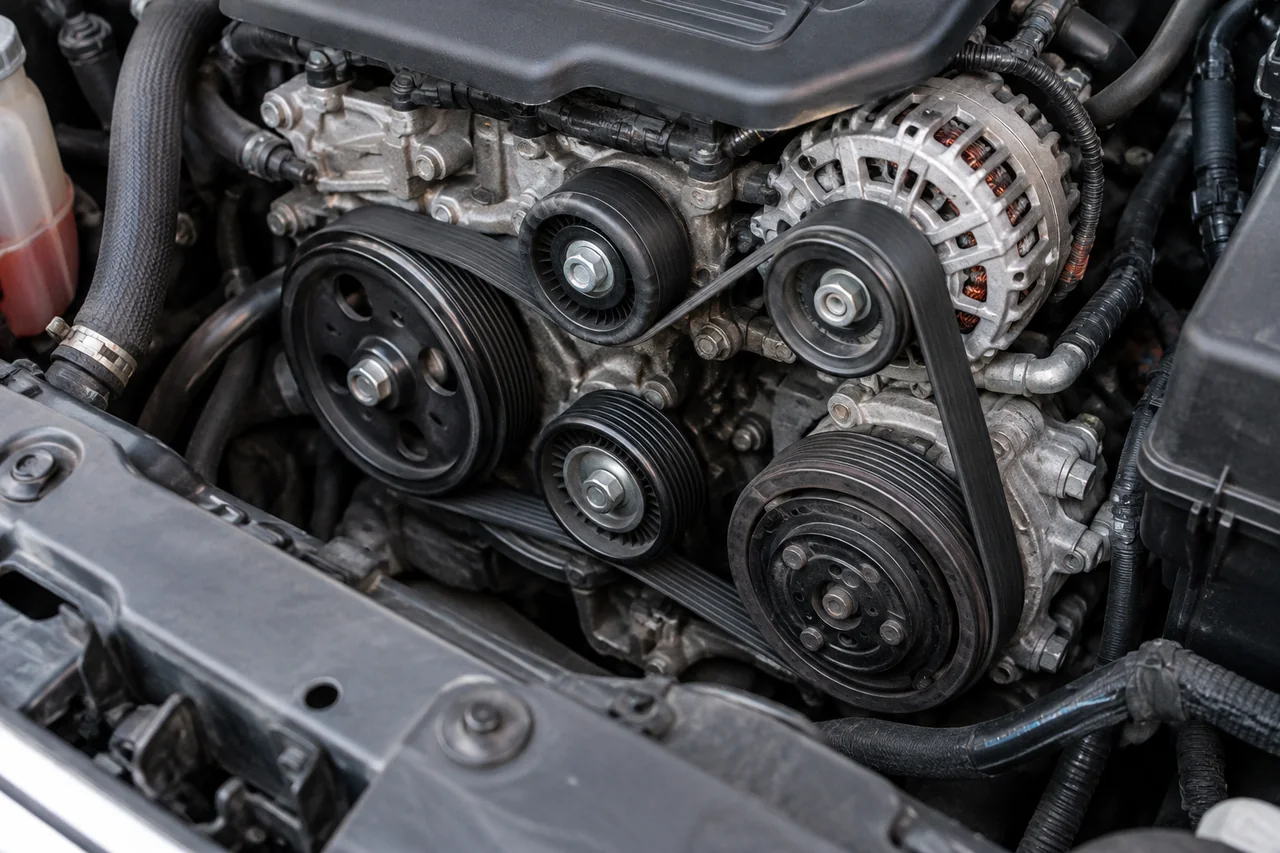
A 2013–2015 Chevy Cruze serpentine belt routes power from the crankshaft to accessories on the 1.4 turbo engine or the 1.8 engine. The right belt routing diagram depends on engine identification and the accessory-drive layout, not the model year alone. Whether you need a 2014 Chevy Cruze serpentine belt diagram, a 2013 1.4 path, or a 2015 Chevy Cruze serpentine belt diagram, confirm fitment before you plan replacement.
Identify Your Cruze Engine Before Choosing a Belt or Diagram
The 2013–2015 Chevy Cruze with a 1.4 turbo engine or a 1.8 engine uses an accessory drive belt whose length and path depend on that engine and its accessories. Other years, engines, and accessory packages can use a different Chevy Cruze serpentine belt and a different belt routing diagram. Owner records, underhood labels, and engine identification information on the engine itself help establish which powerplant is installed. A VIN-based parts lookup then ties that engine to the accessory-drive belt specified for the vehicle's configuration rather than a generic Cruze listing.
Model year by itself does not prove belt fitment or routing. A 2014 Chevy Cruze serpentine belt that matches one 1.8 layout may not match a 1.4 turbo engine, even in the same year. Confirm the exact vehicle before choosing a belt or a diagram. The serpentine belt, also called the accessory drive belt, turns driven accessories from the crankshaft. It is separate from the engine's timing system, which keeps camshaft and crankshaft events in phase and is not serviced as part of this accessory-belt discussion.
Find and Read the Correct 2013–2015 Belt Routing Diagram
Start with the underhood routing label when one is still present and readable. That sticker is meant to show the accessory drive belt path for the engine as equipped, but labels can fade, get replaced, or belong to a different configuration after repairs. Vehicle-specific service information is the backup when the label is missing or unclear. Any 2013 Chevy Cruze serpentine belt diagram, 2014 Chevy Cruze serpentine belt diagram, or 2015 Chevy Cruze serpentine belt diagram you use should identify its supported model year, engine, and applicable accessory configuration before you treat it as the correct map.
Read pulley labels on the diagram and follow the complete belt path from the crankshaft around each idler, the belt tensioner, and every driven pulley shown. Note which surface contacts each pulley: belt ribs usually seat in matching pulley grooves, while the back of the belt may ride on a smooth idler or tensioner. Do not name driven accessories or list a pulley sequence until that routing is verified for the vehicle. If year, engine, or configuration cannot be confirmed, treat the diagram as unverified rather than drawing an assumed route.
Confirm the 2013 Cruze 1.4 Turbo Belt Route
A 2013 Chevy Cruze 1.4 serpentine belt diagram is useful only when it is identified for that 1.4 turbo engine and the accessory layout on the vehicle. If the diagram does not state that application, do not assume the 1.4 turbo route from a generic Cruze illustration. With the engine switched off and cool, compare visible pulley locations and the diagram's orientation to the engine in front of you. Matching crankshaft, tensioner, and accessory pulley positions helps confirm you are looking at the same layout the drawing describes.
If the current serpentine belt Chevy Cruze path is safely visible with the engine off, record that route before disturbing anything. Photographing or sketching pulley contact points can help later comparison, but an existing installation can still be wrong after a prior repair, a jumped rib, or a mismatched belt. A missing belt, or a mismatch between the 1.4 turbo engine and the diagram in hand, is a stop point. Obtain confirmed service information for that 2013 Cruze before any Chevy Cruze serpentine belt replacement proceeds.
Confirm the 2014 Cruze 1.8 Belt Route
A 2014 Chevy Cruze 1.8 serpentine belt diagram should state that it covers the 1.8 engine and the applicable accessory configuration, not merely a 2014 Cruze. Use it only after that application is independently verified. Follow the complete path around every pulley shown, including any verified idler and belt tensioner locations. Skipping a pulley, reversing wrap direction, or leaving the belt off a smooth idler changes length, tension, and belt alignment even if the remaining path looks familiar.
With the engine off and cool, look at how belt ribs sit in matching pulley grooves on grooved pulleys. Ribs that ride on a groove edge, hang off a pulley, or leave unused grooves on one side indicate tracking or alignment trouble rather than a correct 2014 Chevy Cruze serpentine belt installation. Do not extend that 1.8 diagram to a 2013 or 2015 vehicle, or to a 1.4 turbo engine, without independent application verification. A 2015 Chevy Cruze serpentine belt diagram still has to identify its own year, engine, and configuration.
Inspect Belt Condition and Recognize When Testing Is Needed
Inspect a Chevy Cruze serpentine belt for fraying, missing rib material, edge damage, glazing, and fluid contamination from oil or coolant. Those conditions justify further inspection of the belt, pulleys, and nearby seals rather than a conclusion that one part has failed. Squealing or chirping alone cannot identify a failed belt, a weak belt tensioner, or a seized accessory. Noise can come from belt slip, pulley alignment, a worn tensioner, or an accessory bearing, so the sound is a symptom to interpret, not proof of a specific failed component.
Limit inspection to accessible views with the engine off and cool. Keep hands, clothing, and tools away from a moving serpentine belt Chevy Cruze drive; do not probe a running belt to check tension or tracking. If the belt has left its pulleys, noise continues after a visual check, a warning light appears, or the engine overheats, stop safely and arrange professional diagnosis. Charging, cooling, and other accessories depend on this drive, so those signs need testing rather than continued driving while the cause remains unknown.
Plan Serpentine Belt Replacement and Verify the Result
Plan Chevy Cruze serpentine belt replacement around four confirmations: the correct accessory drive belt, a verified belt routing diagram, the access the job actually requires, and the vehicle-specific service procedure. Tensioner spring force can release suddenly, and restricted access or any required lifting creates pinch and support hazards. Leave tension release and obstructed-access work to a qualified technician rather than improvising a method to pry the belt tensioner. A 2014 Chevy Cruze serpentine belt and a 2015 layout still require the same confirmations even when the diagrams look similar.
Before installing a replacement belt, the technician should assess pulley condition, belt alignment, tensioner operation, and contamination that would attack a new belt. After the belt is on the verified route, confirm that belt ribs sit in the pulley grooves and that the belt has clearance from covers and hoses. Only then should an operational check be performed. Persistent noise, tracking problems, or recurring damage after replacement means further testing is still needed; a new belt does not prove the original cause is gone.