2012 Toyota Camry Transmission Speed Sensor Location
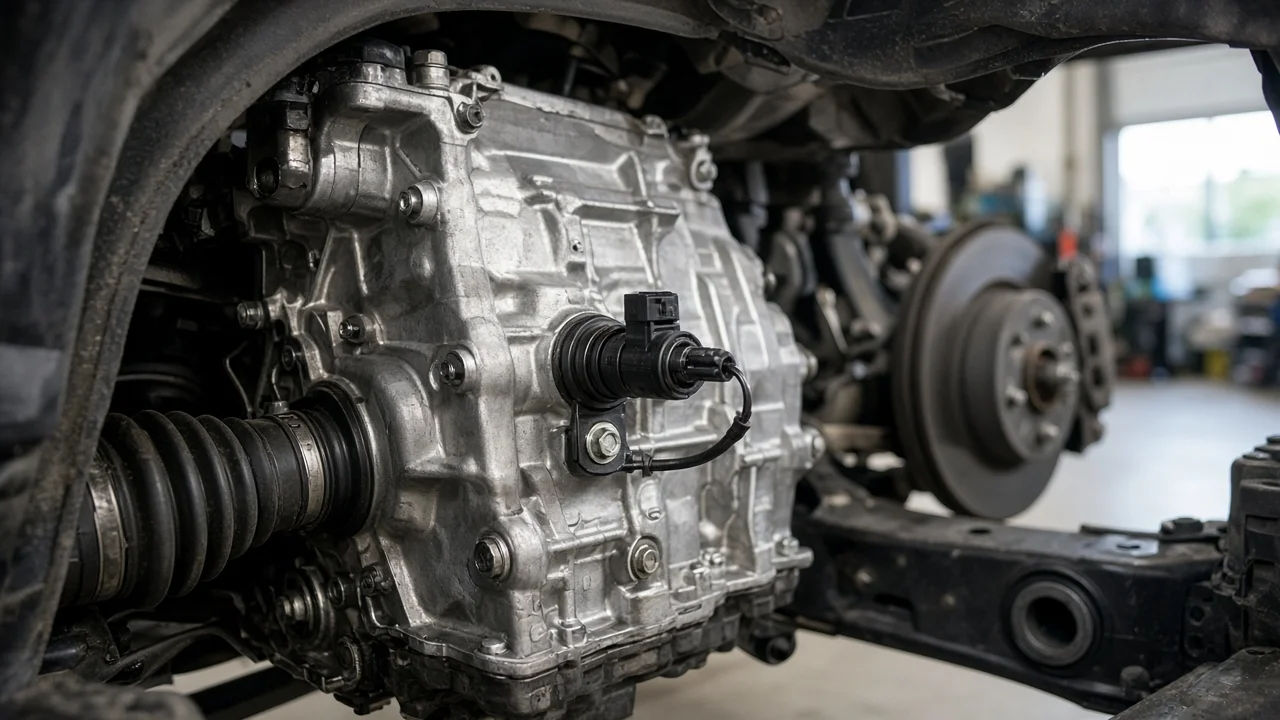
On a 2012 Toyota Camry, the transmission speed sensors are mounted on the automatic transaxle case. They are not on the wheels or elsewhere in the drivetrain. Most gasoline versions have two of them: one reads input (turbine) speed and one reads output speed. Where each sensor sits, and how hard it is to reach, depends on the engine and transmission type in your car. Identify the configuration before removing parts or ordering a replacement.
Where the Speed Sensors Are Located
Gasoline 2012 Camry models use a six-speed automatic transaxle. The four-cylinder 2.5-liter cars are generally paired with the U760E unit, and the 3.5-liter V6 cars with the U660E. On both, the input turbine speed sensor and the output (counter gear) speed sensor are mounted in the transaxle housing. Each sensor is typically held by a single small bolt, sealed with an O-ring and fitted with its own electrical connector. The sensors are generally on the upper or forward-facing area of the case. In this transverse front-drive layout, the case sits low on the driver's side of the engine bay, beneath the battery and air intake components.
In practice, the sensors are usually reached from above after clearing space around the top of the transaxle. Some technicians find one sensor easier to reach from below, with the car safely supported. The two sensors look similar and sit near other connectors, such as the shift solenoid harness and the park/neutral position switch. Identify each one by its harness routing and connector, not by appearance alone.
How the Transmission Uses Speed Signals
The transmission control logic compares the two speed signals. Input speed shows how fast the torque converter turbine and the gear train input are turning. Output speed shows how fast the transaxle is driving the wheels. The ratio between them confirms which gear is actually engaged and whether a clutch is slipping. The control module also uses these speeds to decide when to command torque converter lockup. Shift timing and shift feel depend on both signals being accurate.
If one signal drops out or becomes erratic, the control module may store a diagnostic code and switch to a protective strategy. Owners commonly notice harsh or delayed shifts, a transmission that holds one gear, an illuminated check engine light or erratic cruise control. On many Toyotas of this era, the speedometer reading comes from the wheel speed sensors through the ABS system, not from the transmission. A working speedometer therefore does not rule out a transmission speed sensor fault, and a dead speedometer does not automatically point to one.
What Changes the Answer
The transmission type is the first variable. The four-cylinder and V6 transaxles differ in case design and in what surrounds them in the engine bay. The access route and the parts that must come off are therefore not identical. The Camry Hybrid is a separate case. Its power-split transaxle relies on resolvers inside the motor-generators and uses a different control system. Instructions for conventional input and output speed sensors do not apply to it.
Market and build details matter too. Vehicles built for other regions, or cars with a replaced transaxle, may not match the original fitment. Input and output sensor part numbers should never be guessed. Before ordering, check the transmission code on the vehicle information label or run a parts lookup by VIN. Service history is also relevant. A previous transmission repair can leave connectors damaged, routed differently or not fully seated.
What the Owner Can Do
Start with a scan tool that reads transmission diagnostic codes, not just generic engine codes. Codes in the P0715 to P0722 range point to the input or output speed sensor circuit. A circuit code only means the module is not receiving a plausible signal. Several faults can produce the same code: wiring damage, a corroded or loose connector, low or degraded fluid, debris on the sensor tip or an internal mechanical problem. Write down every stored code and its freeze-frame data before clearing anything.
Next, check the fluid level and condition using the correct procedure for your transaxle. These Toyota units typically use Toyota WS fluid and have no conventional dipstick. Checking the level requires a temperature-specific overflow-plug procedure. The wrong fluid specification or overfilling can cause shift behavior problems on its own. Then inspect the sensor connectors and harness for oil contamination, broken locks, chafing or rodent damage. Note whether the symptoms change with temperature or over road bumps.
If you replace a sensor yourself, first disconnect the battery. Clean the area around the sensor before removing it so dirt cannot fall into the case. Fit a new O-ring and tighten the bolt to the specified torque. Afterward, clear the codes and road test the car through all gears. If the code returns, the fault is likely elsewhere in the circuit or inside the transmission.
Limitations and Next Step
This overview describes the general layout of the gasoline 2012 Camry transaxles. It cannot replace vehicle-specific service information. Exact sensor position, removal steps, torque values and wiring diagrams should come from the factory repair manual or a professional repair database matched to your VIN. A shop with a capable scan tool can also view live input and output speed data while driving. That data often separates a failing sensor from a wiring or internal fault faster than swapping parts.
Seek professional help in any of these situations: the transmission slips, refuses to engage a gear or overheats; it repeatedly enters a fail-safe mode; or codes return after a sensor replacement. These patterns suggest problems a sensor will not fix, and continued driving can turn a modest repair into a costly one. Repair options include sensor replacement, transmission service or deeper diagnosis. Compare them only after the cause has been confirmed.