2012 Buick Enclave Shift Lock Release: How It Works and What to Check
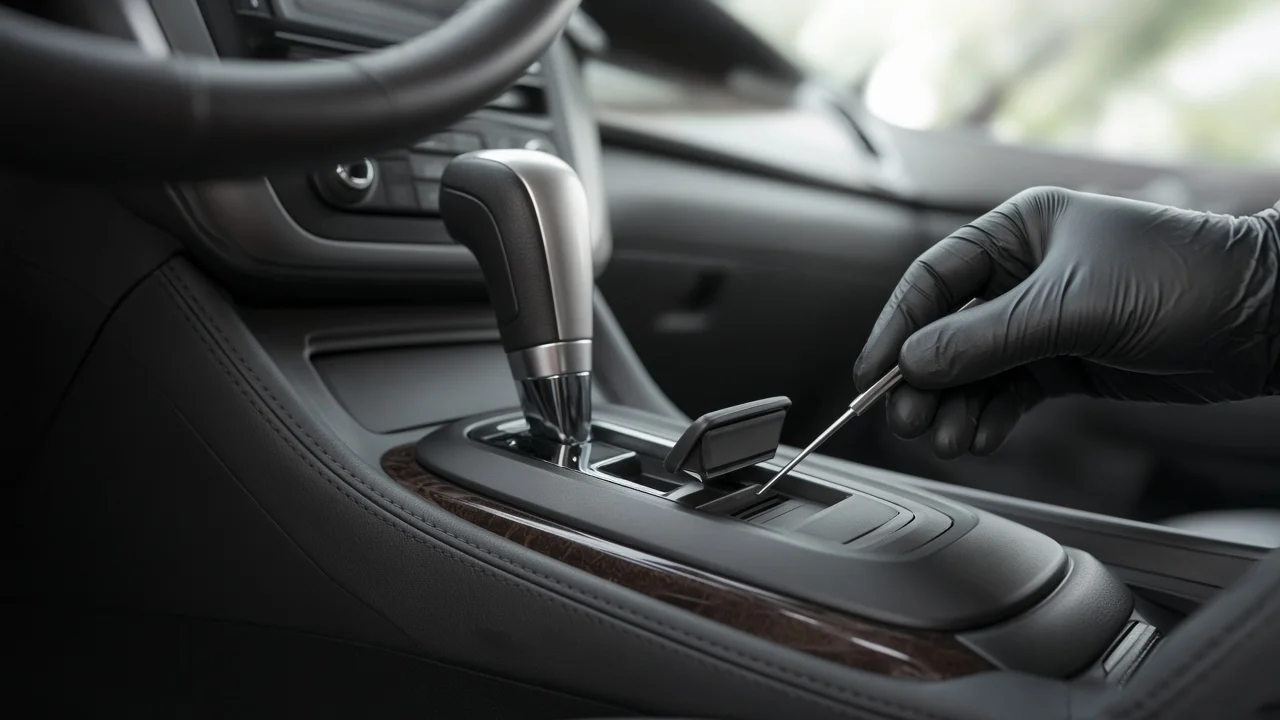
When the shifter on a 2012 Buick Enclave won't leave Park even with the brake pedal pressed, the shift lock release lets you move it by hand. It is a temporary way to get the vehicle moving or towed, not a repair. This guide explains how the release works, how to use it safely, and what a stuck shifter can and cannot tell you about the cause.
The short answer
The 2012 Enclave uses a console-mounted shifter with an electrically controlled brake-transmission shift interlock. Normally, pressing the brake pedal unlocks the lever so it can move out of Park. If that unlock signal never arrives, the shifter stays locked. A manual override at the shifter bypasses the electrical lock. It is usually reached through a small access cover or slot in the console trim next to the lever. With the parking brake set and the brake pedal held, you press a release inside that opening with a small screwdriver or similar tool while moving the lever out of Park.
The exact cover location, key position and order of steps are given in the owner's manual for your vehicle. Follow that sequence rather than a generic description. Using the release only gets the shifter out of Park. The condition that locked it is still there and needs to be diagnosed.
How the shift interlock works
The interlock is a safety feature that stops the vehicle from being shifted out of Park unless the driver's foot is on the brake. A small solenoid in the shifter assembly holds a locking pawl in place. When the system sees that the brake pedal is applied and the ignition is in the correct position, it powers the solenoid, which pulls the pawl away and frees the lever. The brake input comes from the brake pedal switch or position sensor, the same signal that turns on the brake lights.
Because the unlock depends on electrical power and a correct brake signal, anything that interrupts either one can leave the lever locked. That includes a weak or dead battery, a blown fuse, a faulty brake switch or sensor, a wiring problem, or a fault in the solenoid itself. The manual release works because it moves the locking pawl mechanically, so the electrical circuit is not involved. The interlock is separate from the transmission's internal hydraulics, so fluid level and fluid specification do not cause the lever to lock in Park.
What changes the answer
Most 2012 Enclaves use a six-speed automatic transmission, in front-wheel-drive or all-wheel-drive form. The shift interlock works the same way on both drivetrains. What matters more is the condition of the vehicle when the lever sticks. If the battery is discharged, the solenoid cannot release, and the dash and lights will usually show other signs of low voltage. If the battery is healthy but the brake lights don't come on when the pedal is pressed, the problem is more likely in the brake signal path, such as the switch or sensor, its fuse, or its wiring.
Other conditions point in different directions. If the lever moves out of Park but the gear indicator doesn't match, or the vehicle won't engage a gear, the issue may be in the shift cable or its adjustment rather than the interlock. A lever that feels jammed instead of locked can come from debris or spilled liquid in the console, or from a mechanical problem in the shifter. Previous work on the console, brakes or electrical system, as recorded in the service history, can also shift where you look first.
Using the release safely
Before using the override, park on level ground if you can, set the parking brake firmly, and chock the wheels if the vehicle is on any slope. Keep your foot on the brake pedal the whole time the lever is out of Park. Open the access cover carefully with a plastic trim tool or a small flat blade so the console trim isn't scratched or cracked. Insert the tool into the release opening as the manual describes, hold it, and move the lever to Neutral. Once the lever is out of Park, you can start the engine or prepare the vehicle for towing according to the manual's instructions.
Be cautious about driving after using the release. If the root cause is a failed brake switch or sensor, the brake lights may not work, and drivers behind you will get no warning when you slow down. Check the brake lights with a helper or a reflection before any trip. If they don't light, arrange a tow instead of driving. Put the access cover back afterward so dirt doesn't get into the shifter mechanism.
Narrowing down the cause
A few simple observations help narrow the possibilities without assuming any single part has failed. Note whether the engine cranks normally and whether the interior lights and gauges look normal, since that indicates battery condition. Check whether the brake lights work when the pedal is pressed. Listen near the shifter for a faint click when you press the brake with the ignition on, because a click suggests the solenoid is receiving a command. Also note whether the problem happens every time or only intermittently, such as in hot or cold weather.
A scan tool that can read body and transmission modules may show stored diagnostic codes and live brake pedal status, which helps separate an input problem from a solenoid or wiring fault. Codes and live data point to a circuit or condition, not to a confirmed bad part, so test before replacing anything. If a part does need replacing, confirm fitment against the vehicle's VIN, because shifter and brake switch components can differ within a model year. Repair options range from replacing a fuse or charging the battery to replacing a switch, sensor or shifter assembly, depending on what testing confirms.
Limits and when to get help
This explanation covers the general design of the interlock and the manual release. It cannot account for every production variation, prior repair or aftermarket modification on a particular vehicle, so the owner's manual and the factory service information for your VIN are the authority on procedure and component locations. If the release doesn't free the lever, the lever moves but shift behavior is wrong, warning lights appear, or the brake lights don't work, have a qualified technician diagnose the vehicle before it is driven. A professional can test the brake signal circuit and the interlock solenoid directly and confirm the actual cause before any parts are replaced.