2012 BMW 750Li Air Suspension Compressor: Choosing the Correct Part
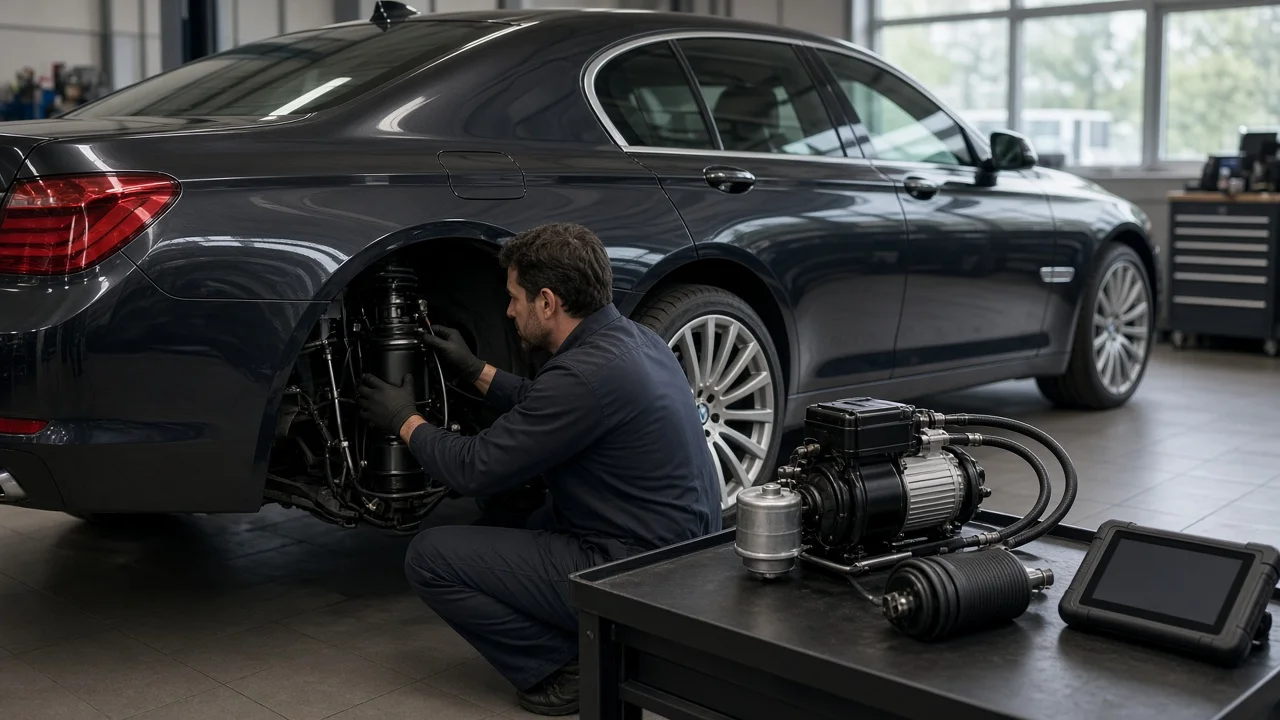
A 2012 BMW 750Li that sags at the rear, shows a suspension warning or runs its compressor longer than usual may need a new air supply unit. It may also have a leak that will destroy the next compressor. This guide explains how to confirm what the car needs, match a replacement to your exact vehicle, judge the differences between available units and build a short list before you buy.
Define the job the product must do
On the long-wheelbase F02 7 Series, the compressor supplies the rear air springs that keep the car level as passengers and luggage change the load. A replacement has one job: deliver enough dry, pressurized air to reach and hold the target ride height without running for long periods. Before you shop, confirm that the compressor is actually at fault. A unit that runs but cannot raise the car, one that never switches on, and one that works but runs constantly point to different causes. A seized motor, a failed relay or fuse, a saturated air dryer, a leaking air spring or a damaged air line can all produce similar symptoms.
A scan tool that reads BMW chassis fault memory, together with a soapy-water leak check on the springs, lines and fittings, tells you far more than the symptoms alone. If a rear air spring is leaking, replacing only the compressor treats the effect rather than the cause, and the new unit will be overworked from its first day. Decide early whether you are buying a compressor alone or a compressor plus the repair that caused the failure. That decision sets your real budget.
Check compatibility
Fitment for this car depends on more than the model year. The 2012 750Li was sold in rear-wheel-drive and xDrive versions, and production changes within the F01/F02 generation can affect part numbers. The most reliable method is to decode your VIN against BMW's parts catalog, or to ask a dealer parts counter or a reputable BMW parts supplier to confirm the part number for your specific car. Compare that number with the label on the unit currently installed. If the two differ, find out why before ordering.
Once you have a candidate part, check its physical interfaces against the original. These include the electrical connector shape and pin count, the air line connection type and size, and whether the unit arrives with its mounting bracket and rubber isolators. Bracket geometry and mounting points must match, because a compressor that is not properly isolated transmits vibration and noise into the cabin and can loosen over time. Also confirm whether the listing includes the air dryer and valve block, or only the motor and pump assembly. Sellers describe this inconsistently, and a part number cross-reference is more trustworthy than a product title that simply lists many BMW models.
Features that affect the choice
The main choice is between a genuine BMW unit, a new unit from an independent manufacturer and a remanufactured or rebuilt compressor. A genuine part offers the most certain fit and part number match, usually at the highest price. Independent new units vary widely. Some are made to the original dimensions and connector specifications, while others are generic designs adapted with brackets. Remanufactured units can be good value if the rebuilder replaces the piston ring, dryer media and seals and pressure-tests the assembly, but quality depends entirely on that process.
Treat marketing labels with caution. Phrases such as OE quality, heavy duty or upgraded mean little without specifics. More useful evidence includes a stated part number cross-reference, a clear list of what is included in the box, documented testing such as pressure or run-time checks, and a warranty with defined terms. Check whether that warranty requires proof of professional installation or a matching relay replacement. Many owners replace the compressor relay at the same time, because a relay that has stuck closed can run a compressor until it overheats. Whether a new relay is needed depends on your diagnosis.
Limitations and ownership costs
A compressor cannot fix leaks, worn air springs, faulty ride height sensors or control module problems, and it cannot compensate for them for long. Budget for the possible related parts: a relay, an air dryer if it is not integrated, replacement O-rings or line fittings, and sometimes new isolators. After installation, the system may need a fault code clear and a ride height check or calibration with suitable diagnostic software. A shop may charge separately for that work. If any suspension component that affects geometry was disturbed during diagnosis, have the wheel alignment checked as well. Keep in mind that the car's ride height must be correct before an alignment reading means anything.
Safety matters during the job. Never rely on the air suspension or a jack alone to hold the car while you work near or under it. Use proper vehicle support on rated stands or a lift placed at the manufacturer's designated points, and follow the model-specific procedure for depressurizing the system before you open any air connection. Use the fastener specification from BMW repair information when you tighten brackets and fittings; do not guess. If the rear suspension is already apart, it is a sensible time to inspect bushings and ball joints for joint play, but plan that inspection as separate work with its own cost.
Build a practical shortlist
Narrow your options to two or three units and compare them on the same points. Does the part number cross-reference match the number confirmed from your VIN? Do the connector, air line fitting and bracket match the original? Is the dryer included, and are the isolators and fittings in the box? Is the unit new or remanufactured, and does the seller describe the rebuild process? What do the warranty length and conditions say, and is the return policy realistic for a part that must be installed before it can be tested? Finally, compare the total cost, including any relay, labor and calibration you will need.
Rank the shortlist by confirmed fit first, then by documented build quality and warranty, and only then by price. A cheaper unit that needs modification or fails early on a 750Li that still has an undiagnosed leak will cost more than a correctly matched part installed after the root cause has been fixed. If any compatibility point remains uncertain, settle it with a parts specialist before you order, not after the old compressor is out of the car.