Identifying a 2011 Subaru Outback Transmission Valve Body
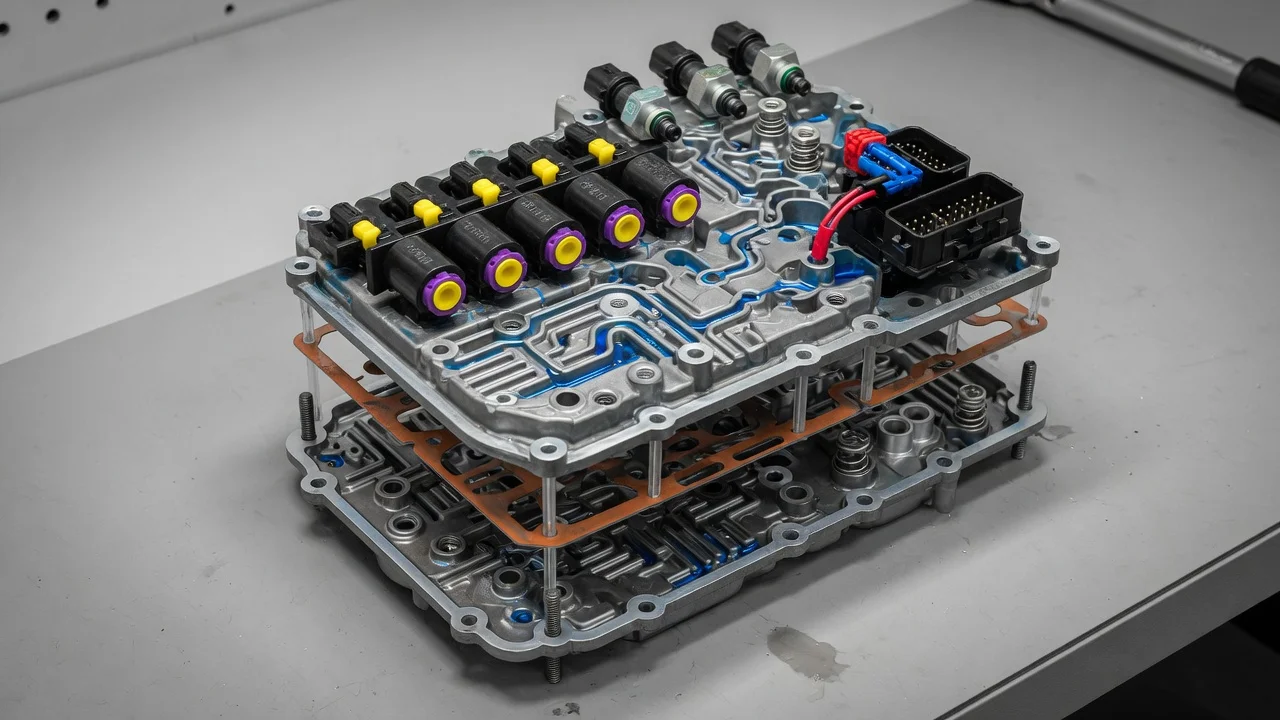
The valve body is the hydraulic control center of an automatic transmission, and it is often blamed when a 2011 Subaru Outback starts shifting badly or slipping. Before you order one or conclude that yours has failed, confirm which transmission the vehicle has and how its control system works. This guide covers identification, fitment, the evidence worth gathering, and why a shift symptom alone does not prove the valve body is the problem.
The short answer
A 2011 Outback with an automatic transmission uses one of two very different units. The 2.5i with an automatic has the Lineartronic continuously variable transmission (CVT). The 3.6R uses a conventional five-speed automatic. The 2.5i was also sold with a six-speed manual, which has no valve body at all. The CVT and five-speed valve bodies are completely different parts and cannot be swapped between them. Identify the correct part by giving the full VIN to a Subaru parts department, then confirm it against the transmission identification label and the part number on the original valve body.
Do not order by model year and trim alone. Part numbers within a single transmission type can be revised or superseded over a production run, and an unknown replacement history means the transmission in the car may not be the one it left the factory with. The VIN lookup combined with a physical check of the installed unit is the reliable path.
What the valve body does
In both transmissions, the valve body is a machined assembly of fluid passages, spool valves and electrically operated solenoids. The transmission control module reads sensors such as vehicle speed, throttle position and fluid temperature, then commands the solenoids. The solenoids and valves route pressurized fluid to wherever it is needed.
In the five-speed automatic, that pressure applies the clutches and brakes that select each gear and controls torque converter lock-up. In the Lineartronic CVT, the valve body controls the pressure on the primary and secondary pulleys that sets the ratio and clamps the chain. It also handles forward and reverse engagement and converter lock-up. Because the system mixes hydraulics and electronics, a fault can sit in the fluid, a solenoid, a sensor, wiring, the control module, the valve body itself or the mechanical parts it feeds. The same symptom can come from any of them.
What changes the answer
The transmission type is the biggest factor, because it decides which valve body, fluid and diagnostic procedures apply. Engine size is a quick first clue: a 3.6-liter six points to the five-speed automatic, and a 2.5-liter four with two pedals points to the CVT. Still verify by VIN, since engine or transmission swaps happen on older vehicles. Every 2011 Outback is all-wheel drive, and the automatic versions use a hydraulically controlled transfer clutch for torque distribution. Some driveline complaints, such as binding in tight turns, may trace back to that control system rather than a purely mechanical fault.
Fluid specification matters as much as hardware. The CVT requires the Subaru CVT fluid specified for it, and the five-speed requires the Subaru-specified automatic transmission fluid. The wrong fluid, or a level that is low or overfilled, can change shift behavior enough to mimic a valve body problem. Service history also changes the picture: previous fluid services, software updates, earlier valve body or solenoid work, or a replacement transmission all affect what you should expect to find.
Fitment goes beyond the part number. Some replacement valve bodies come with solenoids installed and some do not. A replacement may also need calibration data or a learning procedure before the transmission shifts correctly, which is especially relevant for the CVT.
How to identify yours and gather evidence
Start with the paperwork and the VIN. The original window sticker, a dealer service record or a VIN lookup at a Subaru parts counter will show the engine and transmission. Then inspect the transmission identification label on the case, and if the pan is ever off, note the part number on the valve body. Keep these numbers together. They are what a parts supplier or transmission shop needs to confirm fitment.
Before blaming the valve body, collect evidence. Read diagnostic codes with a scan tool that can access the transmission control module, not just generic engine codes, and save any freeze-frame data. Write down exactly how the shift behavior changes: cold or hot, which gear or speed range, under light or heavy throttle, and whether the problem is constant or intermittent. Check fluid level and condition only by the factory procedure, since the correct check depends on fluid temperature and differs between the two transmissions. Note any burnt smell, dark color or debris.
Repair options run from minor to major. A shop may repair a damaged connector or wiring, replace an individual solenoid, perform a correct fluid service, update software, replace the valve body, or overhaul or replace the transmission. Ask how the shop confirmed the diagnosis, for example through electrical testing of solenoid circuits, pressure testing or live data. If you buy a used or remanufactured valve body, match the part number exactly and ask whether any programming or learning is required after installation.
Limitations and next step
Symptoms like harsh shifts, slipping, delayed engagement, shudder or a warning light overlap across several possible causes, so none of them confirms a failed valve body on its own. Internal wear, such as damaged clutches in the five-speed or pulley and chain wear in the CVT, can look like a control problem, and a new valve body will not fix it. Valve body work also requires strict cleanliness and correct bolt torque. Post-repair learning, particularly on the CVT, may need dealer-level diagnostic equipment.
The practical next step is to confirm your transmission type and part number by VIN, then have the transmission control module scanned and the fluid checked by the correct procedure. Ask a Subaru dealer whether any service campaign, software update or warranty extension applies to your VIN before paying for parts. If the evidence still points to the valve body, a transmission specialist familiar with Subaru CVTs or five-speed automatics can confirm the diagnosis and recommend the most cost-effective repair.