Choosing a 2011 Ford Ranger Shift Interlock Solenoid
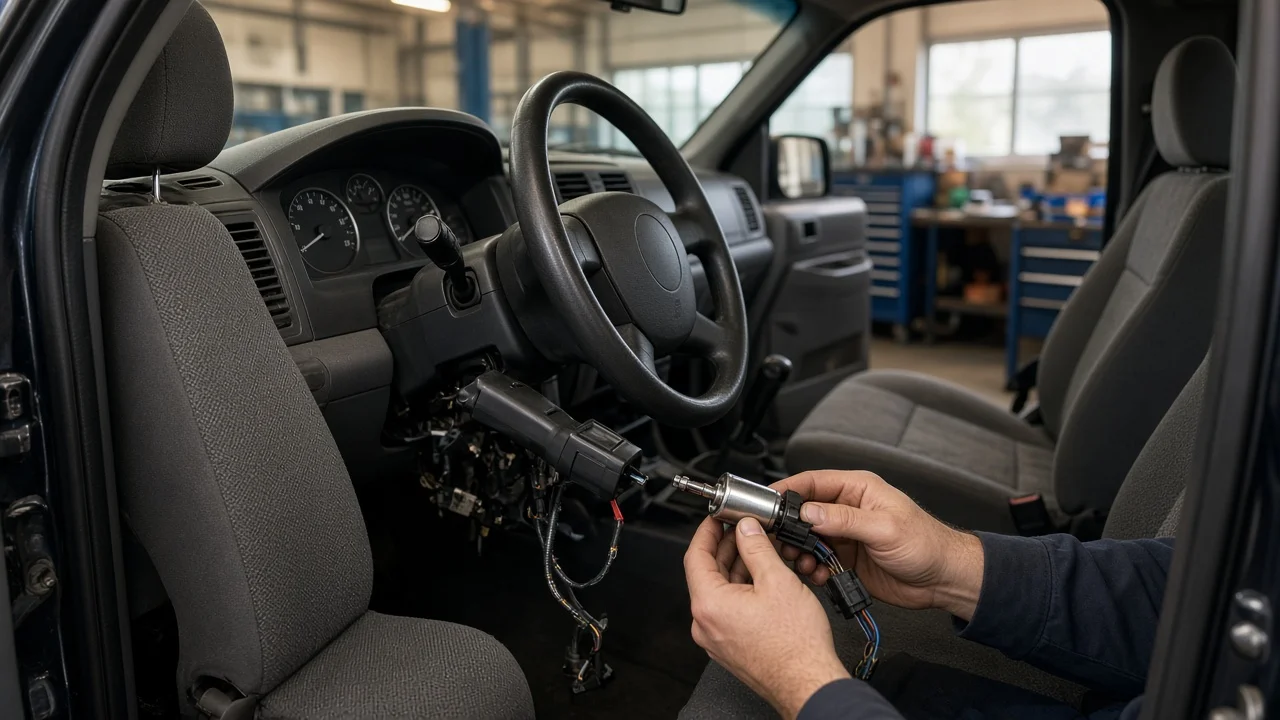
If your 2011 Ranger will not come out of Park even with the brake pedal pressed, the brake shift interlock solenoid is one possible cause, but not the only one. This guide helps you decide whether a replacement solenoid is the right purchase, how to confirm it fits your truck, what separates one part from another, and what the job involves before you spend money. It applies only to Rangers with an automatic transmission. Manual-transmission trucks do not use this part.
Define the job the product must do
The interlock solenoid keeps the gear selector locked in Park until the ignition is on and the brake pedal is pressed. When you press the pedal, the brake circuit powers the solenoid, which releases the lock so the lever can move. Without power, the lock stays engaged. On an automatic 2011 Ranger, this part sits in the shifter mechanism, not inside the transmission. For this purchase, the transmission type matters mainly to confirm the truck is an automatic. Fluid specification and the transmission's service history have no bearing on choosing this part.
Before buying, confirm that the symptom actually points here. Several faults can cause the same stuck-in-Park shift behavior. These include a failed brake lamp switch, which often shows up as brake lights that do not work, a blown fuse in that circuit, damaged wiring or a loose connector at the shifter, a binding or misadjusted shift cable, and worn mechanical parts in the shifter. Two quick checks help narrow it down. First, have a helper confirm the brake lights come on. Second, with the key on, press the pedal and listen or feel for a click at the shifter. If you hear a click but the lever stays locked, a mechanical problem is more likely. If there is no click and the brake lights work, the solenoid or its wiring becomes a stronger suspect. These are clues, not proof. A voltage check at the solenoid connector while the pedal is pressed gives far more useful evidence.
If the truck is stuck right now, check your owner's manual for a shift lock override procedure that lets you move the lever out of Park to reposition the vehicle. Treat that as a temporary workaround, not a repair.
Check compatibility
Fitment depends more on how the shifter is configured than on engine size. Depending on trim and seating, an automatic 2011 Ranger may have a column-mounted shifter or a floor console shifter, and the interlock hardware differs between the two. Before ordering, compare the mounting points, the connector shape and pin count, and the shape of the locking plunger or pawl against what is installed in your truck.
The most reliable way to confirm fitment is to give your VIN to a dealer parts counter or a VIN-based parts catalog. If the original part has a readable number, compare that as well. Be careful with listings that cover a wide range of years and related trucks under a single part number. The fitment may be correct, but you should still check the photos against your own connector and mounting before you buy. Do not assume that parts from related Mazda pickups interchange unless a parts catalog confirms it.
Features that affect the choice
The main choice is between a genuine Ford or Motorcraft part and an aftermarket one. A factory part is most likely to match the original mounting and connector. Aftermarket parts usually cost less, but quality and dimensional accuracy vary between brands. Look for real evidence: a stated cross-reference to the original part number, clear photos of the connector and mounting from several angles, written warranty terms, and a return policy that covers incorrect fitment. Labels such as heavy-duty, premium or upgraded mean little unless they come with specifications you can check.
Also decide whether you need only the solenoid or a larger shifter or interlock assembly. Depending on supplier availability, the solenoid may only be sold as part of an assembly. An assembly costs more and involves more work, but it makes sense if diagnosis points to worn mechanical parts in the shifter rather than an electrical fault. If the original connector is cracked or its terminals are corroded, a part that comes with a replacement pigtail is worth considering.
Limitations and ownership costs
On a column shifter, the job means removing trim shrouds near the steering column, close to airbag wiring. Disconnect the battery and follow the service procedure's precautions and waiting time before you work around airbag components. On a floor shifter, you will need to remove console trim instead. Typical tools include trim tools, sockets and a multimeter for confirming power and ground. The solenoid needs no fluid or other consumables, and a simple electrical actuator like this is not normally something you program.
A new solenoid will not fix a faulty brake lamp switch, a blown fuse, a misadjusted shift cable or broken wiring. It also has nothing to do with internal transmission problems such as harsh shifts, slipping or stored transmission diagnostic codes. Interlock circuit faults may not set any codes, so a clean scan does not rule out the solenoid, and a code elsewhere does not confirm it. The biggest hidden cost is buying a part based on a wrong diagnosis. Many sellers limit returns on electrical parts once they have been installed, so read the policy before ordering.
Your repair options are to do the job yourself, use an independent shop or go to a dealer. Choose based on how comfortable you are with diagnosis and with working near airbag components. A shop that confirms the fault with a voltage test before replacing parts may save you money overall.
Build a practical shortlist
Use this checklist to narrow your options. Confirm the truck has an automatic transmission. Note whether the shifter is on the column or the floor console. Check that the brake lights work and that the fuse is intact. Listen for the solenoid click, and ideally confirm voltage at the connector. Match the part number using your VIN. Compare each candidate's connector, pin count and mounting photos against your truck. Decide whether you need only the solenoid or a complete assembly. Weigh warranty length and return terms for wrong fitment. Finally, plan the installation, including airbag precautions and trim removal.
Rule out any listing that cannot show a clear part number cross-reference or connector photos, however attractive the price. After the repair, record the part number, supplier and date in your service history so a future fault can be traced quickly and any warranty claim is easy to support.