2011 Chevy Cruze Transmission Relearn Procedure
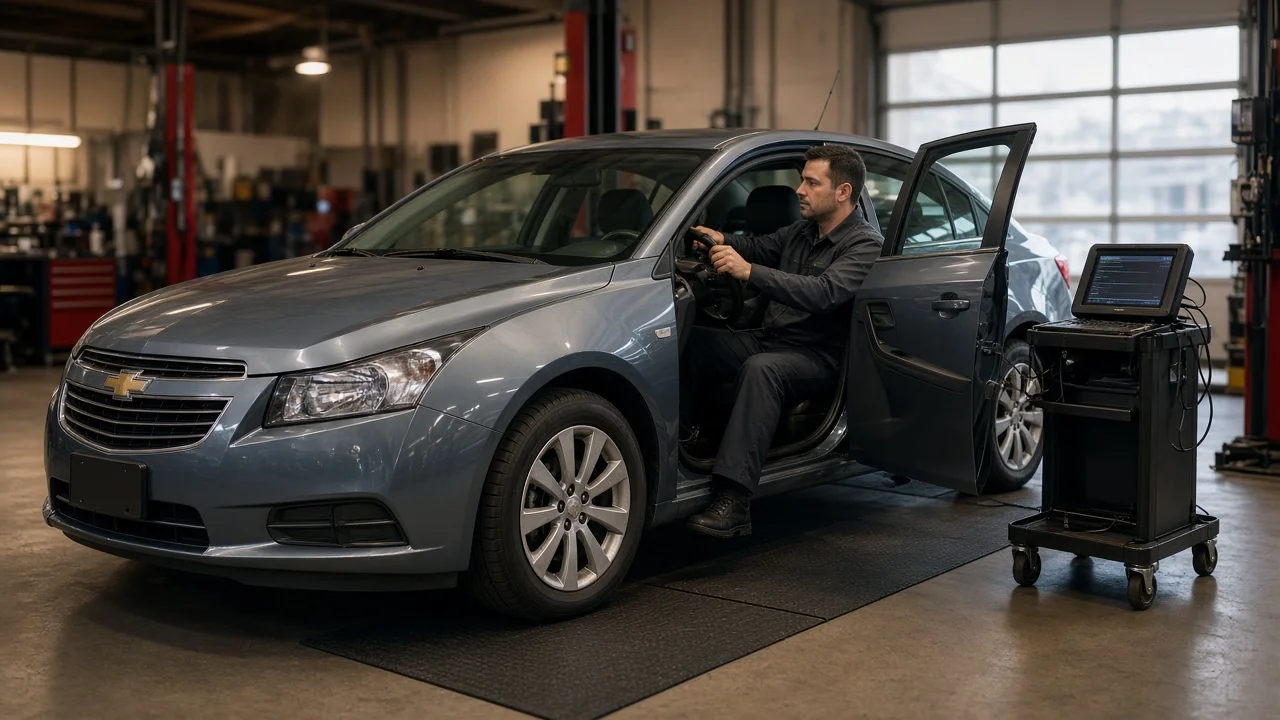
A transmission relearn on a 2011 Chevy Cruze resets and rebuilds the adaptive shift values the transmission control module uses to time clutch apply and release. On automatic models, a technician normally does it with a capable scan tool followed by a structured drive. It is not a pedal or ignition-key sequence. This article covers what the procedure involves, when it applies, and what an owner can do before or after a shop visit.
The short answer
On a 2011 Cruze with the 6-speed automatic (the GM 6T40 family), the relearn is a scan-tool function. A technician typically clears the stored adaptive values and then runs a service fast learn routine in the shop. During that routine, the tool commands clutch fills while the car sits still with the engine idling, the brake applied, and the fluid inside a specified temperature window. The car is then driven so the module can refine shift timing under real load. Manual-transmission Cruzes have no shift adapts to relearn. Disconnecting the battery is not a reliable substitute, because the module keeps adaptive values in memory that normally survives a loss of power.
A relearn is usually called for after these jobs: replacing or reprogramming the control module, replacing the valve body and solenoid assembly, overhauling or replacing the transmission, or repairing internal clutches. Service information may also call for it after a fluid service or a confirmed shift-quality complaint. A relearn is not a repair. If a clutch is worn or slipping, resetting the adapts can briefly hide the problem or make it feel worse.
How adaptive shift learning works
Every shift in this clutch-to-clutch automatic is a handoff: one clutch releases while another applies. The module controls the handoff through pressure control solenoids. It measures how long each shift actually takes by comparing the input and output speed sensor signals. If a shift runs long, the module adds pressure or fill time on the next one. If a shift is too abrupt, it backs off. These corrections are stored as adaptive values for each clutch and each shift.
In this transmission, the control module and the valve body form one assembly inside the case. A replacement unit therefore has no learned values for that particular transmission. The fast learn routine gives each clutch a usable starting point, and normal driving completes the calibration. After a reset, shifts may feel slightly firm or uneven until the module has recorded enough of them.
What changes the procedure
Transmission type matters first. The 2011 Cruze was offered with either the 6-speed automatic or a 6-speed manual, paired with the 1.8-liter engine or the 1.4-liter turbo. Manual cars have no adaptive shift learning, so clutch work on them is purely mechanical. Automatic cars follow the scan-tool route. The exact steps, preconditions and drive pattern depend on the software calibration and on the service information for that specific VIN.
Operating conditions also matter. A fast learn routine will usually stop if the fluid temperature is out of range, a diagnostic code is active, battery voltage is low, or the engine is not at a steady idle. Fluid level and fluid specification affect the result as well. This unit uses Dexron VI, and its level is checked at a fill plug at a set temperature rather than with a dipstick. The wrong fluid or an incorrect level will skew the values the module learns. Software level can matter too. Updated calibrations exist for many GM transmissions of this era, so a dealer may check whether one applies before performing the relearn.
What the owner can do
Start by describing the shift behavior precisely. Note which shift is affected, whether it happens cold or warm, and whether it occurs under light or heavy throttle. Also note the type of problem: flare (engine speed rising between gears), harsh engagement, delayed engagement into drive or reverse, or shudder. Have the diagnostic codes read, including transmission-specific codes that a basic code reader may not show. Collect the service history, including fluid changes, any module or valve body work, and whether a relearn was done afterward.
If you have a professional-level scan tool that supports GM transmission functions, look for the adaptive reset and service fast learn under the transmission module. Follow the on-screen preconditions exactly, and do not start the routine while codes are active. Afterward, drive in normal traffic with light, steady throttle through all six gears. Include some moderate acceleration and coast-downs, and allow several drive cycles. Avoid hard launches and towing until the shifts settle.
If a part needs replacing, confirm fitment by VIN before ordering. Replacement control modules typically have to be programmed to the vehicle. Repair options range from a software update and relearn to valve body or internal clutch repair, so the cost depends on a confirmed diagnosis, not on the symptom alone.
Limitations and next step
A relearn can only calibrate hardware that is working properly. If a shift still flares, slips, or sets a code after the procedure, possible causes include internal wear, a hydraulic fault, a wiring problem, or low fluid. Some 6T40 units have a known weakness involving internal clutch components, but a symptom alone does not show which part has failed. Scan data, slip readings and physical inspection are what establish the actual cause.
Because the steps vary by calibration and by tool, use the factory service information for your VIN or a shop with GM-capable diagnostic equipment. If the car shifts poorly after module or valve body work, ask the shop two things: whether the adaptive reset and fast learn were completed, and whether codes were cleared and rechecked afterward.