Identifying a 2011 Chevy Cruze Transmission Pressure Control Solenoid
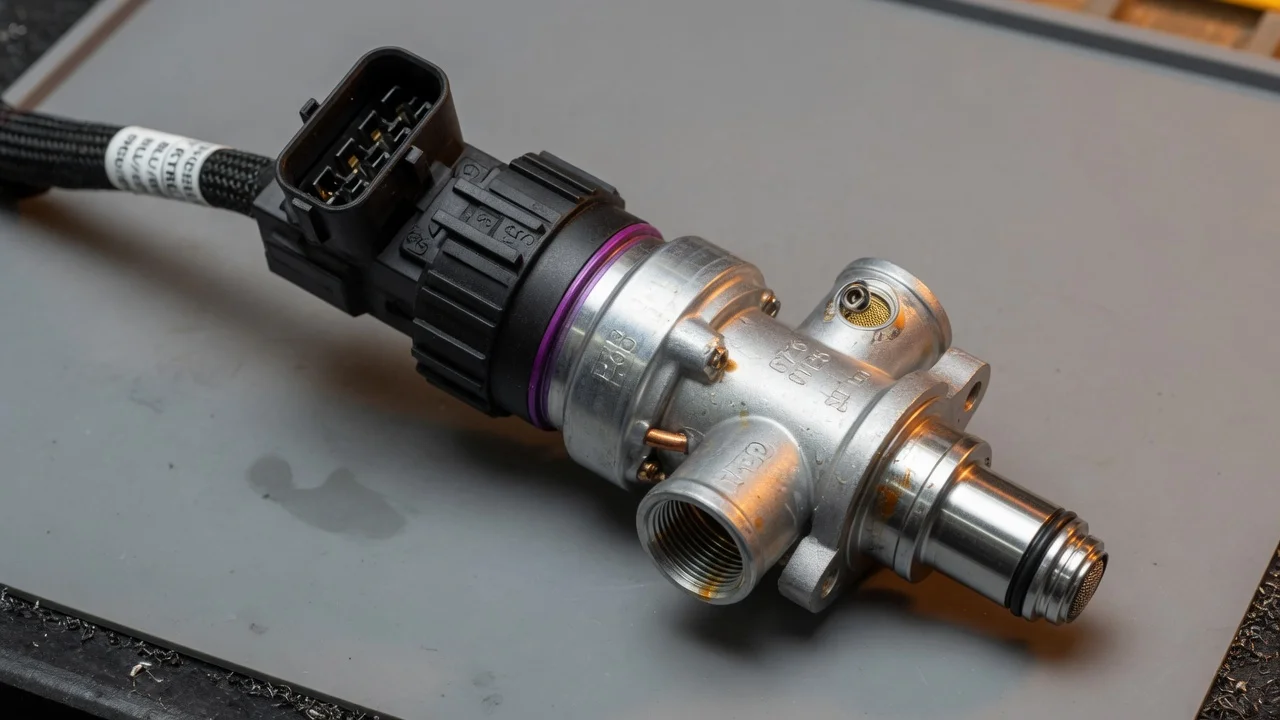
Owners searching for the pressure control solenoid on a 2011 Chevy Cruze often expect a single part bolted to the outside of the transmission. On this car it is neither single nor external. The automatic version uses several pressure control solenoids built into an electronic control assembly inside the transaxle. Before buying parts or reading too much into a symptom, confirm which transmission your Cruze has, what the diagnostic codes actually say, and whether the fault is electrical, hydraulic or mechanical.
Where the pressure control solenoid is on a 2011 Cruze
A 2011 Cruze with an automatic transmission uses the GM 6T40 six-speed transaxle. Its shift and pressure control solenoids are not separate external components. They are part of the control solenoid valve and transmission control module assembly, often called the TEHCM, which mounts to the valve body inside the transaxle behind a side cover. The transmission control module and the solenoids are combined in one unit. Several pressure control solenoids live in that assembly, so a code that refers to solenoid A, B or C points to one specific solenoid within it, and GM service information defines which clutch or function each letter controls. A Cruze with a manual transmission has no pressure control solenoid at all.
In GM's service approach, the practical replacement unit is the whole solenoid and module assembly rather than an individual solenoid. After installation the assembly must be programmed for the vehicle, and the transmission's adaptive shift values need to be relearned with a capable scan tool. Some rebuild shops handle the internals differently, but for an owner the assembly is the part that matters when talking about fitment and repair options.
How pressure control works in the 6T40
The 6T40 uses clutch-to-clutch shifting: during most shifts one clutch releases while another applies, and the control module manages that overlap. Pressure control solenoids are variable devices. The module changes the electrical current to each solenoid, which changes the hydraulic pressure sent to a particular clutch or circuit. Getting that pressure right, and timing it correctly, is what produces a smooth, firm shift instead of a harsh bang or a slipping flare.
The module watches two different things. It checks the electrical circuit of each solenoid for opens, shorts and out-of-range current, and it compares input and output speeds to judge whether a commanded gear actually engaged. That distinction matters. A circuit code points toward wiring, connectors or the assembly itself, while a performance or ratio code means the transmission did not behave as commanded, which can be caused by a solenoid, a valve, low or degraded fluid, or worn and damaged clutch parts.
What changes the answer
Transmission type comes first. US 2011 Cruze models were sold with a 1.8-liter engine or a 1.4-liter turbo, and either could be paired with the 6T40 automatic or a six-speed manual depending on trim. Even among automatics, calibrations and part numbers can differ, so fitment should be confirmed by VIN and the RPO codes on the vehicle's service parts identification label rather than by model year alone.
The exact diagnostic codes change the diagnosis more than the symptom does. Generic codes in the P0960 range describe pressure control solenoid A circuit faults, and neighboring ranges cover other lettered solenoids, but a range or performance code calls for a different test path than an open or shorted circuit. Operating conditions also matter: a fault that appears only when cold, only when hot, or only after a battery problem tells a technician something different. Low system voltage, a weak battery or poor grounds can set transmission codes on their own.
Fluid condition and service history round out the picture. The 6T40 is specified for Dexron VI fluid, and the wrong fluid specification, a low level from a leak, or burnt fluid can produce harsh shifts and slipping that look like a solenoid problem. Previous module replacement, earlier transmission repairs, or a history of slipping between particular gears should all be part of the conversation.
What the owner can do
Start by reading codes with a scan tool that can access the transmission module, not only basic engine data. Write down every code, whether it is current or history, and any freeze frame information. Then describe the shift behavior precisely: which shift is harsh or delayed, whether it happens from a stop or at speed, whether the car goes into a reduced-gear mode, and whether the engine speed flares between gears. These notes are more useful to a technician than a guess about which part failed.
Check the basics that are within reach. Test the battery and charging system, look for transmission fluid leaks around the case and cooler lines, and inspect the external transmission connector for damage or contamination. Note that the 6T40 does not use a conventional dipstick. Its level is checked at a fill or check plug with the engine running and the fluid at a specified temperature, which usually requires a scan tool to read fluid temperature and a lift to keep the car level. If that is outside your comfort zone, leave the level check to a shop rather than guessing.
Use what you find to decide the next move. A circuit code with a healthy charging system and correct fluid points toward wiring or the control assembly. A performance code combined with slipping, burnt fluid or a sudden loss of certain gears raises the possibility of internal mechanical damage, where replacing the solenoid assembly alone would not solve the problem.
Limitations and next step
A symptom such as harsh shifting or slipping does not confirm a failed pressure control solenoid. Pinpoint diagnosis requires GM service information, circuit tests, live scan data and sometimes a road test with commanded pressure checks. Replacement involves reaching an internal assembly, programming it to the vehicle and completing the adaptive learn procedure, which a typical parts-store reader cannot do. Buying a used or unprogrammed assembly without confirming fitment and programming capability can leave the car worse off.
The most reliable next step is a dealer or a transmission specialist with GM-capable diagnostic equipment. Bring your codes, the conditions under which the problem appears, and your service history, and ask whether any service bulletins or campaigns apply to your VIN. With that information the shop can separate electrical faults from hydraulic or mechanical ones and recommend the repair that fits your specific Cruze.