2011–2013 Ford F-150 Transmission Speed Sensor Location
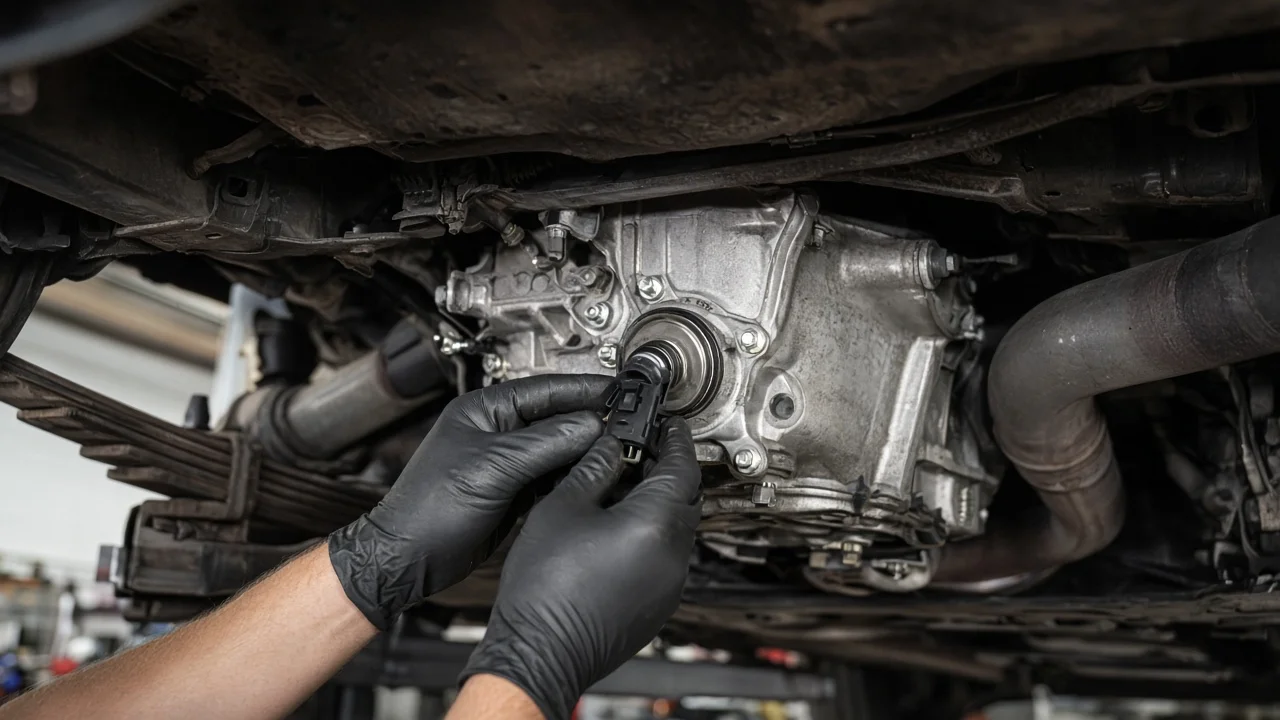
If a scan tool has flagged a speed sensor code on a 2011, 2012 or 2013 Ford F-150, the first surprise is usually that there is no easy bolt-on sensor on the outside of the transmission case. On these trucks the transmission speed sensors sit inside the unit, which changes how you diagnose the fault and what a repair involves. Below is where they are, how they work and what to check before you buy parts.
Where the speed sensors are on a 2011–2013 F-150
The 2011–2013 F-150 uses the 6R80 six-speed automatic across its engine lineup, including the 3.7L V6, 5.0L V8, 3.5L EcoBoost and 6.2L V8. Unlike some older Ford automatics, the 6R80 does not use externally mounted transmission speed sensors. Its turbine shaft speed sensor, intermediate shaft speed sensor and output shaft speed sensor are internal, attached to the valve body and the internal wiring assembly in the lower part of the transmission, under the pan.
To reach them, you drain the fluid and remove the transmission pan, which is under the truck behind the engine. Depending on which sensor is involved and how it is supplied, the valve body or the internal harness, often called the lead frame, may also have to come out. Some of these sensors are serviced only as part of that larger assembly, so check the parts catalog and service information for your exact build before planning the job.
How the transmission uses these signals
Each sensor reads a rotating toothed ring or similar target and sends a pulsing signal to the powertrain control module. The turbine shaft speed sensor reports how fast the torque converter turbine, and therefore the transmission input, is turning. The intermediate shaft speed sensor watches an internal rotating member partway through the gear train, and the output shaft speed sensor reports how fast the output shaft is turning.
The module compares these speeds to work out the actual gear ratio, detect clutch slip, time shifts and control torque converter clutch lockup. When a signal drops out or doesn't make sense compared with the others, the module stores a diagnostic code and may switch to a protective strategy. Owners typically notice this as harsh or delayed shifts, a transmission that stays in one gear, flare during shifts or a check engine light. These symptoms point to a speed signal problem, but they don't by themselves prove the sensor has failed.
What changes the answer
The code number tells you which signal the module is complaining about. Under the generic definitions, P0715 relates to the input or turbine speed sensor circuit, P0791 to the intermediate shaft speed sensor circuit, and P0720 to the output speed sensor circuit. A P0500 vehicle speed sensor code is a different matter. On trucks of this era road speed is commonly calculated from the ABS wheel speed sensors, so a speedometer problem that appears together with ABS or traction control warnings often points to the wheel speed side rather than the transmission. Confirm how your truck sources vehicle speed before chasing the wrong part.
Drivetrain configuration matters too. A 4x4 truck has a transfer case behind the transmission with its own electrical components and codes, and these shouldn't be confused with the transmission's internal sensors. Fitment also varies with build date and calibration, so look up sensors, the internal harness and gaskets by VIN rather than by model year alone. Service history is part of the picture as well: a recent fluid service, valve body work or a prior transmission repair can explain a new code, especially if a connector was disturbed or the fluid level was set incorrectly.
What the owner can do
Start with a scan tool that can read transmission codes and show live data. Watching turbine, intermediate and output shaft speeds while driving tells you whether a signal is missing entirely, dropping out intermittently or reading implausibly. Note when the problem appears, such as cold starts, after the transmission is fully warm, over bumps or only in certain gears, and record any changes in shift behavior. That information is valuable to whoever does the repair.
Check the fluid level and condition next. The 6R80 is specified for Mercon LV, and using the wrong fluid specification can cause shift problems of its own. This transmission has no conventional dipstick. The level is checked at a plug in the pan with the engine running and the fluid at the specified temperature, so follow the published procedure instead of guessing. Also inspect the main electrical connector on the transmission case and the nearby wiring for damage, corrosion, loose locks or fluid wicking into the connector. A bad connection can produce the same codes as a failed internal sensor.
Your repair options depend on what the diagnosis shows and how comfortable you are with transmission work. Dropping the pan is within reach of many home mechanics, but removing the valve body or internal harness demands more care, clean working conditions, correct torque values and the right refill procedure. An independent transmission shop or a dealer can confirm the fault with pinpoint tests before any parts are replaced.
Limitations and next step
A speed sensor code identifies a circuit or signal problem, not a confirmed failed part. Wiring faults, a damaged connector, problems with the internal harness or valve body, incorrect fluid level, mechanical wear inside the transmission and control module software can all produce similar codes and symptoms. Replacing a sensor without testing the circuit risks spending money on the wrong component. Some repairs also need a scan tool procedure afterward, such as clearing or relearning adaptive shift values, and the exact steps depend on the truck's configuration.
If the truck is shifting harshly, stuck in one gear or behaving unpredictably, limit driving until the cause is found, because continued operation with a bad signal can make shifts unsafe or add wear. For an accurate repair path, use VIN-specific service information for your truck. If the live data or circuit tests don't clearly point to one component, have a transmission specialist diagnose it.